
Property Documents Checklist Before Buying in India 2026
Meta Description
Complete property documents checklist to verify before buying in India. Learn critical legal checks, document verification steps, and due diligence process.
Full Article
How to Check Property Documents Before Buying: Complete Checklist
You’re about to spend more money on property than anything else in your life. And the single biggest risk isn’t the price — it’s the paperwork. I’ve seen buyers lose ₹47 lakhs because they skipped one document check. Not because they were careless. Because they didn’t know which documents actually mattered.
Most property documents checklist guides online list 30 papers. That’s not helpful. What you need is a priority system — which documents kill the deal if they’re wrong, and which ones are just nice to have. This is that system.
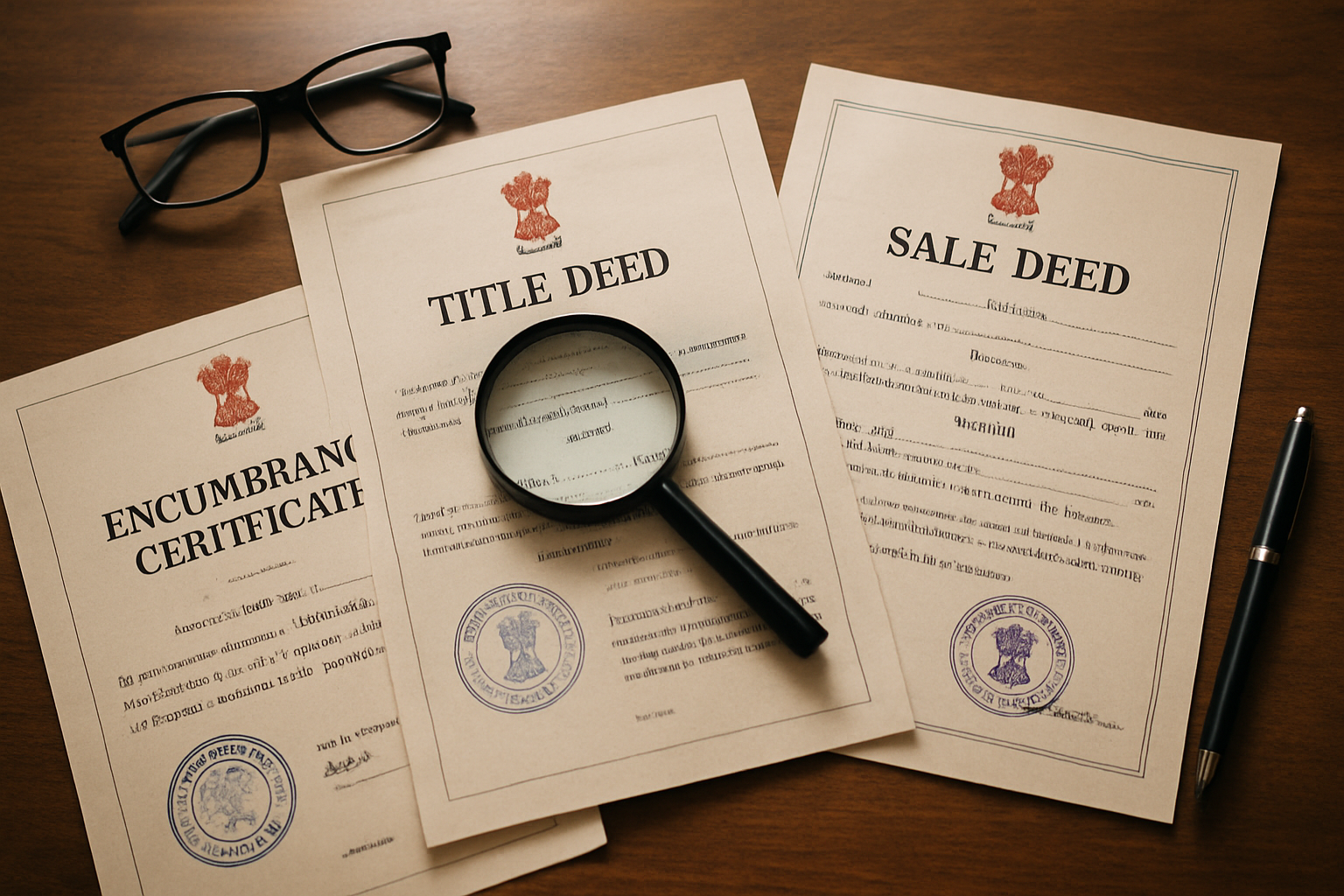
Start With the Title Deed — Everything Else Is Secondary
The title deed proves ownership. No valid title deed means no valid sale. Period. This isn’t one of many important documents. It’s the only document that makes all other documents relevant.
Here’s what most buyers miss — the title deed must show an unbroken chain of ownership. That means every previous owner, every sale, every transfer going back at least 30 years. Some lawyers say 13 years is enough. They’re wrong. In India’s property market, disputes surface decades later. A 30-year search protects you from claims by previous owners or their heirs.
Check the seller’s name on the title deed matches their government ID exactly. Middle name missing? Different spelling? Stop right there. I watched a Bangalore deal collapse in 2025 because the seller’s PAN card said “Kumar” but the deed said “Kumarr.” Small typo. ₹18 lakh legal fee to fix it.
Also verify the property description — survey number, plot number, boundaries, exact measurements. Compare it with the actual site. Developers sometimes show one plot and sell another. A buyer in Pune discovered this after registration. The plot he bought was 200 meters from the one he was shown. Case is still in court three years later.
Encumbrance Certificate — The Document Most Buyers Skip
This is where most mistakes happen. An encumbrance certificate shows all transactions related to the property for a specified period. It tells you if the property is mortgaged, has pending loans, or legal claims against it. Without this, you’re buying blind.
Request an EC for at least 30 years from the sub-registrar’s office. It costs ₹300-500 depending on your state. Takes three days if you apply online. Costs you nothing if you check Freeperty’s property listing verification resources first to understand what you’re looking for.
Here’s the trap — a clear EC doesn’t mean clear title. It only shows registered transactions. Unregistered agreements, family disputes, or oral claims won’t appear. That’s why you need both the EC and a proper title search by a lawyer.
One more thing. If the EC shows frequent transactions — the property changed hands four times in eight years — that’s a red flag. Either there’s a legal issue people discover after buying, or it’s being flipped illegally. Either way, stay away.
Sale Deed of Previous Owner — Not Just the Current One
Most buyers check only the current seller’s sale deed. That’s not enough for property verification guide compliance. You need to see how the current seller acquired the property. Was it purchased? Inherited? Gifted? Each has different legal implications.
If it was inherited, check for a probate order or succession certificate. If multiple heirs exist, all of them must consent to the sale in writing. A property consultant in Chennai once told me about a villa sale that was reversed four years post-purchase because one of five legal heirs never consented. The buyer lost the property and half his money in legal costs.
If it was gifted, verify the gift deed is registered and stamped correctly. Gift deeds are easier to challenge in court than sale deeds. The person who gifted the property or their heirs can claim it was done under coercion. Happens more often than you think, especially with elderly parents.
Purchased properties are cleanest — but only if the previous sale was properly registered and the seller had clear title at that point. This is why the 30-year chain matters. One weak link breaks everything.
Approved Building Plan and Occupancy Certificate
These two documents prove the building is legal. No approved plan means unauthorized construction. No occupancy certificate means the building hasn’t been inspected and cleared for habitation by municipal authorities.
Developers love to say “OC is pending” or “we’ll get it soon.” Don’t believe it. According to India’s real estate regulations, occupation without an OC is illegal. Your bank might refuse a loan. Your property insurance could be void. Worse, the municipal corporation can seal the building.
Check that the approved plan matches what was actually built. Balcony enclosed? Extra floor added? Setback violations? These aren’t small issues. They’re legal violations that can result in demolition orders. I’m not exaggerating. Bangalore’s civic body demolished 23 buildings in 2025 for unapproved alterations.
For plots, verify the layout plan is approved by the development authority. Check if the plot falls under any restricted zone — agricultural land, forest land, wetland, coastal regulation zone. Agricultural land has restrictions on non-agricultural use. Forest land can’t be sold without government clearance. These restrictions don’t always show up in online searches.
Tax Receipts and Utility Bills — The Boring Stuff That Matters
Property tax receipts prove two things. First, the seller has been paying taxes, so there are no outstanding dues you’ll inherit. Second, the name on the tax receipt should match the title deed. If it doesn’t, find out why.
Ask for at least three years of property tax receipts. Paid-up taxes also indicate the seller has been in possession and treating the property as theirs. Long gaps in tax payment can indicate disputes or unclear ownership.
Utility bills — electricity, water, maintenance — serve a similar purpose. They prove the property is connected to civic services and bills are current. But here’s what they really tell you — the seller is actually in possession. Someone paying electricity bills monthly is probably the real owner or occupant, not a fraudster with forged documents.
One more check. Compare the electricity meter number on the bill with the physical meter at the property. Sounds paranoid. But a buyer in Noida discovered the bills he was shown belonged to a different apartment in the same building. The actual apartment had ₹67,000 in unpaid dues.
NOC From Society and Bank Clearance Certificate
If you’re buying an apartment, the No Objection Certificate from the housing society is mandatory. This confirms the seller has no pending dues and the society approves the sale. Some societies have transfer fees — know this upfront.
The society NOC also confirms the seller is the registered member. In some cases, a property is owned by one person but occupied by another on rent or informal arrangement. You don’t want to buy from someone who doesn’t have society records backing their ownership claim.
If the property has an existing home loan, the seller must provide a no-dues certificate from the bank or financial institution. The loan must be fully cleared before registration, or the bank must agree to transfer the loan to you. Never assume this is sorted. Verify it yourself with the bank directly.
A property in Gurgaon was sold with an “understanding” that the buyer would take over the remaining loan. The bank refused the transfer. The seller couldn’t repay. The deal died after six months of back-and-forth, and the buyer lost his booking amount in arbitration.
Get a Property Lawyer — Not Your Friend’s Cousin
Real estate due diligence is not a DIY project. You need a lawyer who specializes in property law in your city. Local matters. Property law varies by state, and local lawyers know the district registrar’s office, the common disputes in that area, and which documents actually get checked versus which ones are just formalities.
Budget ₹15,000 to ₹40,000 for legal verification depending on property value and complexity. That’s not optional. That’s the cost of not losing ₹50 lakhs later. The lawyer will conduct a title search, verify all documents, check for encumbrances, and provide a legal opinion in writing.
Here’s the part nobody tells you — if your lawyer misses something and you suffer a loss, you can sue them for negligence. That’s your safety net. If you skip the lawyer and check documents yourself using some property documents checklist from the internet, you have no recourse when things go wrong. And they do go wrong.
At Freeperty, we see hundreds of property listings every week where sellers have clean documents and some where things are murky. The difference isn’t always visible to a layman. A lawyer spots it in 10 minutes. Pay for that expertise.
Verify Seller’s Identity and Authority to Sell
This sounds obvious but gets overlooked. Check the seller’s identity proof — Aadhaar, PAN, passport. Match the name and photo. If the seller is a company or partnership firm, verify that the person signing has authority to sell on behalf of the entity. Check the board resolution or partnership deed.
If the seller is represented by a power of attorney holder, verify the PoA document is registered, notarized, and gives explicit authority to sell that specific property. General PoAs can be revoked anytime. A specific PoA for sale is safer. Even then, try to involve the actual owner in at least one meeting or the registration process.
We heard of a case in Mumbai where a property was sold using a forged PoA. The real owner was abroad and had no idea. The sale was canceled two years later. The buyer lost money and time. Could have been avoided by one video call with the actual owner.
Also check if the seller is of sound mind and not under any legal disability. Sounds extreme, but sales by minors or persons of unsound mind can be voided. If the seller is elderly, some buyers ask for a brief medical fitness certificate. It’s uncomfortable but protects both sides.
Frequently Asked Questions
What is the most important document to verify before buying property in India?
The title deed is the most critical property document to verify. It proves legal ownership and must show a clear chain of title for at least 30 years. Without a valid and clear title deed, all other documents are irrelevant. Always verify that the seller’s name on the title deed matches their government-issued identity proof exactly, and that the property description matches the actual plot or apartment you’re buying.
How much does property document verification cost in India in 2026?
Professional property document verification through a specialized real estate lawyer typically costs between ₹15,000 and ₹40,000 depending on property value, location, and complexity. An encumbrance certificate costs ₹300-500 from the sub-registrar’s office. Title search fees vary by state. While this seems expensive, it’s significantly cheaper than legal disputes that can cost lakhs and take years to resolve.
Can I buy property without an occupancy certificate?
Legally, no. An occupancy certificate proves the building has been inspected and cleared for habitation by municipal authorities. Banks often refuse home loans for properties without OC. Property insurance may be void. Municipal corporations can seal buildings occupied without proper OC. If a seller claims the OC is “pending,” verify why and get a firm timeline in writing before proceeding.
How do I verify if a property has legal disputes or pending court cases?
Check the encumbrance certificate for registered claims, but understand it won’t show unregistered disputes. Hire a lawyer to search court records in local civil and criminal courts for any cases involving the property or seller. Visit the property and speak with neighbors about known disputes. Check with the local police station if any complaints are registered. Some online legal databases now aggregate court case information by property address or owner name.
What documents should I verify if buying agricultural land?
For agricultural land, verify the 7/12 extract or ROR (Record of Rights) showing ownership and land use classification. Check the NA (non-agricultural) conversion order if you plan non-farming use. Verify there are no restrictions under the Agricultural Land Ceiling Act. Check for any forest land or wetland classifications. Get soil testing reports if available. Verify access to the plot via legal roads, not private land. Agricultural land purchases have additional restrictions in many states, so local legal advice is essential.
Ready to List or Find Property With Complete Document Transparency?
At Freeperty, we believe property document verification shouldn’t feel like navigating a legal maze. That’s why every property listing on our platform includes space for sellers to upload key documents and certifications upfront. Buyers can browse with more confidence. Sellers can stand out by showing they have nothing to hide.
Whether you’re buying your first home, listing a property for sale, or searching for investment plots, Freeperty’s completely free platform connects you with serious buyers and verified sellers across India. No subscription fees. No hidden charges. Just transparent property discovery backed by the right information.
Start your property search or list your property free today at Freeperty.com. Real properties. Real documents. Real transparency.