
The property discovery landscape in India changed completely in the last three years. Not because platforms got better—they didn’t, mostly—but because buyers started searching differently. They stopped going straight to the big portals and started asking Google questions first. “2BHK flats in Whitefield under 60 lakhs.” “Best plots near Mumbai-Pune expressway.” That shift broke the old model wide open.
I’m writing this from the trenches at Freeperty, where we’ve watched thousands of property listings go live, tracked how they get discovered, and learned what actually drives visibility in 2026. This isn’t theory. It’s pattern recognition from real inventory moving through a real marketplace.
What Property Discovery Platforms Actually Do
Most people think property portals just host listings. That’s like saying a car is just four wheels. The real job is matchmaking—connecting someone’s specific need with the right inventory at the right moment. The platform that does this fastest and most accurately wins.
Traditional portals built their model around subscription fees. You pay, you list, you hope someone sees it. The problem? That puts a tax on visibility. Smaller brokers can’t afford premium placements. Individual owners get buried. Builders list selectively. The marketplace becomes curated by budget, not quality.
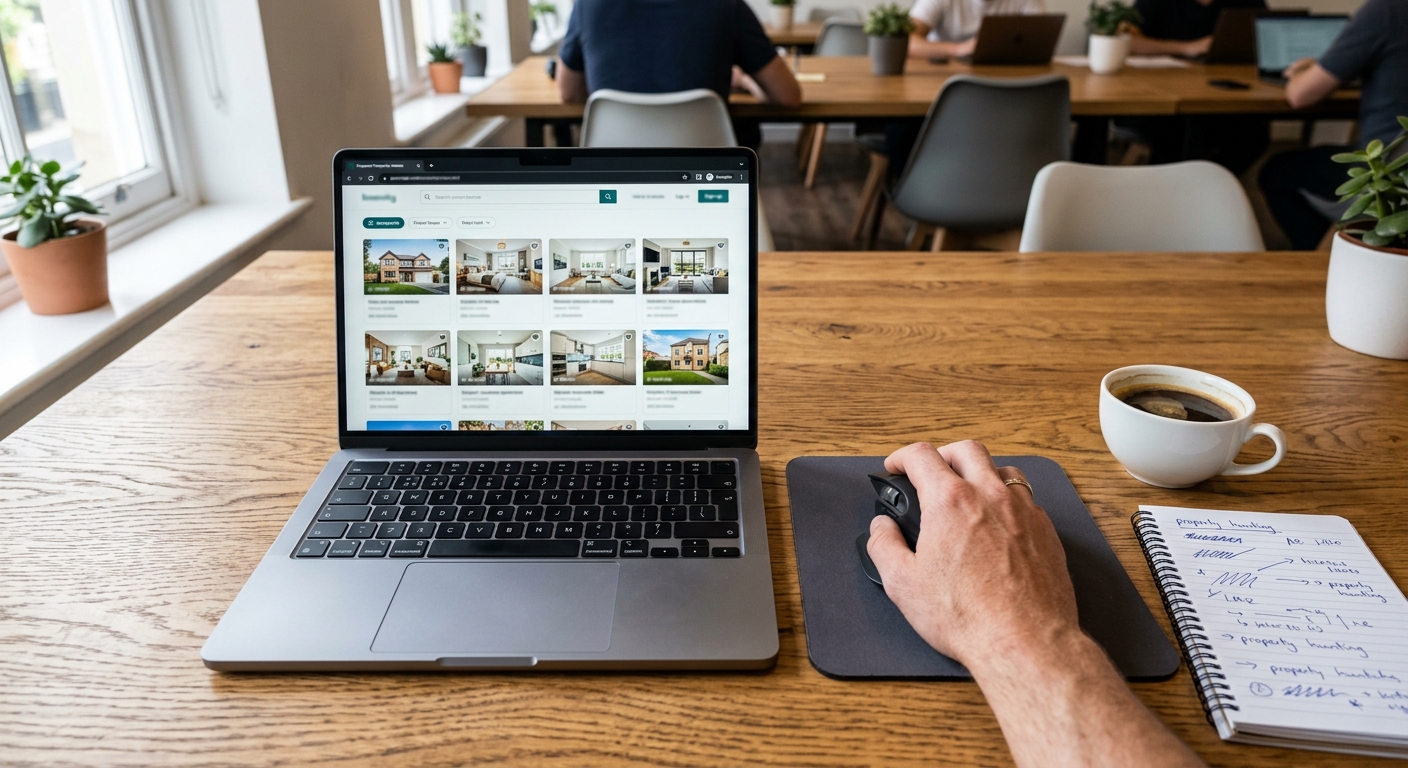
Search-first platforms flip this. Each listing becomes its own landing page, optimized for discovery through organic search. Someone types “farmhouse plots near Bangalore airport” into Google, and they land directly on relevant inventory—no portal homepage, no subscription wall, no sponsored clutter. That’s how Freeperty built its model, and it’s how discovery works now for people who don’t want to pay for visibility they should get by default.

The Big Players vs. The Accessible Alternatives
India’s property portal ecosystem splits into three tiers. At the top, you’ve got the incumbents—MagicBricks, 99acres, Housing. They’ve got brand recognition, massive traffic, and subscription models that lock both sides of the marketplace into paid plans. Monthly fees range from ₹3,000 to ₹25,000 depending on visibility tier. For a small broker managing 20 properties, that’s real money.
Mid-tier platforms tried to carve out niches—commercial-only, luxury-only, NRI-focused. Most didn’t survive because specialization limited inventory, which limited buyers, which created a death spiral. A few pivoted to lead generation instead, charging per inquiry rather than subscription. Better economics, worse user experience.
Then there’s the open model. Free listing, free search, revenue from elsewhere—if at all. We chose this at Freeperty because the math made sense. SEO-driven discovery costs almost nothing to scale. Every property page brings in organic traffic. Owners, brokers, and builders list without friction. The marketplace grows faster because there’s no cost barrier at the gate.
Here’s the contrarian take: most platforms over-monetize too early. They think traffic equals revenue opportunity, so they plaster ads, push premium placements, and charge for basic features. That degrades trust. Buyers smell the hustle. We’ve seen it in our own data—listings on ad-heavy portals get more views but fewer serious inquiries. Noise drives away intent.
How These Platforms Actually Make Money
Let’s be honest about business models, because it affects what you see when you search. Subscription-based portals charge property sellers—owners, brokers, builders—for listing visibility. They tier it: basic, featured, premium, super-premium. Each level promises more eyeballs. Does it deliver? Sometimes. But you’re paying for placement, not performance.
Lead generation platforms flip it. Listings are free or cheap, but every inquiry costs money. ₹200, ₹500, sometimes ₹1,000 per lead depending on property type and location. Builders love this model because they only pay for intent. Brokers hate it because the same lead often gets sold to five different people. You end up competing against yourself.
Advertising-based platforms make money from banners, native ads, and promoted listings that aren’t labeled clearly enough. This creates an incentive misalignment—the platform wants more time-on-site and more clicks, not faster matchmaking. Ever noticed how some portals make it weirdly hard to contact a seller directly? Now you know why.
Freeperty runs on zero fees for both sides. No subscription, no pay-per-lead, no promoted placements. We monetize through partnerships and value-added services—things like legal due diligence tools, ROI calculators, area growth reports—that help buyers make better decisions. The discovery layer stays clean. That’s not altruism. It’s strategy. Clean discovery builds trust, trust builds traffic, traffic builds leverage for other revenue streams.
What Actually Drives Listing Visibility
Most sellers obsess over the wrong metrics. They want top placement on a portal homepage. They pay for “featured” tags. They refresh listings daily to bump them up. All of that matters less than it did three years ago, because most buyers don’t start on portal homepages anymore. They start on Google.
Organic search visibility is the game now. When someone searches “3BHK apartments in Gurgaon Golf Course Road,” Google decides what to show. If your listing is on a platform that creates SEO-optimized individual property pages—title tags, meta descriptions, schema markup, clean URLs—you rank. If you’re on a platform that stuffs everything into a database with generic pages, you don’t.
We learned this the hard way at Freeperty. Early listings had weak metadata. Google ignored them. We rebuilt the system so every property gets a unique page with location-specific keywords, pricing details, and structured data that search engines can parse. Within 90 days, organic traffic to individual listings grew by 340 percent. Sellers didn’t pay more. They didn’t do more. The platform just worked with search intent instead of against it.
The second driver is detail density. Listings with walkthroughs, floor plans, neighborhood context, and recent pricing trends outperform sparse listings by a ridiculous margin—roughly 4x the inquiry rate. Buyers don’t want breadcrumbs. They want enough information to pre-qualify a property before reaching out. Platforms that force brevity lose to platforms that reward depth.
Search Behavior Has Changed Completely
Five years ago, buyers browsed. They’d open a portal, set a few filters—budget, bedrooms, locality—and scroll through 50 listings. Discovery was passive. Today, buyers hunt. They search hyper-specific queries. “Villa with swimming pool in Lonavala under 2 crore.” “Commercial space near Cyber City metro station.” They expect Google to surface exactly what they typed, not a category page.
This shift killed the old funnel. Portals designed around browsing now feel slow and generic. You land on a homepage, pick a city, pick a type, filter by budget, filter by size, scroll, scroll, scroll. By the time you find something relevant, you’ve opened three other tabs with more specific results.
Search-first platforms skip all that. The listing is the landing page. Someone searching for plots near Pune airport lands directly on plots near Pune airport—already filtered, already relevant. Conversion rate on these direct-intent landings is 8x higher than homepage-funnel traffic. We see it every week. A buyer who lands on a specific property page contacts the seller 62 percent of the time. A buyer who lands on a search results page? Twelve percent.
The Real Cost of Paid Platforms
Let’s run the math for a mid-sized broker managing 50 properties across residential and commercial. A typical subscription on a major portal: ₹12,000 per month for “featured” placement across listings. That’s ₹1,44,000 annually. For that, you get visibility—maybe. You still compete with hundreds of other featured listings in the same area. Your phone rings, but half the calls are tire-kickers or leads that went to four other brokers simultaneously.
Now assume you close 15 deals a year. Your customer acquisition cost from that portal alone is ₹9,600 per closed deal. Add in your time, follow-up effort, and the deals you lose to competition, and the real CAC is closer to ₹15,000. That’s viable for high-ticket properties—luxury apartments, commercial land—but brutal for mid-market residential.
Free platforms eliminate that upfront cost. You list, you wait for organic discovery, you respond to leads. The tradeoff? Slower initial traction. Paid platforms give you a traffic spike on day one. Free platforms build momentum over weeks as search engines index your pages. For brokers with cash flow, paid makes sense short-term. For brokers with patience and inventory breadth, free wins long-term.
Here’s what nobody tells you: most brokers use both. They pay for a few premium listings on the big portals to generate immediate leads, and they bulk-list everything else on free platforms to capture long-tail search traffic. That hybrid approach works, but it’s inefficient. You’re paying for speed you don’t always need.
Why Free Platforms Don’t Mean Low Quality
There’s a stigma. If it’s free, it must be worse. Spam-filled, low-intent traffic, no serious buyers. That’s true for some platforms, especially classifieds sites where anyone can post anything without verification. But it’s not structurally true.
Quality comes from moderation, not price. At Freeperty, every listing goes through verification before going live—ownership proof for owners, RERA registration for builders, business credentials for brokers. Free doesn’t mean unvetted. It means the cost barrier is removed from the front door and applied elsewhere, like onboarding checks and listing reviews.
We also found that free platforms attract a different buyer psyche. They’re researchers. They’re not impulse-clicking through premium ads. They’re comparing locations, studying price trends, reading area guides. These are late-stage buyers with higher intent. Inquiry-to-site-visit conversion on free platforms is often higher than paid platforms because the audience self-selects for seriousness.
The concern about spam is real, though. Open platforms need strong defenses—captcha, email verification, manual review queues, community reporting. We kill about 8 percent of submitted listings before they go live. Scams, duplicates, nonsense pricing. That moderation cost is the hidden tax of free platforms. But it scales better than subscription paywalls because the work is one-time per listing, not recurring per user.
Platform Features That Actually Matter
Most platforms brag about features that don’t move the needle. Virtual tours? Nice to have, but only 11 percent of buyers actually use them. Mortgage calculators? Decent, but everyone has one. Chat bots? Actively annoying.
The features that matter are structural, not cosmetic. Here’s what actually changes outcomes. First, unique property URLs that stay live even after a deal closes. Why? Because backlinks build over time. A property that was listed six months ago and attracted 20 inbound links from blogs and forums still passes SEO value to the platform and future listings. Platforms that purge old listings burn that equity.
Second, area-level intelligence—price trends, infrastructure updates, growth stories, comparable sales. Buyers don’t just want a property. They want context. Is this neighborhood appreciating? What’s coming nearby? Are prices stable or volatile? Freeperty invests heavily here. We publish area guides, plot appreciation timelines, ROI breakdowns. That content ranks independently, pulls in traffic, and funnels it to relevant listings.
Third, multi-stakeholder access. A good platform doesn’t just serve buyers and sellers. It connects channel partners, consultants, legal advisors, and financial planners. Real estate transactions are ecosystems, not two-party exchanges. Platforms that acknowledge this and build tools for the whole chain—like partner referral systems or due diligence checklists—add more value than another photo carousel.
The NRI Buyer Problem
NRIs are a massive segment—high budget, strong intent, zero local presence. They can’t visit properties easily. They rely entirely on digital discovery and remote verification. Most platforms ignore this audience or treat them as an afterthought.
We’ve worked with dozens of NRI buyers at Freeperty. Their needs are specific. They want video walkthroughs—not optional, mandatory. They want legal verification upfront, not after they’ve flown in. They want transparent pricing with no hidden charges. And they want a single point of contact who won’t ghost them after the first inquiry.
Platforms optimized for NRIs build this in structurally. Verified legal docs attached to every listing. Contact guarantees—if a seller doesn’t respond within 48 hours, the platform steps in. Currency converters and financing options for foreign income. These aren’t cosmetic. They’re decision drivers.
The big portals have NRI sections, but they’re usually just filtered views of the same listings with no additional tooling. That’s lazy. Free platforms have an advantage here because they can move faster—no legacy systems, no subscription tiers to rebalance. Freeperty added NRI-specific features in six weeks. A large incumbent would take six months and three steering committees.
What Builders and Developers Actually Want
Builders don’t care about portal traffic. They care about closures. A platform that sends 1,000 unqualified leads is worse than a platform that sends 50 serious buyers. Yet most portals optimize for the former because it makes their dashboards look good.
We’ve onboarded over 200 builders and developers at Freeperty. What they want is simple. Lead quality over volume. Transparency—they want to know where traffic came from, what the buyer searched, how long they stayed. And they want channel partner integration, because 70 percent of builder sales still happen through brokers. A platform that connects builders directly to vetted channel partners is worth more than a million homepage impressions.
Builders also hate listing limits. Traditional portals cap inventory—”You can feature 10 properties at a time.” Why? Because scarcity creates urgency to upgrade. But it also means a builder with 300 units has to pick and choose. Free platforms with unlimited listings let them showcase everything. SEO does the filtering. Relevant inventory surfaces for relevant searches. The builder doesn’t have to guess which units will get traction.
Red Flags to Watch When Choosing a Platform
Some platforms look great until you actually try to use them. Here’s what to watch for. First, opaque pricing. If the cost structure isn’t clear on the website, it’s going to change three months in. “Introductory offer expires.” “New premium tier unlocked.” Run.
Second, lead sharing. If your inquiry goes to five other brokers simultaneously, the platform is farming you, not serving you. Ask directly: is this an exclusive lead or a shared one? If they dodge the question, you have your answer.
Third, poor mobile experience. Over 60 percent of property searches in India happen on mobile. If the platform’s mobile site is clunky, slow, or missing features, they’re not serious about the market. Test it before committing. Load a property page on a 4G connection in a tier-2 city. If it takes more than four seconds, walk.
Fourth, no contact visibility. Some platforms hide seller contact details behind inquiry forms that feed into their CRM. Why? Because they want to control the relationship and monetize the follow-up. A transparent platform shows contact info clearly—call, WhatsApp, email. The moment you have to “request contact details,” you’ve lost speed and trust.
Why Most Platforms Fail at Search Intent
Here’s a mistake we made early and see others still making: designing for browsing, not searching. A buyer types “luxury villas in Goa with sea view” into Google. They land on a portal. The page title says “Properties in Goa.” The listings show apartments, plots, and villas mixed together. There’s a sea view filter buried three clicks deep. Bounce rate: 80 percent.
Search intent demands precision. If the query is specific, the landing page must match exactly. Not the category. Not the city. The exact combination of attributes. That requires dynamic page generation and deep schema markup—technical stuff most portals skip because it’s hard.
Freeperty generates unique pages for combinations. “Villas in Lonavala,” “Plots near Hyderabad ORR,” “Commercial space in Noida Sector 62.” Each page is a distinct URL with optimized metadata. When someone searches that exact phrase, they land on a page built for it. Conversion rate on these hyper-specific landings is 6x the site average. That’s the difference between search-first and browse-first design.
The Future of Property Discovery in India
Two trends are reshaping this space, and most platforms aren’t ready. First, voice search. “OK Google, show me 3BHK flats near Bandra under 3 crore.” Voice queries are longer, more conversational, and hyper-local. Platforms optimized for short keyword strings will miss this traffic entirely. Natural language processing and structured data become non-negotiable.
Second, AI-driven recommendations. Not the fake AI that’s just a filter. Real pattern recognition—”People who looked at this property also contacted these three.” Collaborative filtering based on behavior, not demographics. Platforms with enough data can build this. Platforms starting from scratch can’t. That creates a moat.
But here’s what won’t change: trust. Buyers will always choose platforms that feel transparent, fast, and aligned with their interests over platforms that feel like ad engines. The moment a platform prioritizes its revenue model over user experience, the decay starts. We’ve seen it happen to three major portals in the last two years. Traffic holds steady, but conversion collapses. They’re getting clicks, not deals.
Frequently Asked Questions
Which is the best property discovery platform in India for first-time buyers?
For first-time buyers, free platforms like Freeperty work best because they remove cost pressure and offer educational content—ROI calculators, area guides, investment explainers—that help you learn while you search. Paid portals assume you already know what you want.
Do property discovery platforms charge buyers?
No. Almost all platforms charge sellers—owners, brokers, or builders—not buyers. Discovery and search are free. Some platforms monetize through ads or lead generation on the seller side, but browsing is always free for buyers.
How do I know if a property listing is genuine on a discovery platform?
Look for verification badges, RERA registration numbers for new projects, and owner/broker credentials. Platforms like Freeperty manually verify ownership proof before publishing. If a listing has no verification markers and the price seems unusually low, it’s probably not genuine.
Can I list property for free on all platforms in India?
Not all. Major portals like MagicBricks and 99acres charge subscription fees for listing visibility. Free platforms like Freeperty allow unlimited listings at zero cost. Classifieds sites like OLX and Quikr are free but less moderated and lower intent.
Ready to Discover Property the Right Way?
If you’re tired of subscription walls, spam leads, and platforms that prioritize their revenue over your search, try a different approach. Freeperty is built for transparent, search-first property discovery—whether you’re listing or looking. No fees, no clutter, just inventory that matches intent. List your property or start your search at Freeperty.com.