
How to Get Maximum Visibility for Your Property Listing Without Paying Fees
Learn practical, zero-cost strategies to boost your free property listing visibility using SEO, multi-platform discovery, and smart content—tested in India’s real estate marketplace.
Last month, a channel partner from Bangalore uploaded his client’s villa listing to three different platforms. Two were subscription-based portals where the property sat behind login walls and search filters that prioritized premium accounts. The third was Freeperty. Within eight days, the villa started showing up on Google searches for “3BHK villa near Electronic City.” The owner called him, confused—she’d gotten three direct inquiries already, all from organic search. None from the paid platforms.
That’s not luck. That’s how search-first property discovery works when you don’t bury your inventory behind paywalls.
Most property owners and brokers assume that getting visibility means paying for it—boosted listings, featured slots, subscription tiers. But here’s what we’ve seen working with thousands of listings across India: visibility isn’t about who pays the most. It’s about who makes their listing discoverable where actual buyers are already searching. And most of the time, that’s Google. Not a closed marketplace dashboard.
This guide walks you through exactly how to maximize your free property listing visibility without spending a rupee on ads or subscriptions. These aren’t theoretical tips. They’re the exact strategies that consistently get our listings—from individual plot owners to mid-sized developers—found, clicked, and contacted.
Why Free Listings Often Get Better Organic Reach Than Paid Ones
Paid listings on traditional portals do one thing well: they sit at the top of that portal’s internal search results. But here’s the problem—most buyers don’t start their property search inside a portal. They start on Google. They type “2BHK flat for sale in Pune” or “farmland near Nashik” and expect results.
When your listing lives behind a subscription wall or requires a login to view full details, Google can’t index it properly. Search engines can’t surface content they can’t crawl. So your property—no matter how good the photos or how competitive the price—stays invisible to the largest discovery channel on the internet.
Free platforms built on open, search-indexed architecture do the opposite. Every listing becomes its own landing page. Each property gets a unique URL with a clean title, location data, price, images, and description—all of it crawlable. Google treats it like any other webpage, which means it can rank for long-tail searches that paid portals will never touch.
We’ve watched first-time sellers with zero marketing budget outperform established brokers on visibility, simply because their listing was structured to be found. A 1200 sq ft plot in Karjat listed by an individual owner got 47 organic views in the first two weeks—not from portal traffic, but from people searching “plots under 20 lakhs near Karjat.” The listing wasn’t boosted. It was just discoverable.
That’s the shift. Paid visibility gets you portal traffic. SEO-optimized free listings get you search traffic. One is rented. The other compounds over time.
Make Your Listing Title Work Like a Search Query
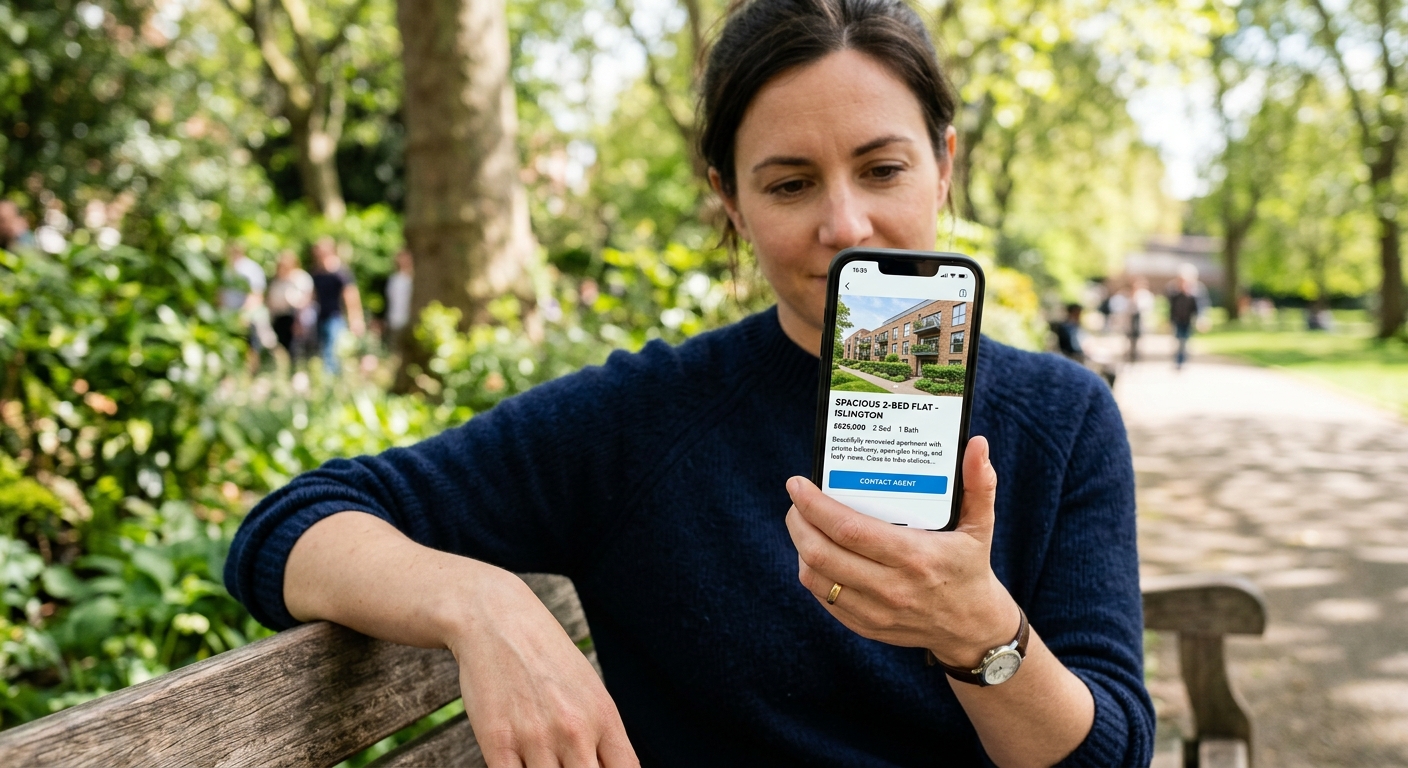
Your listing title isn’t a creative writing exercise. It’s the single biggest factor in whether someone clicks your property or scrolls past it. Most sellers get this wrong by trying to sound appealing instead of sounding searchable.
Bad title: “Beautiful Home in Great Location”
Good title: “3BHK Independent House for Sale in Baner, Pune – 1800 Sq Ft”
The second one matches how people actually search. They don’t type “beautiful home.” They type property type, number of bedrooms, transaction type, and location. If your title doesn’t include those elements, you’re invisible to intent-driven searches.
Here’s the formula we tell every seller on Freeperty: lead with the property type and configuration, follow with the transaction type, then the specific locality and city. If size or a standout feature matters for that property category—like square footage for plots or carpet area for flats—include it. Skip adjectives. They don’t help search engines understand relevance.
Example breakdowns:
- “2BHK Flat for Rent in Whitefield, Bangalore – Ready to Move”
- “Agricultural Land for Sale near Alibaug – 5 Acres, Beach-Facing”
- “Commercial Shop for Lease in Connaught Place, Delhi – 800 Sq Ft”
Notice what’s missing—words like “premium,” “luxury,” “beautiful,” “spacious.” Those might work in ad copy, but they do nothing for organic discovery. A buyer searching for “commercial shop Connaught Place” will find the third example. A buyer searching for “luxury property Delhi” probably won’t—and even if they did, that’s a vague, low-intent query that rarely converts.
Your title is your primary keyword. Treat it like the anchor of your entire listing’s findability. Get it right, and half the SEO work is done.
Write Descriptions That Answer the Questions Buyers Actually Ask
Most property descriptions read like brochures. Flowery language, vague claims, zero specifics. “Nestled in a serene locality with world-class amenities and excellent connectivity.” That tells a search engine nothing. It also tells a buyer nothing.
Descriptions need to do two things: give Google the semantic context to understand what you’re selling, and give the buyer the information they’d ask for if they were standing in front of you. Answer those questions in the first 150 words, and you’ll improve both your search relevance and your conversion rate.
Start with the basics—property type, exact location with nearby landmarks, size, price, possession status, and a one-sentence summary of who this property suits. Then get specific. What’s the plot dimension? What’s included in the sale? What’s the distance to the nearest highway or metro? Is there a title deed? What’s the property tax status?
Here’s a real example from a plot listing that consistently ranks for local searches:
“1200 sq ft residential plot for sale in Sector 21, Kharghar, Navi Mumbai. Clear title, NA plot, ready for construction. Located 1.2 km from Kharghar railway station and 800 meters from the Kharghar node. Ideal for building an independent house or small villa. Priced at ₹42 lakhs, negotiable. Possession immediate.”
That’s 60 words. It answers location, size, legal status, proximity, use case, price, and timeline. A buyer reading that knows whether to call. Google reading that knows whether to rank it for “NA plot Kharghar” or “residential plot near Kharghar station.”
Contrast that with: “Prime plot in upcoming area with great investment potential and peaceful surroundings.”
One gets found. The other doesn’t.
If you’re listing a flat, mention the floor number, lift availability, furnishing status, society name, and maintenance cost. If it’s commercial space, include frontage, visibility, parking, and permitted usage. For agricultural land, specify soil type, water source, access road width, and distance from the nearest town. These aren’t nice-to-haves. They’re the queries people search and the data that makes your listing semantically rich.
Upload High-Quality Images That Show What Matters
Blurry photos kill listing performance. Not because buyers are picky—though they are—but because image quality signals seriousness. A listing with three low-resolution phone photos taken at odd angles doesn’t just look bad. It looks untrustworthy.
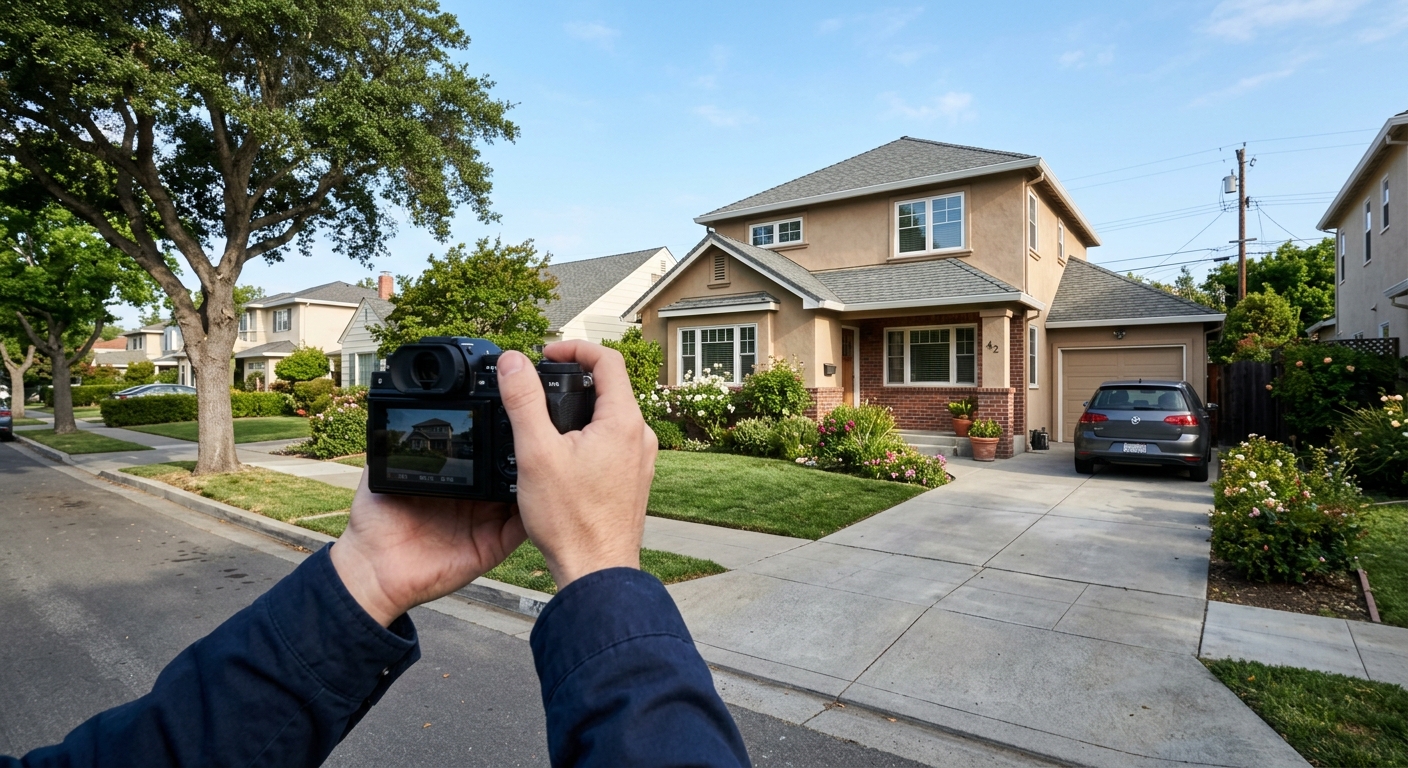
You don’t need a professional photographer. You need natural light, a steady hand, and a plan for what to shoot. For residential properties, capture the main entrance, living area, each bedroom, kitchen, bathrooms, and any outdoor space. For plots, shoot the full boundary from multiple angles, nearby roads, and any visible landmarks. For commercial properties, show the street-facing view, entrance, main floor area, and parking.
Take at least 8 to 12 images. More is better, as long as they’re distinct. Google Images is a discovery channel—buyers browse property photos before they even read the listing. If your images are good, they’ll show up in visual search results for that area or property type.
One trick we recommend: include at least one wide-angle shot that shows spatial context. Buyers want to see how rooms connect, how much space there is between the property and the road, or how the plot sits relative to neighboring ones. Close-ups are fine for details, but context shots build trust.
And here’s something most sellers miss—name your image files before you upload them. Instead of “IMG_4735.jpg,” rename it to “3bhk-flat-baner-pune-living-room.jpg.” Google reads file names. It’s a small SEO boost, but it’s free and it takes 30 seconds.
List on Platforms That Let Search Engines Index Your Property
This is where most sellers go wrong. They upload their listing to a portal, pay for a subscription or a featured slot, and assume that’s enough. Then they wonder why their property doesn’t show up on Google.
The issue isn’t the portal. It’s whether that portal allows its listings to be crawled and indexed by search engines. Many subscription-based platforms deliberately keep listings behind login walls or use robots.txt rules that block Google from accessing property pages. That’s a business decision—they want buyers to stay inside their ecosystem and see ads. But it’s bad for sellers who want organic visibility.
Freeperty works differently. Every listing gets a public, indexable URL the moment it’s published. No login required to view. No robots.txt blocking. No paywall. That means Google, Bing, and other search engines can crawl the page, index the content, and rank it for relevant queries. Your listing becomes a discoverable asset, not just a database entry.
If you’re listing on multiple platforms—and you should—check whether the listing is actually visible on Google. Copy the property address or a unique phrase from your description, put it in quotes, and search for it. If your listing doesn’t show up within the first few pages, it’s not indexed. That platform isn’t helping your organic reach.
Some portals also aggregate listings into map-based searches or area pages that do rank well. That’s useful, but only if your specific listing is linked from those pages with its own crawlable URL. If it’s just a pin on a map with details hidden behind a modal or login prompt, you’re still invisible.
We’ve seen brokers move their entire inventory from paid portals to Freeperty and get more inquiries within three weeks—not because Freeperty sends more internal traffic, but because their listings started appearing in Google search results for the first time.
Use Location-Specific Keywords Throughout Your Listing
Most sellers mention the city and maybe the neighborhood. That’s not enough. Buyers search with hyper-local intent—they type “flat near Hinjewadi IT park” or “villa in Mahabaleshwar hill station area,” not just “property in Pune” or “property in Maharashtra.”
Your listing should include the main locality, nearby sub-areas, landmarks, metro stations, highways, schools, hospitals, malls—anything that someone might use as a reference point when searching. These aren’t just helpful for buyers. They’re semantic signals that help Google understand the geographic relevance of your listing.
For example, if you’re listing a flat in Whitefield, Bangalore, don’t just say “Whitefield.” Mention nearby areas like ITPL, Marathahalli, Varthur, or specific projects like Brigade Metropolis or Prestige Shantiniketan if they’re close. Reference the Whitefield railway station, the Outer Ring Road, or major employers like SAP or Dell if they’re within a few kilometers. Each mention increases the number of local search queries your listing can match.
We’ve tested this with plot listings in semi-urban areas. A listing that mentioned only “Karjat” got minimal search visibility. The same listing edited to include “Karjat near Imagica,” “Karjat railway station,” and “Karjat-Khopoli highway” started ranking for a dozen more long-tail searches. Traffic doubled within a month.
Don’t keyword-stuff. Use these terms naturally in your description, especially in sentences that describe accessibility or proximity. “Located 10 minutes from Baner-Pashan link road” is better than “Baner. Pashan. Link road.” Write for humans first, but include the geographic vocabulary that buyers actually use.
Update Your Listing Regularly to Keep It Active
Search engines prioritize fresh content. A listing that hasn’t been touched in six months signals to Google that it’s either outdated or abandoned. Even if the property is still available, it gets pushed down in rankings in favor of newer listings.
This is easy to fix. Log in every two weeks and make a small update—revise the price if there’s been a negotiation, add a line about a new nearby infrastructure project, update the possession timeline if it’s changed, or upload an additional photo. Even minor edits refresh the “last updated” timestamp and signal to search engines that the listing is still active.
On Freeperty, we’ve seen properties that are updated regularly get 30 to 40 percent more organic impressions than identical listings that are left static. It’s not about gaming the algorithm. It’s about reflecting reality—property availability and context do change, and your listing should reflect that.
If you’re a broker managing multiple listings, set a calendar reminder to review and update your portfolio every two weeks. It’s a 10-minute task that keeps your entire inventory visible.
Add a Call to Action and Make Contact Easy
You’d be surprised how many listings forget to tell the buyer what to do next. They describe the property, upload photos, and then just… stop. No phone number. No clear instruction. No sense of urgency.
Every listing should end with a simple, direct call to action. “Contact us for site visits” or “Call for pricing and availability” or “Schedule a viewing today.” It sounds obvious, but clarity drives action. If a buyer has to hunt for your contact information or isn’t sure whether the property is still available, they’ll move on.
Include your phone number in the description text itself, not just in a contact form field. Make sure your WhatsApp number is active and listed—most buyers in India prefer WhatsApp for first contact. If you’re a broker, include your name and the agency name. If you’re an owner, mention that explicitly—many buyers prefer dealing directly with owners.
Response time matters. We’ve tracked inquiry patterns on Freeperty, and listings where the seller responds within two hours get significantly higher conversion rates than those where the response takes a day or more. Buyers are comparing multiple properties. Speed wins.
Leverage Area Guides and Location Intelligence Content
One overlooked strategy: if the platform publishes area guides, investment insights, or infrastructure updates, your listing benefits by association. When buyers search for information about a locality—”is Hinjewadi a good area to buy property” or “upcoming metro stations near Whitefield”—they often land on editorial content first, then browse listings in that area.
Freeperty publishes location-focused content for exactly this reason. A buyer reading about growth potential in Karjat or price trends in Baner is already in the consideration phase. If your listing is in that area and indexed on the platform, you’re one click away from a potential inquiry.
This is passive visibility—you’re not actively promoting, but your listing is discoverable through content-driven search traffic. It’s one of the reasons SEO-focused platforms outperform closed marketplaces over time. Your property isn’t just competing with other listings. It’s benefiting from the organic authority of the entire platform.
Track What’s Working and Adjust
Most sellers upload a listing and then forget about it. That’s fine if it’s working. But if you’re not getting views or inquiries, you need to figure out why.
Check your listing analytics if the platform provides them. How many impressions is the listing getting? What’s the click-through rate? Are people viewing your photos or bouncing immediately? If impressions are low, it’s a discoverability issue—your title or keywords aren’t matching searches. If clicks are low but impressions are decent, it’s a relevance or trust issue—your title or first image isn’t compelling. If clicks are high but inquiries are low, your description or contact method isn’t clear.
If the platform doesn’t provide analytics, use external tools. Search for your own listing on Google using relevant keywords and see where it ranks. Use Google Search Console if you have access—some open platforms let you verify your listing as a webpage. Track which queries are driving traffic and optimize your listing around those terms.
We’ve worked with brokers who treat their listings like landing pages—they test different titles, rewrite descriptions, swap out the lead photo, and measure what changes move the needle. That level of iteration isn’t necessary for everyone, but if you’re serious about maximizing visibility, treating your listing like a marketing asset makes sense.
Common Mistakes That Kill Free Listing Visibility
Three mistakes show up over and over. First—generic titles. “Property for sale” or “House available” tells no one anything. It’s invisible to search and meaningless to buyers. Fix the title first.
Second—incomplete information. If you don’t include the price, size, or possession timeline, buyers assume it’s either too expensive or not serious. Fill in every field the platform gives you. Empty fields hurt credibility and reduce search relevance.
Third—ignoring mobile. Over 70 percent of property searches in India happen on mobile devices. If your photos are too large and load slowly, or your description is a wall of text with no paragraph breaks, mobile users will bounce. Keep paragraphs short. Use bullet points for specs. Test how your listing looks on a phone before you publish it.
We’ve seen sellers fix just these three things and double their inquiry rate within a week. None of it requires technical skill. It just requires treating your listing like the first impression it is.
Why Freeperty’s Open Marketplace Model Works for Organic Reach
Most property platforms treat listings as inventory they control. They decide who sees what, when, and in what order—usually based on who pays for premium placement. That’s fine for generating platform revenue, but it’s terrible for seller visibility.
Freeperty flips that model. Every listing is public, indexable, and treated as a standalone page from day one. No paywalls. No subscription tiers. No featured slots that push free listings into oblivion. The result is a marketplace where organic search does the heavy lifting, not paid promotion.
This isn’t idealism. It’s architecture. When you list on Freeperty, your property gets a clean URL structure, metadata optimized for search, schema markup for rich results, and inclusion in sitemaps that search engines crawl daily. None of that requires you to do anything beyond filling out the listing form. The platform handles the SEO infrastructure. You just provide the content.
That’s why individual property owners and small brokers often outperform large developers on our platform. It’s not about budget. It’s about who provides better, more specific information in a format that search engines can understand and rank.
In our first year, we saw listings from channel partners with zero digital marketing experience start ranking on Google’s first page for local property searches. They didn’t hire agencies. They didn’t run ads. They just listed their inventory on a platform designed to be discovered.
Frequently Asked Questions
How long does it take for a free property listing to show up on Google?
It depends on how well-structured the listing is and how often the platform is crawled by search engines. On Freeperty, most listings get indexed within 48 to 72 hours. Ranking for competitive keywords can take two to four weeks, but long-tail searches—like “3BHK flat near XYZ landmark”—often start showing results within the first week. Regular updates and good content speed this up.
Can I list the same property on multiple platforms to increase visibility?
Yes, and you should. Listing on multiple platforms increases your reach as long as each platform allows search engine indexing. Just make sure the content isn’t identical—vary your title and description slightly to avoid duplicate content issues. Google will still index both, but unique content on each platform performs better.
Do free listings rank as well as paid ones on Google?
Google doesn’t care whether you paid a portal for placement. It cares about relevance, content quality, page structure, and user engagement. A well-optimized free listing with clear information, good photos, and regular updates will often outrank a poorly written paid listing. The key is making your listing discoverable and valuable, not how much you spent to post it.
What should I do if my listing isn’t getting any inquiries?
Start by checking if it’s actually visible. Search for it on Google using your property type and location. If it doesn’t show up, the listing might not be indexed, or your keywords don’t match how people search. If it is visible but not getting clicks, revise your title to be more specific and make sure your first photo is high quality. If you’re getting views but no inquiries, clarify your contact information and price—vague listings don’t convert.
Start Listing Smarter, Not Louder
You don’t need a marketing budget to get your property in front of serious buyers. You need a platform that treats your listing as a searchable asset, a title and description that match how people actually search, good photos that build trust, and a willingness to update and improve over time.
Freeperty was built for exactly this—zero-cost listing, full search visibility, and an open marketplace where your property competes on relevance, not ad spend. Whether you’re an individual owner selling your first plot or a broker managing 50 listings, the same rules apply: make it findable, make it clear, and make it easy to contact you.
If you’ve been sitting on a property waiting for the right time to list it, or if you’ve been frustrated with paid platforms that deliver more invoices than inquiries, try a different approach. List it where buyers are already searching—on platforms that let Google do the discovery work for you.
Visit Freeperty today, create your free listing, and see what happens when visibility isn’t locked behind a paywall. No subscriptions. No hidden fees. Just your property, fully discoverable, exactly where buyers are looking.