
Three months ago, Rajesh left his corporate sales job in Pune. No backup plan. Just a hunch that helping people find homes would pay better than selling enterprise software. Today he’s clearing ₹1.8 lakh a month as a property agent. But week one? He made exactly zero. Week two wasn’t much better.
Here’s what changed: he stopped thinking like an employee and started thinking like a real estate broker.
If you’re wondering how to become a property dealer in India, you’re probably asking the wrong question. The paperwork part is simple. The business part — that’s where most people stall. This guide walks you through both, because getting a license without understanding the business is like buying a car without learning to drive.
What Does a Real Estate Broker Actually Do in 2026?
Let’s clear this up first. A broker isn’t just someone who shows properties. That’s what people think it is. It’s actually matchmaking backed by market intelligence.
You’re connecting buyers with sellers. Renters with landlords. Investors with opportunities. Sometimes you’re doing site visits. Sometimes you’re on the phone explaining stamp duty calculations. Other times you’re negotiating a deal over WhatsApp at 11 PM because the buyer just got cold feet.
Most brokers in India work independently or as channel partners with builders. Some join established firms. Others build teams. The beauty of this career is that you can start alone with zero capital and scale as you learn. Freeperty makes this easier in 2026 than it’s ever been — you can list properties for free, build your inventory, and let search traffic find you instead of chasing every lead manually.
The work is flexible. The income is uncapped. The rejection is constant until it isn’t.
Do You Actually Need a License to Become a Real Estate Broker?
Technically, no. Practically, yes — if you want to operate without legal risk.
India introduced the Real Estate Regulatory Authority (RERA) in 2016. Under RERA, anyone who facilitates property transactions as an agent or broker must register with their state’s RERA authority. The rules vary slightly by state, but the framework is consistent. You need registration if you’re brokering properties that fall under RERA — which includes most residential and commercial projects.
Here’s what most new agents miss: RERA registration isn’t just a formality. It’s a trust signal. Buyers and sellers are more cautious now. They ask for your registration number. They check if you’re listed on the state RERA website. Operating without it puts you at a disadvantage even if you’re technically not violating the law in every transaction.
Getting registered is not complicated. It takes 2-4 weeks depending on your state. You’ll need basic KYCs, a security deposit (usually ₹10,000 to ₹25,000), and proof of address for your business. Some states also require you to pass a basic exam or attend a short training program. Maharashtra, Karnataka, Telangana, and Delhi have streamlined the process significantly by 2026.
The Real Barrier Isn’t the License — It’s the First 90 Days
Rajesh’s story isn’t unique. Most people who try to become a property agent quit before month three. Not because they can’t get clients. Because they can’t handle the silence.
You make calls. Nobody answers. You send messages. Left on read. You visit a site. The seller ghosts you after you’ve spent an hour understanding their property. This is normal. It doesn’t mean you’re bad at it. It means you haven’t built momentum yet.
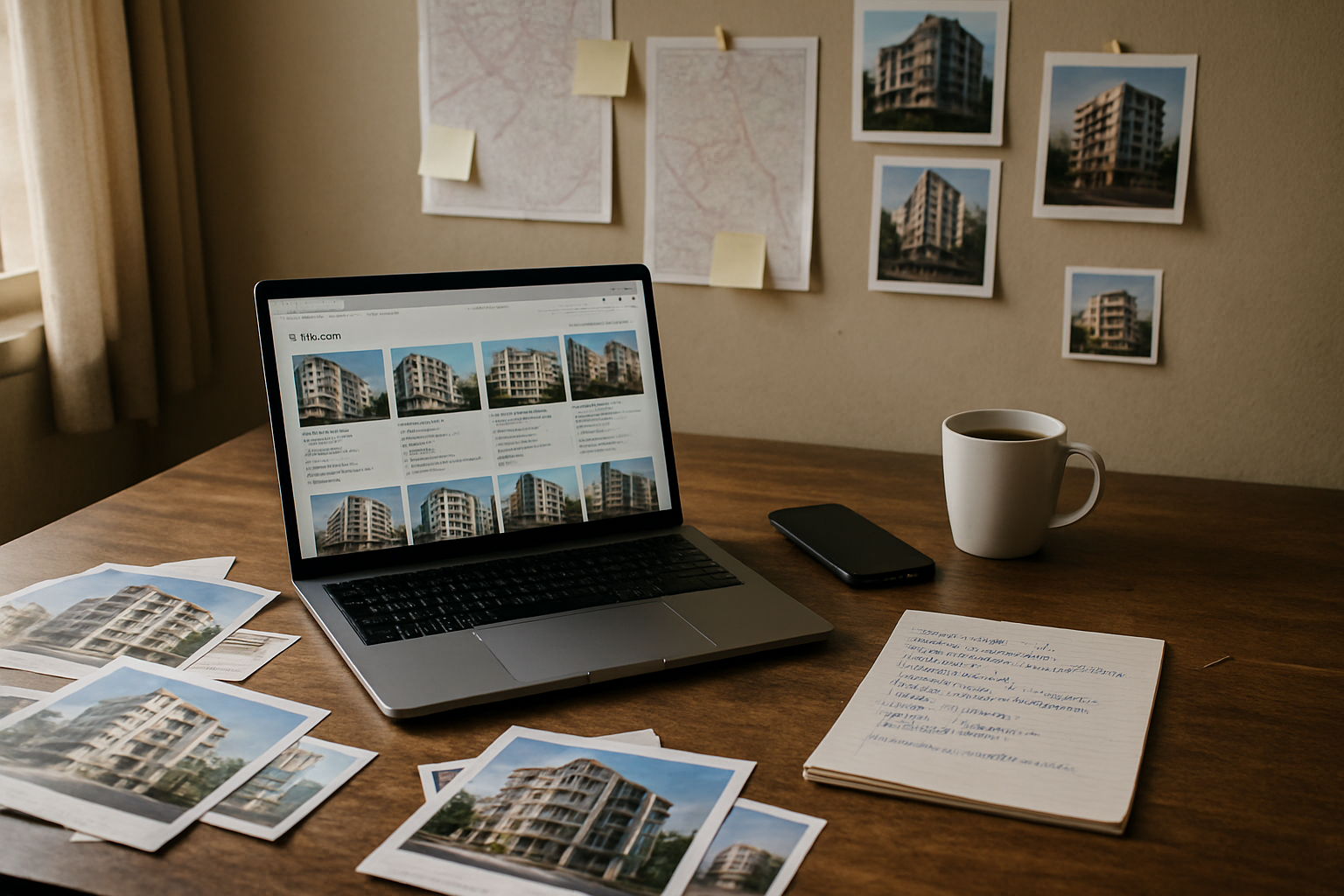
Here’s what worked for Rajesh and dozens of others we’ve seen start from scratch: he picked one area in Pune — Hinjewadi — and became obsessive about it. Not the whole city. One locality. He listed every available property he could find on Freeperty, walked the neighborhoods, spoke to security guards, tracked which societies had rental demand, noted which properties had been sitting unsold for months.
Within six weeks, when someone asked him about Hinjewadi, he knew more than agents who’d worked there for years. That specificity is what converts strangers into clients. People don’t hire generalists. They hire specialists who make them feel safe.
How to Build Your Property Inventory Without Spending on Leads
This is where most new brokers burn money. They buy leads from portals. Those leads are shared with 15 other agents. Conversion rate is under 2%. It feels like progress because you’re busy. It’s not progress.
Instead, build your own inventory. Visit every society in your chosen area. Talk to security guards and society managers — they know which owners are planning to sell or rent. Drop pamphlets in mailboxes. Join local WhatsApp groups. List everything you find on Freeperty’s free listing platform.
Each listing becomes a searchable page. Someone Googling “3 BHK for sale in Hinjewadi Phase 2” can land directly on your listing. That’s organic discovery. That’s how you build authority without a marketing budget.
By month two, Rajesh had 40 listings live. By month four, he had 120. Some were exclusive. Most weren’t. Didn’t matter. Volume creates visibility. Visibility creates inbound inquiries. Inbound inquiries close faster than cold leads.
What You’ll Actually Earn as a Real Estate Broker in India
Let’s talk numbers. Not the motivational kind. The real kind.
Brokerage in India typically ranges from 1% to 2% of the transaction value. Sometimes it’s split between the buyer’s agent and the seller’s agent. Sometimes it’s just you. For rental properties, it’s usually one month’s rent — sometimes paid by the landlord, sometimes by the tenant, sometimes split.
If you close a ₹60 lakh property sale at 2% brokerage, you make ₹1.2 lakh. Sounds great. Now factor in that it might take 45 days to close that deal. You might show 12 properties before one converts. You might work with three buyers who ghost you before the fourth one signs.
New agents typically earn ₹15,000 to ₹40,000 in their first three months combined. Not per month. Combined. Month four is often the breakout month if you’ve been consistent. By month six, you should be clearing ₹60,000 to ₹1 lakh. By month twelve, if you’ve built a solid pipeline and a reputation in your area, ₹1.5 to ₹3 lakh per month is achievable.
Top brokers in metro cities earn ₹10 lakh+ per month. But they’re also managing teams, handling commercial deals, and working with builders as channel partners. That’s not year one. That’s year three if you’re strategic.
How to Actually Find Clients Without Burning Out
Cold calling works. But it’s soul-crushing if that’s all you do. You need a mix.
Start with your warm network. Tell every person you know that you’re now helping people buy, sell, or rent property. Don’t make it a sales pitch. Just mention it. You’ll be surprised how many people say, “Oh, my cousin is looking for a flat in Whitefield” or “My boss wants to sell his villa.”
Join local real estate groups on Facebook and WhatsApp. Don’t spam. Share useful information. Answer questions. Build credibility. When someone asks “Anyone know a good 2 BHK near Electronic City for under ₹30 lakh?” — that’s your cue.
List aggressively on free platforms like Freeperty. Each property you list is working for you 24/7. Someone searching at midnight might find your listing and call you the next morning. That’s passive lead generation.
Collaborate with other brokers. This industry runs on relationships. If another agent has a buyer but no matching inventory, and you have the property, you split the commission. That’s called co-broking, and it’s how deals get done faster.
Attend property expos and builder events. Not to buy a stall. Just to walk around, collect contacts, understand what’s launching, and introduce yourself to project sales teams. Many builders are desperate for good channel partners who can bring serious buyers.
Common Mistakes New Property Agents Make in Year One
Mistake one: chasing every lead. You can’t serve everyone. The agent who says “I deal in everything — residential, commercial, plots, farmland, pan-India” is the agent who closes nothing. Niche down. Get known for something specific first.
Mistake two: overpromising. You tell a buyer you’ll find them a 4 BHK in Koramangala for ₹1.2 crore. It doesn’t exist at that price. Now you’ve lost credibility. Set expectations based on reality, not based on what the client wants to hear.
Mistake three: not following up. Most deals don’t close on the first conversation. They close on the fifth. You showed a property two weeks ago. The buyer hasn’t called back. You assume they’re not interested. Wrong. They might be comparing options, waiting for a loan approval, or just busy. Follow up. Politely. Persistently.
Mistake four: ignoring documentation basics. A client is ready to buy. You don’t know how to explain the sale deed process, or what encumbrance certificate means, or how to verify property titles. They lose confidence. Learn the paperwork side early. Read your state’s RERA guidelines, understand stamp duty calculators, know the registration process.
Mistake five: working without a CRM or tracking system. You’re juggling 15 buyer inquiries, 8 site visits, and 3 active negotiations. You forget to call someone back. You double-book a site visit. You lose deals to disorganization. Use a simple Google Sheet or a free CRM like HubSpot or Zoho. Track every lead. Follow up systematically.
What the Best Brokers Do Differently
They listen more than they talk. Average agents pitch properties. Good agents ask questions first. What’s your budget? Why are you moving? What’s non-negotiable for you? The answers shape which properties you show and how you position them.
They educate, not just sell. When a first-time buyer asks about home loans, the average agent says “talk to a bank.” The good agent explains loan-to-value ratios, suggests which banks have better rates for that property type, and connects them with a reliable loan consultant. You’re not just closing one deal. You’re building a long-term referral source.
They stay updated on micro-market trends. Not just “Bangalore real estate is hot.” They know which exact locality saw 8% appreciation last year, which upcoming metro line will impact property values, which builder has a reputation for delays. That level of insight is what separates order-takers from trusted advisors.
They build systems early. Once you’re doing five transactions a month, chaos is the default mode. The best agents document their process. How do they qualify leads? What’s their site visit checklist? How do they handle negotiations? When do they ask for referrals? Repeatable systems let you scale without losing quality.
Frequently Asked Questions
What qualifications are required to become a real estate broker in India?
There are no strict educational qualifications mandated by RERA. You need to be at least 18 years old, have basic KYC documents, and register with your state RERA authority. Some states require a short training program or exam, but it’s not difficult. Most successful brokers come from diverse backgrounds — sales, engineering, finance, even homemakers. What matters more than a degree is market knowledge and people skills.
How much does it cost to start a property agent business in India?
You can start with under ₹50,000. RERA registration costs ₹10,000 to ₹25,000 depending on your state. You’ll need a phone, internet, and basic visiting cards. If you list properties on free platforms like Freeperty, you avoid the ₹20,000 to ₹50,000 monthly subscription fees that traditional portals charge. The biggest cost is actually time — the first three months when you’re earning little while building your network and inventory.
Can I become a real estate broker without joining a big firm?
Absolutely. Many top-earning brokers operate independently. The advantage of joining a firm is training, brand credibility, and ready access to inventory. The downside is revenue sharing and less control. Independent brokers keep 100% of their commission but have to build everything from scratch. With platforms like Freeperty, independent agents now have tools that only big firms had access to five years ago — free listings, SEO-driven discovery, and direct client connections.
How long does it take to start earning a steady income as a property dealer?
Most agents see their first commission within 60 to 90 days if they’re actively building inventory and networking. Steady income — meaning consistent monthly earnings of ₹50,000 or more — typically takes 6 to 9 months. The timeline depends on your location, how specialized you become, and how systematically you follow up with leads. Agents who treat it like a part-time hobby take much longer than those who commit full-time from day one.
Do real estate brokers need to pay GST in India?
If your annual turnover exceeds ₹20 lakh (₹10 lakh for North-Eastern states), you must register for GST. Many new brokers don’t hit that threshold in year one. Once you cross it, you’ll charge 18% GST on your brokerage and file returns. Keep records of all transactions from the start — it makes GST compliance much easier later. Consult a CA as you approach the threshold to ensure you’re compliant.
Ready to Start Your Property Agent Career? Here’s What to Do Next
You’ve read this far, which means you’re serious about becoming a real estate broker. Most people stop at thinking about it. You’re already ahead.
Start today. Not next month. Today. Pick your area. Walk it. Talk to five people — security guards, shopkeepers, society secretaries. Ask which properties are available. Note down details. Come home and list them on Freeperty. That’s day one done.
Day two: call ten people in your network. Tell them you’re helping people find property in [your chosen area]. Ask if they know anyone looking. Don’t expect immediate leads. You’re planting seeds.
Day three: check RERA registration requirements for your state. Gather documents. Start the process. It takes a few weeks, so begin now rather than waiting until you’re “ready.”
This is a business where momentum beats perfection. The agent who lists 10 average properties today will outperform the agent who’s still planning the perfect launch next month.
Freeperty exists to make this easier for you. You don’t need ₹30,000 a month for a portal subscription. You don’t need to compete with 50 agents for the same lead. You list properties, they become searchable pages, and buyers find you. That’s how independent agents build sustainable businesses in 2026.
If you’re ready to take this seriously, register on Freeperty, start listing, and give yourself six months of consistent effort. That’s the real timeline for knowing whether you’ll make it as a broker. Most people quit at month two. The ones who stay become the success stories.