
Complete Farmhouse Investment Guide for Smart Buyers in India
Your complete farmhouse investment guide for buying agricultural land in India — legal steps, zoning checks, financial planning, and what experienced buyers wish they’d known before closing their first farm property deal.
Complete Farmhouse Investment Guide for Smart Buyers in India
You’re looking at a 3-acre plot. Green canopy, mango trees, weekend escape potential written all over it. The broker says it’s agricultural land with farmhouse rights. Price feels reasonable. You’re ready to move.
Stop right there.
Farmhouse investment in India isn’t like buying an apartment. The legal maze is thicker, the paperwork heavier, and the mistakes costlier. I’ve watched buyers spend ₹47 lakhs on agricultural land only to discover they can’t build anything taller than a cattle shed. Not because they didn’t ask questions — but because they asked the wrong ones.
This farmhouse investment guide walks you through what actually matters when buying agricultural land in India. Not theory. Not ideal scenarios. What works in the field, with real registrars, actual gram panchayats, and the kind of sellers who conveniently forget crucial details.
Understanding What You’re Actually Buying
Here’s where most farmhouse deals start falling apart.
Agricultural land and farmhouse property are not the same thing legally. You can own agricultural land. That doesn’t automatically mean you can build a farmhouse on it. Each state in India has different conversion rules, floor area ratio limits, and construction permissions. Maharashtra allows 10% of total land for construction. Rajasthan has different limits. Karnataka changed its rules twice in three years.
The land classification on the 7/12 extract matters more than what the broker calls it. If it says “agricultural,” you need conversion permission before construction. If it says “non-agricultural” or “NA land,” you’re one step ahead — but still not home free. Zoning matters. A parcel marked residential-agricultural has different rules than one marked purely agricultural.
Freeperty lists farm properties with clear land classification details because we’ve seen too many buyers skip this step. One client in Pune bought what he thought was farmhouse-ready land. Turned out the previous owner had applied for NA conversion but never completed it. The application was pending for 31 months. He inherited that wait.
Never assume conversion is easy. Never assume it’s included. Never assume the seller handled it. Verify the land record first, then build your purchase decision around what the document actually says — not what anyone promises verbally.
Step 1: Check Your Legal Eligibility to Buy Agricultural Land
Most urban buyers don’t know this rule exists until it blocks their purchase.
Several Indian states restrict who can buy agricultural land. In Maharashtra, only registered farmers can buy agricultural land. In Karnataka, you need to prove agricultural income or be from a farming family. Haryana limits purchases to residents of the state. These aren’t suggestions. These are deal-breakers enforced at the sub-registrar’s office during registration.
If you’re not eligible, you have three options. Get the land converted to NA status before purchase — that’s the seller’s job, not yours, and should happen before you sign anything. Buy land in a state without purchase restrictions — Rajasthan, Goa, and parts of Tamil Nadu have fewer barriers. Or structure the purchase through an eligible family member, which comes with inheritance and tax complications you’ll want a lawyer to map out.
I watched a Bangalore-based IT professional spend four months negotiating a farmhouse deal in Lonavala. Perfect location. Great price. He got to registration and learned he couldn’t legally buy it. The land wasn’t converted, and he wasn’t a registered farmer. Deal collapsed. He wasted time, the seller moved on, and the property went to someone else.
Check your eligibility before you fall in love with a property. Call the local tehsildar’s office or district collectorate and ask directly: “Can a non-farmer from [your state] buy agricultural land here?” Get a clear answer. This isn’t the exciting part of farmhouse investment, but it’s the part that determines whether anything else matters.
Step 2: Verify Land Records and Ownership Chain
This step separates cautious buyers from those who later hire lawyers to undo their mistakes.
Agricultural land records in India exist across multiple documents, and all of them need to match. Start with the 7/12 extract in Maharashtra, Pahani in Karnataka, Khasra-Khatauni in UP and Rajasthan, or Adangal in Tamil Nadu. This shows current ownership, land type, survey number, and any encumbrances. Then pull the property card or mutation record, which confirms whether ownership transfers are updated in government records.
Here’s what kills deals: encumbrances nobody mentioned. A loan against the property. A legal dispute filed three years ago. A revenue case from a previous owner. An unpaid property tax that’s now ballooned into a lien. These don’t always show up in initial searches. You need an encumbrance certificate covering at least the last 13 years — some lawyers recommend 30 years for agricultural land because disputes move slowly in rural areas.
One buyer I know found a gorgeous 5-acre plot near Nashik. Price was below market. He checked the 7/12 extract — clean. Checked ownership — matched the seller. Closed the deal in 22 days. Six months later, a cousin of the previous owner filed a partition suit claiming joint ownership. The sale wasn’t technically illegal, but now he’s stuck in litigation that’ll take years to resolve. He didn’t check the family tree or ask about co-ownership history.
Order a title search through a local advocate who works in that district. Don’t use your city lawyer for this — use someone who knows the local land records office, the talathi, and how these documents actually get updated in that area. Pay the ₹12,000 or ₹18,000 they charge. It’s the cheapest insurance you’ll ever buy in this farmhouse investment guide.
Step 3: Physically Inspect and Survey the Boundaries
Google Maps won’t save you here.
Agricultural land boundaries in India are shockingly fluid. A fence doesn’t mean ownership. A road carved through the property doesn’t mean right of way. Trees planted along the edge don’t mark the legal line. The actual boundary is defined by survey markers and measurements recorded in government land records.
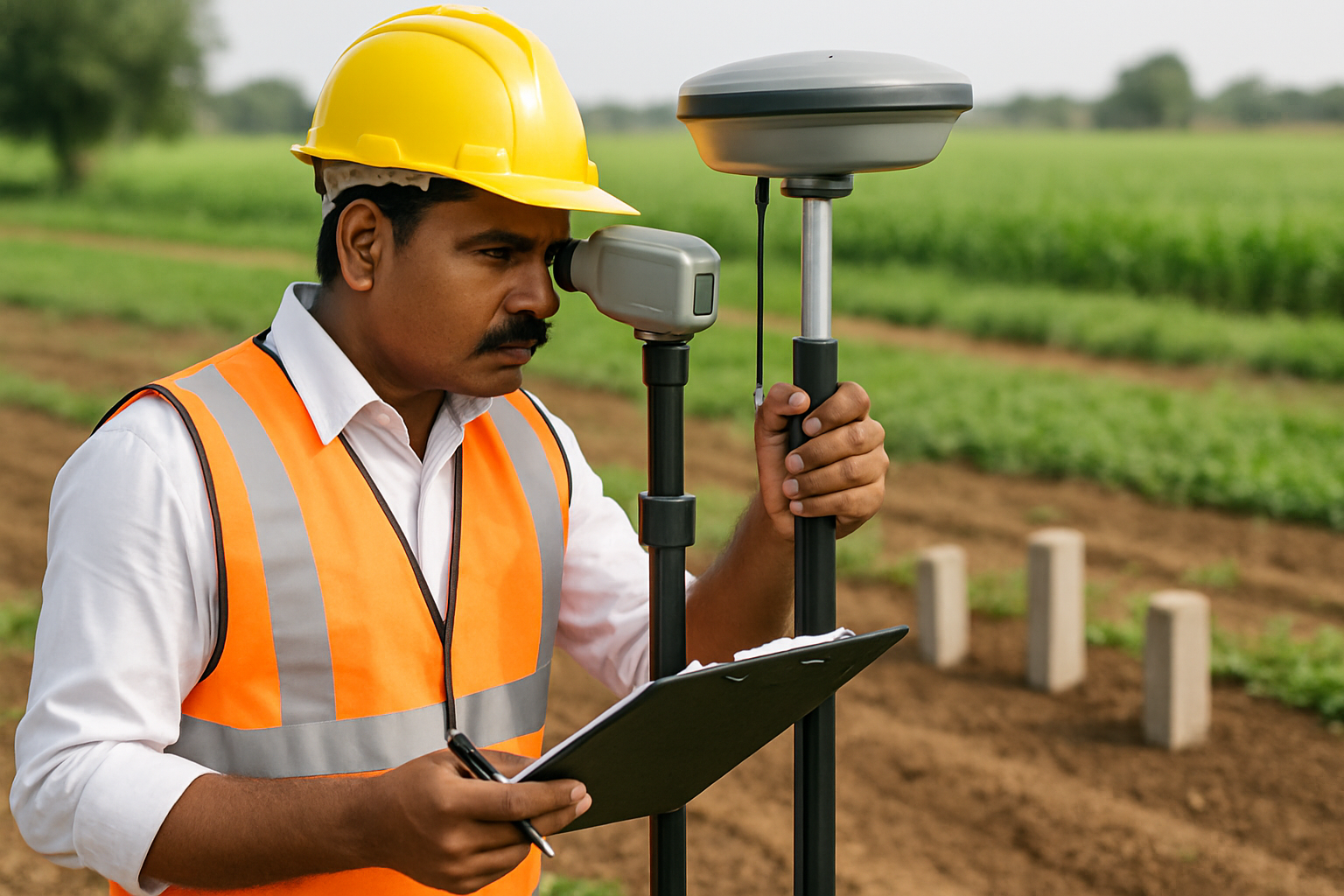
Get a licensed surveyor to physically verify the plot. They’ll use GPS tools, compare measurements with the survey number on record, and mark the corners. This costs between ₹8,000 and ₹25,000 depending on plot size and terrain. It’s not optional. Boundary disputes account for 38% of agricultural land litigation in India, according to data from district courts across six states.
While you’re on site, check access. Does the property have direct road access, or do you cross someone else’s land to reach it? If there’s no pucca road, is there a recorded right of way? I’ve seen farmhouse buyers discover after purchase that their only access route goes through a neighbor’s plot — and that neighbor isn’t friendly. No right of way was documented. Now every visit involves negotiation or a long detour.
Check water sources. Is there a borewell? What’s the depth, and is it functional? Are there water rights attached to the property, or is it dependent on a community source? Farmhouse investment in areas with dropping water tables is risky. A plot with no reliable water becomes a burden, not an asset. Visit during both dry and monsoon seasons if possible, or talk to immediate neighbors about water availability year-round.
Step 4: Understand Construction Permissions and Restrictions
This is where farmhouse dreams hit reality.
Even if you own agricultural land, construction limits are strict. Most states allow 10% to 15% ground coverage for farm-related construction. That’s not 10% per floor — that’s total built-up area. So on a 1-acre plot (43,560 square feet), you might get approval for 4,000 to 6,500 square feet of construction. Not the sprawling estate you pictured.
Farm-related construction is another phrase that matters. You can’t just build a villa. The structure has to serve agricultural purposes — worker housing, storage, equipment shed, dairy, greenhouse. A farmhouse qualifies if you can prove the land is actively used for farming. That means you’ll need to show cultivation, farming income, or agricultural activity when applying for construction permission.
To get that permission, you’ll need approvals from the gram panchayat, sometimes the tehsil office, and in some states, the district town planning authority. It’s not a single-window process. One buyer in Udaipur waited 11 months for approvals. His architect had submitted plans that didn’t match the local construction bylaws, and the rejection-correction loop ate up time.
Some buyers try to skip permissions. Bad idea. Unauthorized construction on agricultural land can be demolished by local authorities, and you won’t get compensation. It’s also a nightmare if you ever want to sell — no buyer’s lawyer will clear a property with illegal construction. Do this step properly, even if it takes longer. Use an architect who has worked on farmhouse projects in that exact district. They’ll know the unwritten rules that determine whether your application sails through or gets stuck.
Step 5: Plan the Financial and Tax Structure
Farmhouse investment in India has tax angles most buyers miss until filing season.
Agricultural land is exempt from capital gains tax — but only if it’s used for agriculture and located in a rural area. The definition of “rural area” matters. In most states, it’s any area beyond 8 kilometers from a municipal limit. If your farmhouse is closer, it doesn’t qualify for the exemption. Sell it later, and you’ll owe capital gains tax like any other property.
Stamp duty and registration charges vary by state and sometimes by land type. Agricultural land often has lower stamp duty than residential property, but that’s only if it stays agricultural. Once you convert it to NA land, the stamp duty rate jumps. In Maharashtra, agricultural land stamp duty is around 1% in rural areas. NA land? That’s 5% to 6%, plus registration fees. Budget for conversion costs if that’s part of your plan.
Financing agricultural land is harder than financing a flat. Most banks don’t offer home loans for farm property. A few offer agricultural loans, but those come with different interest rates, shorter tenures, and stricter eligibility criteria. If you need financing, start those conversations early. Don’t assume you’ll get a loan just because you have a good credit score and steady income.
Property tax on agricultural land is usually minimal — sometimes ₹500 to ₹2,000 annually in rural areas. But if you’re building a farmhouse and using it recreationally, local authorities may reclassify it and raise your tax liability. One owner in Coorg faced a sudden tax jump from ₹1,200 to ₹18,000 annually after the panchayat noticed regular non-agricultural use. It’s legal. It’s just not what he budgeted for.
Plan your finances with a CA who understands agricultural property. The deductions, exemptions, and liabilities are different from urban real estate, and you’ll want to structure ownership in a way that doesn’t trigger unexpected tax hits.
Step 6: Draft a Bulletproof Sale Agreement
The sale agreement for agricultural land needs more protection than a standard property contract.
Include every detail about land use, water rights, access routes, and existing structures. Mention the exact boundaries verified by the surveyor. List any easements or shared resources. If there’s a water line running through the property that serves neighboring plots, that needs to be in writing. If there’s a dirt path others use to reach their land, document it. If there are tenants or farm workers living on the property, their status needs to be clear.
Add a clause that makes the sale conditional on clear title verification and encumbrance certificate review. Don’t just say “subject to clear title.” Specify that the seller must provide documents confirming no pending litigation, no unpaid dues, no claims from family members, and no government acquisition notices. If any of these surface after agreement but before registration, you should have the right to cancel without penalty.
One clause most buyers skip: dispute indemnity. If a legal issue related to prior ownership emerges after you’ve registered the property, the seller should indemnify you for legal costs and losses. This won’t prevent disputes, but it gives you a path to recovery if the seller knowingly hid problems.
Use a lawyer who has handled agricultural land transactions in that district. Not your corporate lawyer. Not your cousin who does contract work. Someone who knows how rural land deals go wrong and has written agreements that hold up when tested. That person exists in every district — ask local property consultants or check with the district bar association.
What Experienced Farmhouse Buyers Wish They’d Known
Talk to anyone who’s bought agricultural land, and they’ll tell you the same things.
Neighbor relationships matter more than in city properties. You’re not separated by walls and floors. Your water source, your access road, your boundaries — all of these touch someone else’s reality. Introduce yourself before you buy. Ask neighbors about the land, the previous owner, and any history you should know. They’ll tell you things the seller won’t.
Maintenance is not optional. Agricultural land doesn’t stay clean on its own. Bushes grow. Fences fall. Boreholes need servicing. If you’re not living there full-time, you’ll need a caretaker or regular visits. One absentee owner came back after eight months to find squatters had set up temporary shelters on his plot. Eviction took legal action and six more months. An occupied property, even temporarily, changes everything.
Don’t buy based on dreams. Buy based on documents. The mental image of weekend retreats and farm-to-table mornings is lovely. The reality involves permits, water shortages, construction delays, and costs that double your budget. If the paperwork doesn’t support your vision, walk away. Another property will come.
And here’s the contrarian bit: bigger is not always better. A 5-acre plot sounds impressive. It’s also five times the maintenance, five times the property tax, and five times the trouble if you need to sell quickly. Many first-time farmhouse buyers are happier with 1 to 2 acres — enough space to build, enough land to feel rural, but manageable in terms of cost and upkeep.
Frequently Asked Questions
Can NRIs buy agricultural land in India for farmhouse investment?
No, NRIs cannot buy agricultural land in India under current FEMA regulations. However, NRIs can buy converted NA land that was previously agricultural, as long as it’s classified as residential or commercial at the time of purchase. If you inherit agricultural land as an NRI, you can hold it but face restrictions on selling it without RBI permission.
How long does land conversion from agricultural to non-agricultural take in India?
Land conversion timelines vary by state. In Maharashtra, expect 4 to 8 months if your application is complete and the land qualifies. In Karnataka, it can take 6 to 12 months. Rajasthan is faster at 3 to 6 months in most districts. Delays happen if documents are incomplete, if there’s revenue department backlog, or if neighbors file objections. Budget at least 6 months and don’t start construction until conversion is officially recorded.
What is the minimum land size required to build a farmhouse in India?
Most states require a minimum of 1 acre (43,560 square feet) to qualify for farmhouse construction permissions. Some states like Haryana mandate 2 acres minimum. The logic is that smaller plots don’t support meaningful agricultural activity. Even where there’s no official minimum, panchayats often reject construction plans on plots smaller than 1 acre because they don’t fit the farm structure definition.
Is farmhouse investment better than buying residential property in India?
It depends on your goal. Farmhouse investment offers lower per-acre cost, tax benefits on agricultural income, and lifestyle value if you enjoy rural settings. But liquidity is lower — selling farm property takes longer than selling a city flat. Appreciation is slower and less predictable. If you want steady rental income or quick resale, residential property works better. If you want long-term holding, weekend use, and potential agricultural income, farmland fits.
What are the risks of buying agricultural land without conversion?
Buying unconverted agricultural land limits your construction rights, restricts resale to eligible buyers only, and leaves you dependent on future conversion approval that may or may not come. If local regulations tighten, you could be stuck with land you can’t build on and can’t sell easily. You’ll also miss out on financing options, since most banks don’t lend against pure agricultural land. The biggest risk is assuming conversion will happen later — it might not, and you’ll own land you can’t use the way you planned.
Start Your Farmhouse Investment With the Right Information
Farmhouse investment in India rewards patience and punishes shortcuts. The buyers who do well are the ones who verify everything, assume nothing, and treat every verbal promise as irrelevant until it’s on paper and recorded with the government.
If you’re serious about buying agricultural land, start by searching properties on Freeperty’s property listings. You’ll find farmhouse plots, agricultural land, and NA land across India — all listed for free by owners, brokers, and developers. Every listing shows land classification, survey details, and seller contact info. No hidden fees. No subscription walls.
And if you own farm property and want to list it where buyers actually search, post your property on Freeperty for free. Your listing becomes a searchable page, visible to buyers looking in your exact area. We’ve built this platform so that farm property gets the same search visibility as city apartments — because good land shouldn’t stay invisible just because it’s rural.
This farmhouse investment guide gives you the steps. The rest is due diligence, legal verification, and honest assessment of whether a farm property fits your life. Take your time. Ask hard questions. Walk away from deals that feel rushed. The right property will still be there when you’re ready — and if it’s not, another one will come.