
Commercial Space for Startups: Office & Retail Discovery
Find the right commercial space for startups without overpaying. Compare office and retail options, avoid common leasing traps, and discover properties that actually fit your budget.
Here’s what we’ve noticed after watching hundreds of startups hunt for their first commercial space: most of them rent the wrong property at exactly the wrong time.
They overestimate what they need. They underestimate what they’ll pay beyond rent. And they lock themselves into leases that made sense on paper but kill their runway three quarters in. We’ve seen promising businesses spend six months burning through deposits and broker fees before they even sign a lease — all because they didn’t understand how commercial property discovery actually works in India’s fragmented market.
This isn’t about finding any office or retail space. It’s about finding the right commercial space for startups and SMEs — properties that match your stage, your budget, and your actual growth trajectory, not the one you pitch to investors.
Why Most Startup Office Listings Don’t Show What You Actually Need
The first friction point isn’t availability. It’s visibility.
Most commercial property platforms weren’t built for early-stage businesses. They were built for established companies with predictable headcounts, multi-year commitments, and dedicated facility managers. The search filters assume you know your exact square footage requirement. The pricing assumes you can pay six months upfront. The inventory skews toward large floor plates in premium business districts — exactly what a bootstrapped team can’t afford.
Small office spaces for startups — the 500 to 1,500 square foot range — get lost in the noise. Brokers don’t prioritize them because commissions are lower. Listings don’t surface them because the platforms optimize for higher-value transactions. And landlords often don’t even list them online, preferring word-of-mouth referrals to avoid dealing with what they perceive as higher-risk tenants.
This is where Freeperty’s model makes a difference. Because listing is completely free and there’s no subscription gatekeeping search results, smaller commercial spaces that wouldn’t justify a paid listing on other platforms actually show up. The owner of a 600-square-foot ground-floor retail unit doesn’t have to weigh listing fees against potential returns — they just list it. And startups searching for niche configurations get access to inventory they’d never find on legacy portals.
Office Space vs. Retail Space: What Actually Matters for Early-Stage Businesses
Most founders think the distinction is obvious. Offices are for service businesses. Retail is for products. Done.
Not quite. The real difference isn’t what you sell — it’s how customers reach you and how much control you need over the space.
Office space for SMEs is fundamentally about cost efficiency and location flexibility. You’re optimizing for talent access, commute time for your team, and basic infrastructure — reliable power, internet, restrooms, parking if you’re lucky. Foot traffic doesn’t matter. Signage doesn’t matter. You can take a second-floor unit in a mixed-use building and nobody cares. Lease terms tend to be more flexible because office landlords are used to businesses scaling up or down.
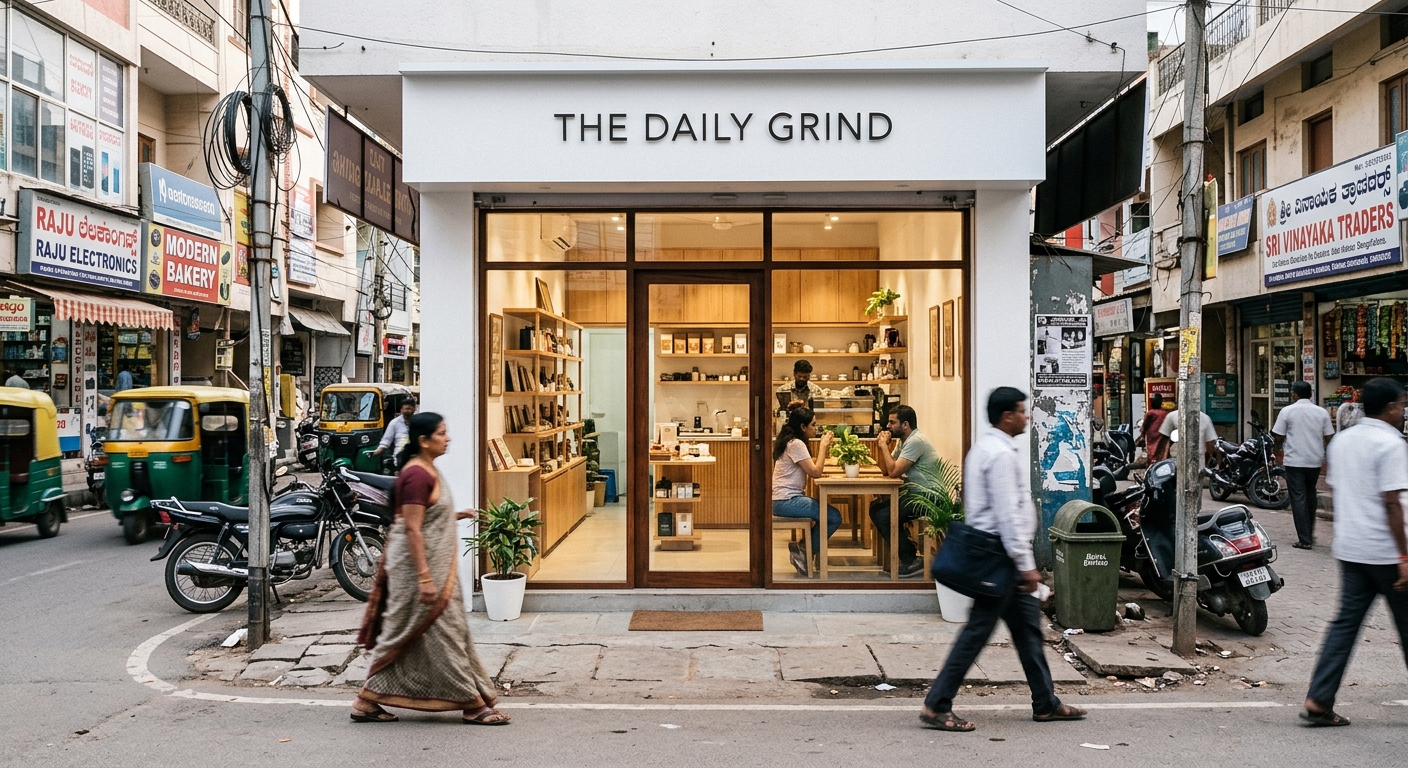
Retail space for small businesses is about visibility and configuration. You’re paying for street access, window frontage, and the ability to modify interiors. Zoning matters. Neighboring tenants matter. A ground-floor corner unit commands a premium not because it’s nicer, but because it converts better. Retail landlords are pickier about tenant mix and stricter about lease violations because your business directly affects foot traffic for everyone else in the building.
Here’s the part most people miss: co-working and managed office space blur this line completely. A design studio might think they need retail space for client meetings — then realize a well-located co-working setup with a few dedicated desks and bookable meeting rooms costs half as much and comes with better amenities. A small e-commerce brand might assume they need a warehouse — then discover a hybrid retail-storage unit in a Tier-2 location gives them fulfillment space and a walk-in showroom for the same rent.
We’ve worked with a Pune-based SaaS startup that spent two months hunting for a standalone office, only to realize their five-person team didn’t need one. They moved into a flexible desk arrangement, saved ₹40,000 a month, and used the difference to hire a sixth engineer. That decision bought them an extra four months of runway — which turned out to be exactly what they needed to close their seed round.
The point isn’t that one option is better. The point is that most startups don’t rigorously compare the trade-offs before signing.
The Hidden Costs That Kill Startup Budgets in Commercial Leases
Rent is just the start. Sometimes it’s not even the expensive part.
Walk into any commercial lease negotiation and you’ll hear “all-inclusive” or “lock-in period” or “fit-out allowance” thrown around like they mean the same thing everywhere. They don’t. And the difference between understanding these terms and just nodding along can cost you three to six months of operating capital.
Security deposits in India typically run six to twelve months of rent for commercial properties. That’s not unusual — it’s standard. But it’s also a massive upfront cash requirement that most early-stage startups underestimate. A ₹30,000/month office suddenly needs ₹1.8 lakh just to unlock the door, before you’ve bought a single desk or paid your first internet bill.
Maintenance charges are billed separately in most commercial buildings, and they’re almost never as low as the landlord’s initial estimate. Expect another 15 to 25 percent on top of base rent, covering everything from common-area electricity to elevator maintenance to security staffing. In metro markets, this can push your effective monthly cost 20 percent higher than the listed rent.
Fit-out and modifications are where retail tenants get hit hardest. Landlords rarely hand over a blank shell in move-in condition. You’re paying for electrical work, plumbing if you need a pantry or restroom upgrade, partitioning, flooring, paint, signage mounts — and in many cases, the lease requires you to restore the space to original condition when you leave. We’ve seen small retail businesses spend ₹3 to ₹5 lakh on interiors for a 400-square-foot space, only to shut down eighteen months later and forfeit the entire investment.
Stamp duty and registration fees vary by state but generally add another 5 to 8 percent of the annual rent value upfront. In Maharashtra, for example, you’re looking at around 5 percent for commercial lease registration — non-negotiable, often overlooked.
Then there’s the brokerage. One month’s rent is standard. Sometimes it’s split between tenant and landlord. Sometimes the tenant pays the whole thing. Either way, it’s another chunk of capital you won’t get back.
Add it up and a ₹30,000/month space can require ₹2.5 to ₹3.5 lakh upfront before you move in. Most first-time founders budget for two months’ rent and get blindsided.

How to Search for Commercial Property Without Wasting Three Months
The default approach is backwards. Most founders start by browsing listings, bookmarking a dozen properties, and then trying to visit them all in a week. They end up confused, exhausted, and no closer to a decision.
Here’s a better sequence.
Start with the zone, not the property. Identify the three to four micro-locations where your business actually needs to be. For a service startup, that might be proximity to metro stations where your team lives. For a retail brand, it’s neighborhoods where your target customers already spend time. For a logistics-heavy SME, it’s access to highway connectors and delivery zones.
Use search filters that match your actual constraints — budget per month including maintenance, minimum and maximum square footage, availability date, furnishing level. Don’t browse aspirationally. If you can afford ₹25,000/month all-in, don’t look at ₹35,000 listings hoping to negotiate them down. You usually can’t.
On Freeperty, each property becomes its own search-optimized page, which means you’re not just filtering a database — you’re discovering inventory through the same search behavior you’d use to research anything else. A query like “small office space near Hinjewadi Phase 1” can surface a listing from an independent landlord who never bothered with paid portals. That’s the inventory gap most platforms never fill.
Shortlist no more than five properties and visit them all within 48 hours. Your memory of space is terrible. If you spread visits across two weeks, you’ll forget which unit had the better lighting or whose landlord was easier to talk to. Batch the visits, take photos, compare immediately.
Ask the landlord about the previous tenant — specifically, why they left and how long they stayed. If the last three tenants were all startups who vacated within a year, that’s a signal. Maybe the rent escalation clause is punitive. Maybe the building management is difficult. Maybe the location just doesn’t convert for early-stage businesses.
Check mobile network strength and test the internet line if one’s already installed. Sounds basic, but we’ve seen teams move into a commercial space only to discover their Zoom calls drop constantly because the building sits in a connectivity dead zone.
Don’t skip a visit hoping to save time. Photos lie. Floor plans lie. Even video walkthroughs lie. You need to stand in the space during business hours, hear the noise level, see the light, and imagine your team actually working there.
Lease Terms That Protect You vs. Terms That Lock You In
This is where most startups get trapped.
A standard commercial lease in India runs three to five years with a lock-in period of one to two years and rent escalation of 5 to 10 percent annually. Sounds reasonable until your growth stalls, your funding round falls through, or your business model pivots — and you’re stuck paying for space you can’t afford and can’t legally exit.
Here’s what to negotiate before you sign.
Lock-in flexibility: Push for a shorter lock-in or a buy-out clause that lets you exit early by forfeiting some portion of the deposit rather than remaining liable for the full lease term. A six-month lock-in is startup-friendly. Anything beyond twelve months is a risk unless you have serious revenue predictability.
Rent escalation caps: Don’t accept open-ended clauses. Lock in the exact percentage increase and the intervals. A 5 percent annual escalation is manageable. A clause that says “escalation at landlord’s discretion” is a trap.
Deposit return terms: Clarify in writing when and how you get your deposit back, what condition the space needs to be in, and how damages or modifications are assessed. Ambiguity here leads to disputes that can drag on for months after you vacate.
Subleasing and assignment rights: If your business pivots or scales faster than expected, can you sublease part of the space? Can you assign the lease to another tenant if you need to exit? Most landlords default to “no” unless you ask upfront. Get it in writing.
Maintenance and repair responsibilities: Who fixes what, and who pays? A leaking roof, a broken AC unit, a plumbing issue — these are landlord responsibilities in most agreements, but only if it’s documented. Otherwise you’ll end up paying for repairs that should have been covered.
Notice period for termination: Understand what happens if either party wants to exit. Standard is one to three months’ notice after lock-in, but verify it’s mutual — some leases let the landlord terminate on short notice while holding the tenant to much longer timelines.
We worked with a Bengaluru-based edtech startup that signed a three-year lease with an 18-month lock-in and 10 percent annual escalation. By month 14, their funding environment had shifted and they needed to downsize. The landlord refused early exit, and the startup ended up paying rent on a half-empty office for six months while searching for a sublease — which the agreement didn’t permit. They burned ₹2.7 lakh they didn’t have.
A better lease structure would have included a 12-month lock-in with a buy-out option and a subleasing clause. That’s not aggressive negotiation. It’s basic risk management for an early-stage business.
Why Property Discovery Platforms Optimized for Search Density Win for SMEs
Here’s the structural advantage most startup founders miss: in real estate, searchability is inventory access.
Traditional portals control visibility through paid placements, featured listings, and subscription tiers. If a landlord doesn’t pay for premium visibility, their property gets buried. If you don’t pay for contact unlocks, you can’t reach the owner. The platform acts as a gatekeeper, not a facilitator.
Freeperty flips that model. Because every listing is free and every property generates its own search-optimized page, the platform works more like organic search than a walled database. A small property owner listing a 700-square-foot office in a Tier-2 neighborhood gets the same structural visibility as a broker listing a 10,000-square-foot retail plaza — because both are equally discoverable through search intent, not ad spend.
For SMEs and startups, this matters more than it sounds. The commercial properties that fit your budget and stage are almost always the ones brokers don’t prioritize and platforms don’t feature. You’re hunting for the overlooked inventory — and you need a discovery model that surfaces it.
Search-first platforms reward specificity. A query like “pet-friendly office space in Koramangala under ₹30,000” might return zero results on a traditional portal because no one paid to tag their listing that way. On a search-optimized open marketplace, that query might surface three owner-listed properties that happen to mention flexible pet policies in the description. That’s not luck — it’s how searchable content works when it’s not locked behind paywalls.
This is why Freeperty’s approach works better for niche requirements. The platform isn’t deciding what you should see. The search engine is matching your intent to available inventory, and more inventory is available because listing it costs nothing.
What to Check During a Physical Visit That Most Founders Ignore
You’ve shortlisted. You’ve scheduled visits. Now don’t waste them by only looking at the obvious stuff.
Check the electrical panel and ask about power backup. How many dedicated lines does the unit have? Is there a generator or inverter for the building, and does it cover your floor? Startups running server equipment or design hardware can’t afford power interruptions. If the building’s backup only covers common areas and elevators, you’ll need your own UPS setup — and that’s an added cost.
Look at the restroom situation. Shared restrooms in older commercial buildings are often under-maintained and overcrowded. If your team is more than five people, this becomes a daily frustration. Dedicated restrooms inside the unit are a meaningful quality-of-life upgrade.
Ask about operating hours and after-hours access. Some buildings lock main entrances after 8 or 9 PM. Some require security approval for weekend access. If your team works late or keeps non-traditional hours, confirm you won’t be locked out of your own office.
Walk the neighborhood during the time of day you’ll actually be there. A location that feels safe and vibrant at 11 AM might be deserted and poorly lit by 8 PM. For retail, check foot traffic and neighboring businesses during peak hours — a street-facing unit near closed shutters won’t generate walk-ins.
Check the parking and delivery situation for commercial properties near high-congestion zones. If your business involves client visits, vendor deliveries, or employee commutes by car, verify there’s actual parking nearby — not just a mention of “available parking” in the listing. In dense metro areas, parking alone can become a deal-breaker.
Test the water pressure and check for damp spots on walls or ceilings. Persistent leaks and mold aren’t cosmetic issues — they’re signs of deeper building maintenance problems that the landlord probably won’t fix.
Ask about waste disposal and housekeeping. Is there a building-managed disposal system, or are you responsible for arranging it? For retail and F&B businesses, this isn’t trivial — improper waste handling can lead to pest problems and municipal fines.
We’ve seen teams fall in love with a space during a walkthrough, only to realize two weeks in that the building’s elevator breaks down twice a week, the internet backbone can’t support their upload needs, and street-side vendors block their entrance every evening. A 30-minute visit can’t catch everything, but it should catch the things a listing description won’t tell you.
Retail Space Configuration Mistakes That Cost Small Businesses Customers
Retail is unforgiving. Office space hides a lot of mistakes. Retail doesn’t.
The wrong configuration doesn’t just hurt aesthetics — it directly kills conversions. And most small business owners don’t realize the problem until they’ve already signed the lease and built out the interiors.
Depth-to-width ratio matters more than total square footage. A narrow, deep space — say 10 feet wide and 40 feet deep — feels cramped and uninviting even if the total area is decent. Customers don’t explore. They glance from the entrance and move on. A wider, shallower layout with the same square footage converts better because it reads as open and browsable.
Ceiling height affects perceived value. Low ceilings make even spacious retail units feel claustrophobic and budget-tier. If you’re positioning as a premium or design-forward brand, a unit with 9-foot ceilings will work against you no matter how well you merchandize.
Window visibility and entrance placement are non-negotiable for discovery-based retail. A unit tucked inside a corridor or set back from the main street — even if it’s technically “ground floor” — won’t get walk-in traffic. You’re paying retail rent for what’s functionally a hidden warehouse.
Column placement and layout interruptions matter for flow. Structural columns in the middle of a small retail floor break sightlines and make merchandising awkward. You end up with dead zones that customers don’t naturally walk into.
Access to utilities — especially plumbing and ventilation — can be a hidden cost multiplier. If you’re opening a café, cloud kitchen, salon, or any business that needs running water and exhaust systems, verify that the space is already plumbed and vented for it. Retrofitting these systems in a retail unit that wasn’t designed for them can cost as much as three months’ rent.
We worked with a boutique clothing brand in Mumbai that leased a 300-square-foot street-facing unit in a busy market. Looked perfect on paper. But the entrance was recessed three feet from the sidewalk, and a structural beam bisected the front window. Foot traffic walked past without noticing the store existed. They spent ₹80,000 on interiors and signage trying to fix a configuration problem that couldn’t be fixed. Six months later, they relocated — and paid another deposit and brokerage to do it.
The better move would have been to walk five comparable retail units in the same area, observe which ones naturally pulled customers in, and identify the physical layout patterns that worked. That kind of ground-level research beats any listing description.
How to Spot Red Flags in Landlord Behavior Before You Commit
Sometimes the space is fine. The landlord is the problem.
Red flag one: Reluctance to provide documentation upfront. If the landlord hesitates to share ownership papers, tax receipts, or a draft lease agreement during initial discussions, walk away. This isn’t caution — it’s either disorganization or something worse. Legitimate landlords have these ready.
Red flag two: Pressure to commit before you’re ready. “Another tenant is very interested, you need to decide today” is a classic closing tactic. Sometimes it’s true. More often it’s not. A landlord willing to give you 48 hours to review terms and consult a lawyer is a landlord you can work with.
Red flag three: Vague or contradictory answers about previous tenants. If you ask why the last tenant left and the landlord’s story keeps changing — or they refuse to answer — that’s a signal. Either the space has a persistent problem, or the landlord is difficult to deal with.
Red flag four: Resistance to negotiating reasonable clauses. Asking for a buy-out option or a repair responsibility clause isn’t aggressive — it’s standard. A landlord who treats every negotiation request as an insult probably isn’t someone you want to call when the AC breaks in July.
Red flag five: Insisting on cash-only transactions or avoiding formal rent agreements. This is both a tax issue and a legal one. Without a registered lease, you have almost no tenant protections. If a dispute arises, you’re unprotected. And from the landlord’s side, this signals they’re not declaring rental income — which might not seem like your problem until it becomes one during a compliance audit.
We’ve worked with startups who ignored these signals because the space was great and the rent was below market. In every case, the relationship soured. One founder spent four months chasing a landlord for a refund of a ₹1.2 lakh deposit after vacating, only to discover the person who signed the lease wasn’t actually the legal owner — just a power-of-attorney holder with no accountability.
Character matters in a lease relationship. You’re going to be dealing with this person for years. If the red flags show up during courtship, they don’t disappear after signing.
FAQ: Commercial Space for Startups
What’s the average cost of commercial space for startups in India?
It varies widely by city and location. In metro Tier-1 markets like Bengaluru, Mumbai, or Pune, expect ₹30 to ₹80 per square foot per month for office space in decent but not premium areas. Retail space commands higher rates, often ₹60 to ₹150 per square foot depending on foot traffic. Tier-2 cities like Jaipur, Coimbatore, or Indore can be 40 to 60 percent cheaper. Always account for maintenance, deposit, and fit-out costs on top of base rent.
Should a startup lease office space or use co-working spaces?
It depends on team size, funding stage, and work style. Co-working makes sense for teams under 10 people who value flexibility and don’t need dedicated private space. Once you cross 12 to 15 employees or need consistent client-facing meeting areas, a leased office often becomes more cost-effective and provides better branding control. Run the numbers for your specific situation — co-working per-desk costs vs. leased space total cost including utilities.
How can I find commercial property for startups without paying brokerage?
Use open listing platforms where owners post directly, like Freeperty, where property discovery happens through search rather than broker gatekeeping. You can also tap your network — landlords often prefer referral tenants over cold leads. If you do work with a broker, clarify upfront whether the brokerage is shared with the landlord or entirely on you, and negotiate it before viewing properties.
What lease terms should startups avoid in commercial agreements?
Avoid open-ended rent escalation clauses, lock-in periods longer than 12 months without buy-out options, and any agreement that makes you liable for structural repairs or restoration to original condition beyond normal wear. Also avoid verbal amendments — everything negotiated must be in the signed, registered lease document. If the lease is ambiguous about deposit return conditions, clarify and document it before signing.
Ready to Find Commercial Space That Actually Fits Your Startup Budget?
You don’t need the biggest office or the most Instagram-worthy retail frontage. You need space that fits your stage, protects your runway, and doesn’t lock you into terms you’ll regret in six months.
Freeperty’s commercial property listings give you access to office and retail spaces across India without subscription fees, hidden contact unlocks, or gatekept inventory. Whether you’re a three-person team hunting for a small office near a metro line or an SME looking for a street-facing retail unit in a growth neighborhood, you’ll find properties listed directly by owners, brokers, and builders — all searchable, all free to browse, all transparent.
Search by location, budget, size, and property type. Compare options. Reach out directly. Make decisions based on what actually works for your business — not what a platform’s algorithm decides to show you.
Start your search on Freeperty today and find the commercial space your startup actually needs.