
Commercial Property Investment: Complete Beginner’s Guide
Commercial Property Investment: What Works, What Doesn’t, and How to Start Without Burning Money
Learn commercial property investment basics — office space, retail property, warehouse investments. Real ROI numbers, tenant strategies, and mistakes that cost lakhs in India’s commercial real estate market.
Most people get commercial property investment backwards. They think it’s simpler than residential. Bigger returns, fewer headaches, professional tenants who pay on time.
Reality check: commercial property investment has bigger upside and bigger downside. One bad tenant can wreck your cash flow for 18 months. One location mistake costs you 30% appreciation you’ll never recover. But get it right — location, tenant quality, lease terms — and you’re looking at returns residential can’t touch.
Here’s what actually works in India’s commercial real estate market. No fluff. No textbook theory. Just the framework we’ve built helping property owners and investors make decisions on Freeperty’s platform — where we’ve seen what pushes commercial listings to sell fast and what makes them sit for months.
Why Commercial Property Investment Beats Residential (Sometimes)
Commercial isn’t better. It’s different.
Residential gives you liquidity. You can sell a 2BHK in 60 days if you price it right. Commercial? That same property might take 6 months to find the right buyer. But while you wait, commercial pays better. Way better.
Office space in a decent Tier-1 location yields 7-9% annually. Retail in a high-footfall area? Push that to 10-12% if you land the right tenant. Compare that to residential rental yields hovering around 2-3% in most Indian cities. The math changes completely.
But here’s what nobody mentions upfront — vacancy kills you faster in commercial real estate. A residential tenant leaves, you find another in 3-4 weeks. Commercial tenant leaves? You might sit empty for 4 months. Longer if the fit-out is specific to their old business.
We’ve watched warehouse properties near logistics hubs in Bhiwandi and Manesar triple their inquiries in 18 months. Infrastructure drove it — new expressways, metro extensions, industrial corridors. One builder listed a 12,000 sq ft warehouse on Freeperty’s listing platform in March 2023 at ₹1.8 crore. Sold in September for ₹2.1 crore because two e-commerce companies bid against each other. That’s what location intelligence does in commercial property investment.
The Four Commercial Property Types That Actually Make Money in India
Forget the 12-category breakdown you’ll find in textbooks. In India, four types matter for individual investors.
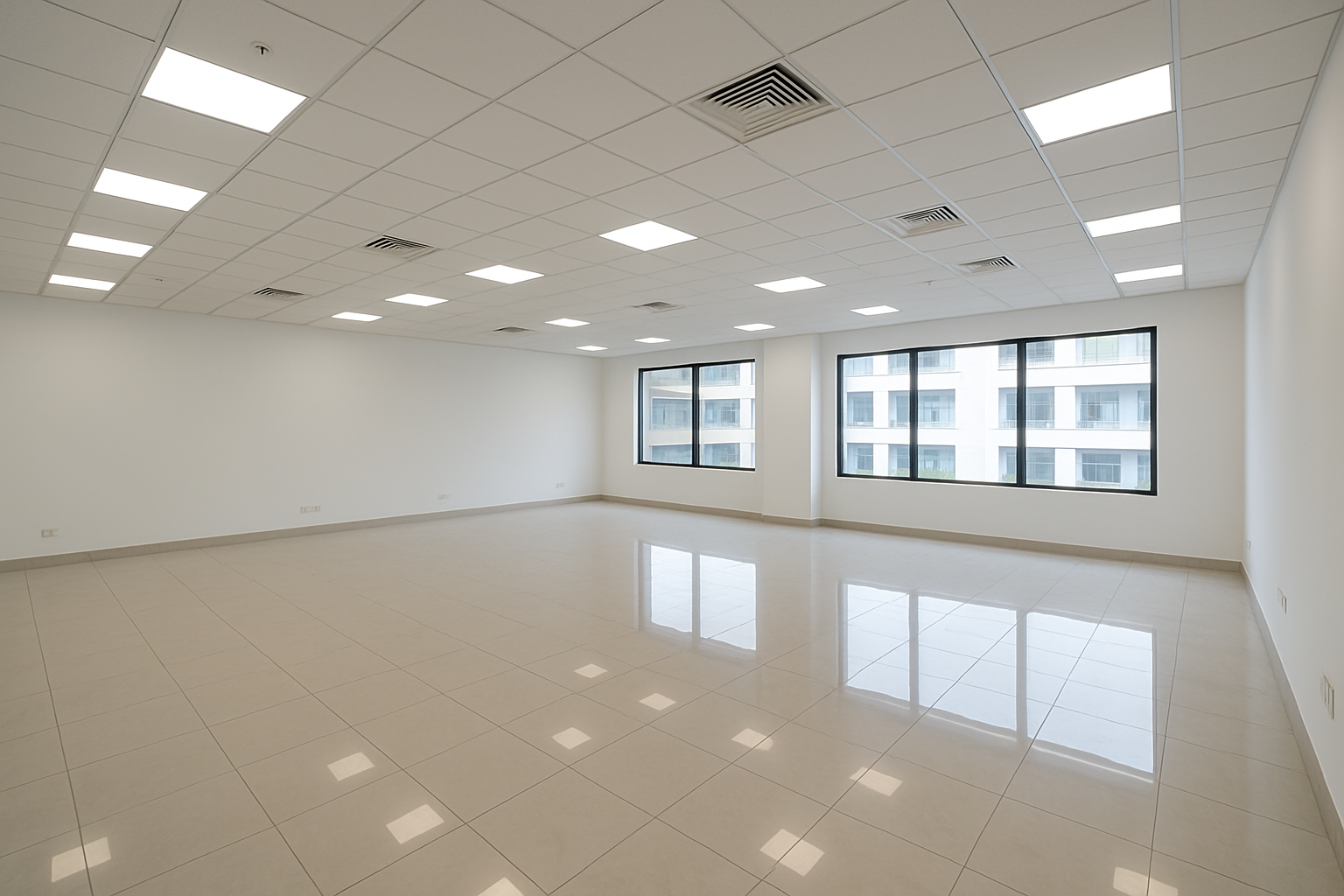
Office space. Safest entry point if you’re new to commercial property investment. Demand is stable in Tier-1 and Tier-2 cities. Bengaluru, Pune, Hyderabad, Gurgaon — corporate tenants need space. Returns? Expect 6-8% yield. Appreciation depends entirely on office district maturity. Emerging micro-markets like Whitefield or Hinjewadi outpace established CBDs on growth, but tenant quality drops slightly.
Retail space. High-footfall locations print money. Ground floor shops near metro stations, malls with anchor tenants, high-street retail in residential clusters. One investor we know bought a 450 sq ft retail unit in Noida Sector 18 for ₹87 lakh in 2019. Rented it to a national pharmacy chain at ₹65,000 monthly. That’s 9% yield before maintenance. But retail is unforgiving — wrong location means zero demand. Period.
Warehouse and logistics. This segment exploded post-COVID. E-commerce needs storage. Third-party logistics companies need distribution hubs. If you’re near a national highway, an airport, or a dedicated freight corridor, warehouse investing pays off. Yields touch 8-10%. Downside? These properties need scale — you’re looking at ₹2-5 crore minimum. Not beginner-friendly unless you’re pooling capital.
Co-working spaces. Controversial opinion — don’t buy these as an investment unless the operator has a 9-year lock-in lease. The co-working model is tenant-driven, not asset-driven. If WeWork or 91Springboard signs a long lease and takes possession, great. You’re effectively renting to a corporate entity. But if you’re buying a “co-working ready” shell hoping to operate it yourself? That’s a business, not an investment. Different game entirely.
What Nobody Tells You About Commercial Lease Agreements
Lease terms make or break commercial property investment. Residential leases are 11 months, renewable, simple. Commercial leases? These are 3-year, 6-year, 9-year commitments with lock-in periods, escalation clauses, and exit penalties.
Here’s what matters.
Lock-in period protects you. Always negotiate a 3-year minimum lock-in. That means even if the tenant wants to leave in year two, they’re liable for rent until year three ends. Without this, you’re exposed to the same vacancy risk as residential — except commercial vacancies last way longer.
Escalation clause is your inflation hedge. Standard practice in India is 5% annual rent increase or 15% every three years. Lock this in writing. We’ve seen property owners skip this because the first lease looked attractive, then watched inflation eat their returns while the tenant paid 2019 rents in 2024.
Maintenance responsibility shifts differently. In residential, you handle most repairs. In commercial property investment, tenants often cover interior maintenance, AC servicing, and minor electrical work. Structural stuff — lifts, common areas, facade — stays with you. Define this clearly. One dispute over a ₹40,000 AC replacement can sour a tenant relationship for years.
Security deposit is higher but riskier. Commercial tenants pay 6-10 months’ rent upfront as deposit. Sounds safe. It’s not. If they trash the space during fit-out or skip rent in month 11, that deposit barely covers your legal fees and lost time. Vet the tenant’s business stability before you hand over keys.
Check their GST filings. Look at their other locations. If they’re opening their first branch in your property, you’re taking on business risk, not just tenant risk. That’s fine if the rent compensates you — but know what you’re signing up for.
The Real Numbers: What Commercial Property Investment Actually Costs
Purchase price is just the start. Add stamp duty, registration, GST on under-construction properties, brokerage, legal fees, and fit-out costs if the space needs work.
Let’s say you’re buying an office unit in Pune for ₹1.2 crore. Stamp duty in Maharashtra is 5% for commercial — that’s ₹6 lakh. Registration adds another ₹30,000. Legal due diligence and property lawyer? ₹50,000 if you don’t skip corners. Brokerage if you used a channel partner? Another 1-2%, so ₹1.2-2.4 lakh. You’re at ₹8 lakh in just transaction costs before you earn a single rupee.
Then comes fit-out. Commercial tenants expect basics — flooring, electrical points, washroom access, maybe a false ceiling. Budget ₹200-400 per sq ft for a shell-and-core space to become rentable. A 1,000 sq ft office needs ₹2-4 lakh in interiors unless you find a tenant willing to do their own fit-out. Some will. Most won’t.
Financing works differently too. Home loans for residential properties come easy at 8-9% interest. Commercial property loans? You’re looking at 9.5-11%, and banks fund only 60-70% of the property value, not 80-90% like residential. That means bigger down payment. For that ₹1.2 crore Pune office, expect to arrange ₹50-55 lakh in cash or liquid assets. The rest you can finance.
One mistake we see constantly on Freeperty: buyers underestimate holding costs. If your property sits vacant for 4 months, you’re still paying EMI, property tax, and society maintenance. That’s ₹1.2 lakh in EMI alone at 10% interest on ₹70 lakh loan. Add ₹8,000 monthly maintenance. Vacancy just cost you ₹5 lakh.
How to Pick a Commercial Property Location Without Guessing
Location is 70% of your return in commercial real estate. Maybe 80%. You can fix a bad tenant. You can’t fix a bad location.
Start with tenant demand, not your budget. If you’re buying office space, go where companies are actually setting up — not where they were five years ago. Bengaluru’s Outer Ring Road, Hyderabad’s HITEC City, Gurgaon’s Golf Course Extension, Pune’s Hinjewadi and Baner — these aren’t secrets. They’re proven demand zones. Yes, prices are higher. That’s because rent demand is reliable.
Retail is trickier. Footfall drives everything. A retail unit 200 meters from a metro gate will always outperform one that’s 800 meters away. Always. Check peak and off-peak traffic. Visit the location at 11 AM on a Tuesday and 7 PM on a Saturday. If it’s dead both times, your tenant will struggle — and when they struggle, they either renegotiate rent downward or they leave.
Warehouse and logistics properties need connectivity. National highways, state highways, proximity to ports or airports. A warehouse 12 km from NH-48 with bad internal roads will sit empty while one 3 km away with clean access gets leased in weeks. Basics matter more than fancy specifications here.
Freeperty’s search filters let you narrow by location, property type, and budget — then sort by newest listings or price. That helps, but visiting matters more. Spend a day in the area. Talk to neighboring business owners. Check if the area has pending infrastructure — a metro line extension, a flyover, a commercial complex being built nearby. Government infrastructure announcements often signal future demand before prices spike.
Tenant Quality Matters More Than Rent Amount
Here’s a trap most first-time commercial property investors fall into — they pick the highest bidder.
Tenant A offers ₹80,000 monthly. Tenant B offers ₹72,000 monthly but has three existing locations and files GST returns on time. You pick Tenant A because ₹8,000 extra per month is ₹96,000 annually. Smart move, right?
Wrong. Tenant A runs out of cash in month 9. Stops paying rent. You spend 4 months in negotiation and legal notices. They vacate in month 14, leaving the space damaged and you sitting with zero income for 6 months total. Meanwhile Tenant B would’ve paid reliably for three years, renewed the lease, and referred another business to your second property.
Vet your tenants like you’re hiring them. Because you are. Check company registration details, GST filings, existing lease history. If they’ve operated other locations, visit them. Are those spaces maintained? Are they still operating or did they shut down? Small businesses close constantly. That’s not a moral judgment — it’s just risk you need to price in.
Anchor tenants are gold in commercial property investment. A bank branch, a national retail chain, a recognized corporate entity — these tenants rarely default. They may negotiate hard on rent, but they pay on time. Stability beats slight upside every time.
One more thing. Avoid single-owner startups in their first year unless the founder personally guarantees the lease. We’ve seen this play out a dozen times on listed properties — founder has big ambitions, rents premium space, burns through funding, vanishes in 18 months. You’re stuck holding an empty asset.
Tax Treatment and ROI Reality in Commercial Property Investment
Commercial property income gets taxed as “income from house property” just like residential. But deductions differ.
You can claim 30% standard deduction on rental income. Interest on loan used to buy the property is fully deductible — no ₹2 lakh cap like in residential. If you’re paying ₹7 lakh annually in interest on your commercial property loan and earning ₹10 lakh in rent, your taxable income is ₹3 lakh after standard deduction. That’s a big shield.
Depreciation doesn’t apply unless you’re running a business from the property. But when you sell, capital gains tax hits differently. Hold for less than 24 months? Short-term capital gains taxed at your income slab rate. Hold longer than 24 months? Long-term capital gains taxed at 20% with indexation benefit. Indexation adjusts your purchase price for inflation, which lowers taxable profit significantly.
Real ROI in commercial property investment isn’t just rental yield. It’s yield plus appreciation minus vacancy minus costs. Let’s model it.
You buy office space for ₹1.5 crore (including transaction costs). You rent it for ₹90,000 monthly — that’s ₹10.8 lakh annually or 7.2% gross yield. Subtract property tax (₹25,000), maintenance (₹60,000), and one month’s vacancy buffer (₹90,000). You’re at ₹6.05 lakh net income, or 4% net yield. Add 6% annual appreciation — conservative for a decent location. Total return is 10% annually.
Compare that to a fixed deposit at 7% or residential property at 5-6% total return. Commercial wins — if your assumptions hold. If vacancy stretches to 3 months instead of 1, or appreciation is 3% not 6%, your return drops to 6-7%. Still decent. Not spectacular.
Common Commercial Property Investment Mistakes That Cost Lakhs
Mistake one: Buying based on builder reputation alone. A Grade-A builder in residential doesn’t automatically mean Grade-A in commercial. Commercial success is location and tenant ecosystem. We’ve seen premium builders launch commercial projects in locations with zero office demand. The project delivered on time — and sat 60% vacant for two years.
Mistake two: Ignoring possession timelines. Under-construction commercial properties often delay 12-18 months beyond promised date. You’re paying pre-EMI or full EMI with zero rental income. That’s 18 months of negative cash flow. Buy under-construction only if the delay won’t break your finances or if you’re getting a 25-30% discount to ready properties.
Mistake three: Skipping legal due diligence. Commercial properties have complicated ownership structures — undivided land share, strata title, leasehold vs freehold. If the builder hasn’t separated commercial and residential land parcels legally, you’ll face issues getting loans and reselling later. Spend ₹40,000 on a good property lawyer. It’s the cheapest insurance you’ll ever buy.
Mistake four: Overestimating rent based on listing prices. Just because a broker lists office space at ₹120 per sq ft doesn’t mean tenants pay that. Check actual transaction data — ask neighboring property owners what they’re getting. Brokers inflate numbers to win your listing. Reality is 15-20% lower in most micro-markets.
Mistake five: Buying small commercial units in isolated buildings. A single 300 sq ft shop in a standalone building is hard to rent and harder to sell. Commercial tenants want visibility, co-location with other businesses, and active foot traffic. Small unit in a large commercial complex? Much better. Small unit alone? You’re fighting an uphill battle.
Frequently Asked Questions
What is the minimum investment needed for commercial property in India?
You’ll need ₹50 lakh to ₹1 crore minimum for a small retail or office unit in Tier-2 cities. Tier-1 cities like Bengaluru, Mumbai, Pune start at ₹80 lakh for a usable commercial space. Add 10-15% for transaction costs and fit-out. If you’re financing, arrange 40% as down payment since banks fund only 60-70% of commercial property value.
Is commercial property investment better than residential?
Commercial property investment gives higher rental yield — 7-10% vs 2-3% in residential — but comes with longer vacancy periods and bigger tenant risk. Residential is easier to sell and refinance. Commercial works better if you can handle 3-6 month vacancies and want income over capital gains. Neither is universally better — it depends on your risk appetite and liquidity needs.
How do I find tenants for my commercial property?
List on free platforms like Freeperty where buyers and renters actively search commercial inventory. Work with local brokers who specialize in your property type — office brokers for office space, retail brokers for shops. Visibility matters — put up signage, use Google My Business, and join local business networking groups. Good tenants often come through referrals from existing business owners in the area.
What rental yield should I expect from commercial property?
Office space yields 6-9% in most Indian cities. Retail in high-demand areas gives 8-12%. Warehouses near logistics hubs offer 8-10%. These are gross yields before maintenance, property tax, and vacancy. Net yields drop 2-3 percentage points after costs. Anything above 6% net yield is solid in today’s market — don’t chase yields above 12% unless you understand the specific risk.
Can NRIs invest in commercial property in India?
Yes. NRIs can buy commercial property in India under RBI’s Foreign Exchange Management Act guidelines. You’ll need an NRO or NRE account, and repatriation rules apply when selling. Financing is possible through NRI-specific home loan products, but interest rates are 1-2% higher than for residents. Repatriation of rental income and sale proceeds is allowed up to USD 1 million per financial year after tax clearance.
Ready to Start Your Commercial Property Investment Journey?
Commercial property investment isn’t passive income. It’s active income with long holding periods. You’ll deal with tenant negotiations, lease renewals, vacancy gaps, and market cycles. But if you pick the right location, vet tenants properly, and structure your lease agreements correctly, the returns beat almost every other real estate category in India.
Freeperty gives you free access to commercial property listings across India — office spaces, retail units, warehouses, and mixed-use developments. No subscription fees. No hidden charges. Search by location, budget, and property type. Each listing is a searchable page, which means your property gets organic visibility the moment you list it.
Whether you’re a first-time investor testing commercial real estate or a channel partner managing multiple client portfolios, Freeperty connects you to the entire ecosystem — buyers, sellers, brokers, builders, and consultants — in one transparent marketplace. Start exploring commercial property investment opportunities today at Freeperty.