
A plot owner in Amravati called us last month. He’d been paying ₹15,000 a month across two listing platforms for eight months. Zero serious buyer inquiries. He was ready to pull the property off the market entirely. We listed it on Freeperty — no subscription, no hidden charges. Within three weeks, he had seven qualified leads. One converted. The difference? Not the property. Not the price. The platform economics changed who could actually see his listing and how long it could stay visible without burning his budget.
That’s the story playing out across India right now. Individual property owners — people who own one plot, one flat, one farmhouse — are getting priced out of visibility on platforms that were supposed to help them sell. The subscription model that works for builders with 200-unit inventories doesn’t work for someone trying to sell their single asset. And in 2026, the market’s finally catching up to that reality.
Here’s what actually matters when you’re choosing where to list your property for free.
Why Free Property Listing Sites Work Better for Individual Owners Than You Think
The common advice is backwards. People assume free means lower quality, fewer eyeballs, less serious buyers. We’ve watched the opposite play out hundreds of times now.
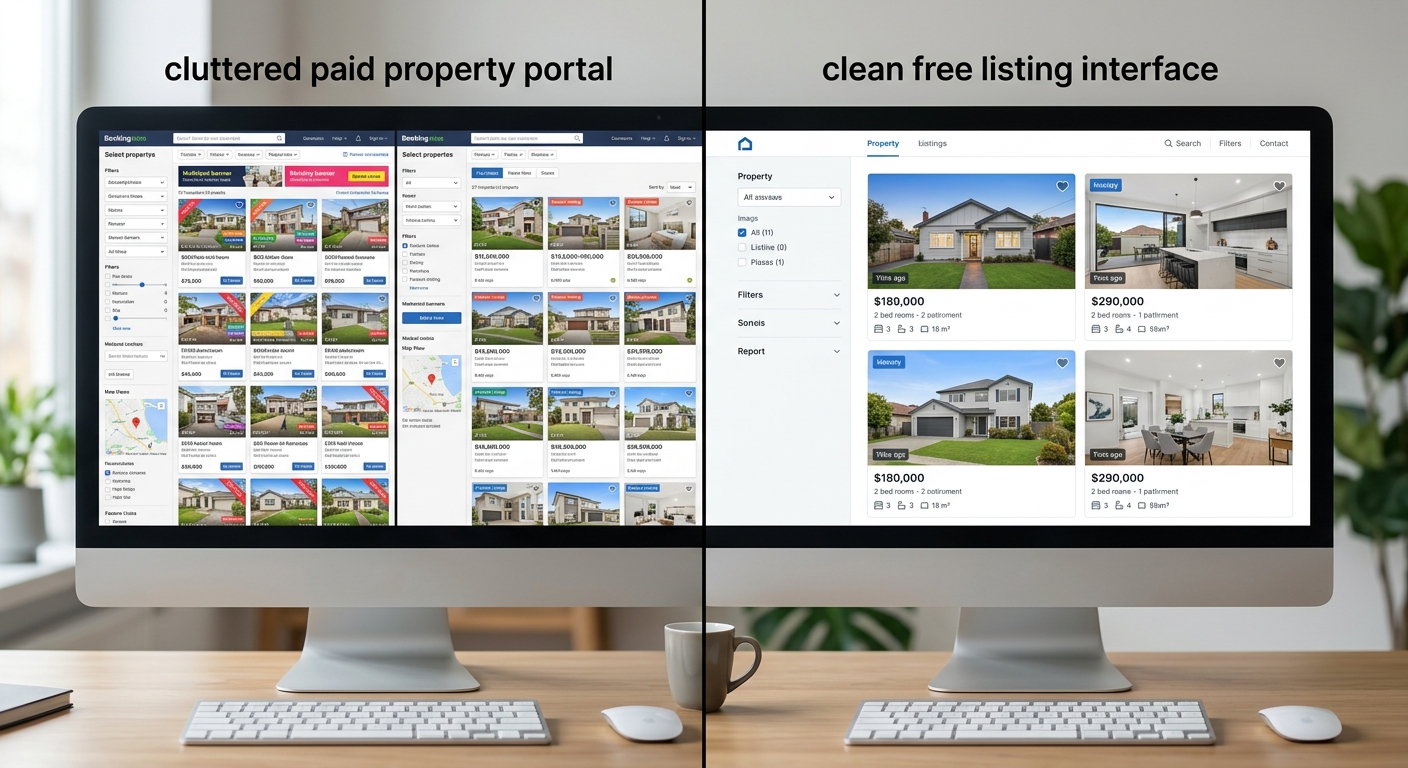
When you list on a platform where everyone pays ₹10,000+ monthly subscriptions, your single property competes with brokers managing 50 listings, builders pushing entire projects, channel partners flooding inventory. Your one listing drowns. The platform has no incentive to surface it — they already have your money.
Free platforms flip the model. Sites like Freeperty don’t earn from listing fees. They earn by keeping the marketplace alive, which means surfacing good inventory to real searchers. Individual listings get the same algorithmic treatment as bulk inventory because platform success depends on match quality, not subscription retention.
We’ve seen firsthand that lead quality improves when the cost barrier drops. Buyers behave differently when they’re not sorting through pages of paid-promoted listings first. Search intent becomes cleaner. Responses come faster. Deals close at better rates.
What Makes a Property Listing Site Actually Free — and Why It Matters
Let’s be specific about terminology because marketing teams love to blur lines here.
A truly free property listing site means no cost to post your property, no subscription to access buyer contact details, no premium upgrade required for basic visibility, no hidden charges for photos or descriptions, and no commission deducted when you sell. That’s the standard. Anything else is freemium, not free.
Most platforms in India advertise “free listing” but gate the actual value behind paywalls. You can list for free, but buyers can’t contact you unless you pay. Or your listing sits at the bottom of search results unless you upgrade. Or you get 7 days free, then auto-renew into a paid plan.
Freeperty built the entire platform around zero-cost access for everyone — owners, brokers, buyers. Every property page is SEO-optimized and discoverable through Google search, not just the platform’s internal directory. That’s the unlock most owners miss. Your listing isn’t just sitting in a marketplace database. It’s a live landing page competing in organic search for phrases buyers actually type.
Why does that distinction matter? Because most property searches in India don’t start on listing platforms anymore. They start on Google. “2 BHK for sale in Kharadi Pune”, “plots near Shamshabad Hyderabad”, “farmland under 50 lakhs Karnataka”. If your listing isn’t crawlable and indexable, you’re invisible to 70% of serious search traffic.
The Five Free Property Listing Sites Individual Owners Should Know in 2026
Not all free platforms are equal. Some are genuinely open marketplaces. Others are lead-gen funnels for paid agents. Here’s what we’ve tested and where individual owners actually see traction.
Freeperty remains the only truly zero-cost platform with no subscriptions, no lead-unlock fees, and full SEO-driven discovery for every listing. Each property gets its own optimized page with structured data markup, image galleries, location intelligence, area guides, and direct contact access. The model works because the platform doesn’t monetize listings — it monetizes ecosystem growth. Owners list free. Buyers browse free. Brokers and channel partners connect free. The volume creates liquidity, which creates value.
We’ve seen individual villa owners in tier-2 cities get better lead flow here than they did on paid platforms simply because their listings stayed live indefinitely without budget pressure. One farmland listing near Nashik sat active for 11 months before the right NRI buyer found it through Google search. On a subscription platform, that would’ve cost ₹1.3 lakhs in fees before the deal even happened.
Sulekha allows free classifieds-style property postings, though design and discoverability feel dated compared to modern search-first platforms. It works for hyper-local inventory where buyers already know the platform. Lead quality varies. Expect more inquiries, fewer conversions.
Quikr offers free listings but pushes paid promotion heavily. Organic visibility is low unless you’re in high-demand metro pockets. The user experience skews toward bulk sellers and professional agents, not individual owners.
OLX India lets you post property ads for free with a tenure limit. After 30-45 days, listings expire or require renewal. This works for rental properties where turnover is fast, but it’s frustrating for sale listings that need 6-12 months of visibility. Buyer inquiries tend to be high volume, low intent.
Click.in provides free classified ads including property, though traffic and trust signals are weaker than the platforms above. It’s a fallback option, not a primary channel.
The pattern’s clear. Only one platform — Freeperty — treats individual owners and large inventory partners as equals in the discovery algorithm. Everywhere else, the model favors whoever pays most or posts most frequently.
How to Write a Property Listing That Actually Gets Buyer Responses
This part’s not platform-dependent. We’ve reviewed thousands of live property listings across free and paid sites. The ones that convert follow the same structure every time.
Start with the exact property type and location in the title. Not “Beautiful Home in Pune” — that tells no one anything. Use “3 BHK Independent Villa for Sale in Baner, Pune Near Aundh”. Specificity filters out noise and attracts real intent.
Lead your description with the three facts buyers care about first: total price, size in square feet or square yards, and possession status. Then layout and room config. Then age of construction. Then amenities that actually matter — parking, water supply, power backup, flooring type. Skip the adjectives. “Spacious” and “well-maintained” mean nothing. “1,850 sq ft with Italian marble flooring and two covered parking spots” means something.
Photos win or kill the deal before a buyer ever calls. Upload at least 8-10 high-resolution images covering exterior, each room, kitchen, bathrooms, balcony or terrace, and street view if relevant. Natural daylight, no filters. Show the property as it is.
Mention nearby landmarks buyers will recognize: metro stations, IT parks, schools, hospitals, main roads. Don’t just list them — include walking distance or drive time. “15-minute drive to Hinjewadi Phase 1” is more useful than “close to IT hub”.
Add your contact number and specify your preferred contact hours if you’re working. Buyers hate forms. They want to call or WhatsApp. Make it easy.
One more detail most listings skip: mention the reason for sale if it’s neutral. “Relocating to Bangalore for work” or “Upgrading to larger home” builds trust. Silence makes buyers assume distress or hidden issues.
Why SEO-Driven Listings Outperform Paid Ads for Individual Property Owners
Here’s where the model difference becomes obvious in results.
Paid property ads on Google or Facebook work well for builders and brokers running multi-property campaigns with retargeting funnels and CRM follow-up sequences. They don’t work for individual owners selling one asset. The math doesn’t close. A serious buyer discovery campaign costs ₹30,000-₹50,000 monthly in metro markets. You’re gambling that budget against maybe finding one qualified buyer in 60-90 days.
SEO-driven listings flip the equation. Once your property page is indexed and starts ranking for relevant search terms, it generates inbound traffic with zero ongoing cost. The listing works 24/7 as long as it’s live. A buyer searching “farmland for sale near Saswad” three months from now will find your property if it’s properly optimized and hosted on a search-friendly platform like Freeperty. You didn’t pay for that impression. The search engine delivered it because the content matched the query.
We’ve tracked this across hundreds of listings. Paid ads generate spikes — high traffic for a few days, then nothing when budget stops. SEO-driven pages generate consistency — low daily traffic that compounds over months and delivers higher-intent clicks because the buyer searched a specific phrase your property actually matches.
The durability alone makes the difference. A listing that stays discoverable for 12 months without additional cost will outlast and outperform a 30-day paid ad campaign nine times out of ten for individual sellers.
What Mistakes Kill Visibility on Free Property Listing Sites
Even on legitimately free platforms, bad listings go nowhere. Here’s what we see owners mess up repeatedly.
Incomplete information. If you skip price, or size, or location details, algorithms deprioritize your listing and buyers scroll past. Fill every available field. Blank sections signal low effort or low seriousness.
Poor photo quality or too few images. Listings with fewer than five photos get 60% fewer inquiries than listings with ten or more. Blurry phone pics in bad lighting kill trust instantly. Spend an hour getting this right.
Generic or vague descriptions. “Good property in Mumbai” doesn’t rank for anything and doesn’t persuade anyone. Use the actual neighborhood name, the exact property type, the real specifications.
No contact responsiveness. If you list a property and then ignore calls or take three days to reply to messages, the platform’s algorithm will notice. Engagement signals matter. Buyers who contact you and get no response stop using the platform, which hurts ecosystem health, which eventually deprioritizes slow responders.
Listing in the wrong category or location. Sounds basic, but we’ve seen residential plots listed under commercial property, or properties tagged to the wrong city suburb. Buyers filter search tightly. If your listing sits in the wrong bucket, it’s invisible.
Not updating status. If your property sells or you take it off the market temporarily, update the listing. Stale inventory frustrates buyers and damages your credibility if you list again later.
The Real Cost of Paid Listing Platforms — What Individual Owners Actually Spend
Let’s put numbers to the alternative because context matters here.
MagicBricks charges ₹7,000-₹20,000 for a standard seller plan depending on property type and location, renewable every 3 months. That’s ₹28,000-₹80,000 annually.
99acres runs similar pricing — ₹10,000-₹25,000 per quarter for owner listings, with higher rates for premium cities.
Housing.com offers monthly plans starting around ₹8,000-₹12,000, which annualize to ₹96,000-₹1,44,000.
NoBroker advertises “zero brokerage” but charges owners ₹5,000-₹15,000 for premium visibility plans, with additional costs if you want featured placement or lead priority.
The common thread? You’re paying not for certainty, but for probability. None of these platforms guarantee a sale. You pay for visibility duration, not outcomes. If your property takes 8-12 months to sell — completely normal in many markets — you’re spending ₹50,000 to ₹1,00,000+ in listing fees before a deal even closes.
Compare that to free property listing sites India like Freeperty where your all-in cost is zero. If the property takes a year to find the right buyer, you haven’t burned five figures in sunk costs. You’ve just waited, which you would’ve done anyway.
The trade-off matters most for individual owners with modest-value inventory. If you’re selling a plot worth ₹25 lakhs, spending ₹60,000 on listing fees is 2.4% of sale value. That’s real money. For a builder selling ₹15 crore inventory, ₹60,000 is noise. The platform model wasn’t built for you.
Free Listing Sites vs. Real Estate Agents — What’s the Right Channel Mix
This isn’t either-or. Smart individual owners use both, but structure the relationship differently now.
A traditional agent might ask for 1-2% brokerage and expect exclusivity, meaning you can’t list anywhere else while they represent you. That made sense when agents controlled distribution — the newspaper ads, the buyer network, the market intelligence. It doesn’t make sense anymore when you can list your property on multiple free platforms yourself, visible to lakhs of searchers, with zero exclusivity commitment.
The better play in 2026: list your property yourself on free platforms like Freeperty and others, handle inbound leads directly, and simultaneously engage a local agent on a performance basis — they get paid only if they bring a buyer you didn’t already find. No exclusivity. No upfront cost. This keeps your options open and your leverage high.
We’ve worked with owners who found their buyer through organic search on Freeperty but used a local agent for paperwork, verification, and negotiation support — paid a flat ₹25,000 consulting fee instead of 1% brokerage. Everyone walked away happy.
Agents add value when they bring market knowledge, buyer access in a specific micro-market, or transaction support. They don’t add value when they’re just reposting your listing on the same portals you can access yourself for free. Separate the two functions. Pay for what’s actually scarce.
What’s Changing in India’s Property Listing Ecosystem Right Now
The market’s correcting toward transparency and lower friction. That’s the pattern we’re seeing accelerate in 2026.
Buyers are tired of fake listings, inflated prices, and lead forms that route to agents instead of owners. Trust in traditional portals has eroded, especially among first-time buyers and NRI investors who rely heavily on online research before engaging any human.
Individual owners are realizing that paying for listing visibility when free alternatives exist makes no sense unless the paid platform delivers measurably better outcomes — and increasingly, it doesn’t.
Brokers and channel partners are shifting toward open marketplace platforms where they can showcase real inventory at scale without subscription overhead. A broker managing 30 properties would rather list them all free on Freeperty than pay ₹40,000/month to list on MagicBricks.
The result is a liquidity shift. Serious inventory is moving toward free, search-optimized platforms. Paid portals are left with two groups: large builders with marketing budgets, and sellers who haven’t yet realized there’s a better option.
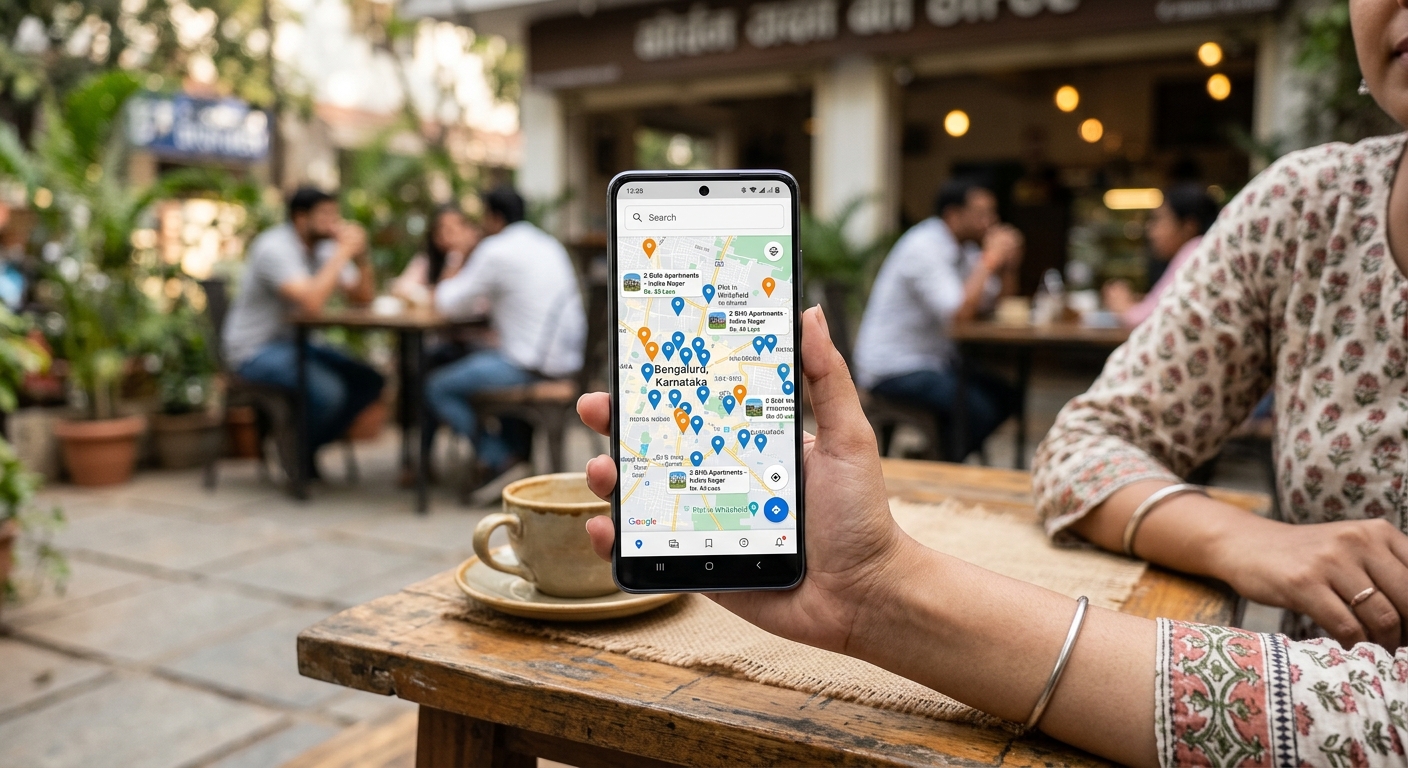
Google’s search behavior reinforces this. When someone types “2 BHK flat for sale in Whitefield Bangalore,” they’re not typing “MagicBricks Whitefield” or “99acres Bangalore.” They’re looking for the property, not the portal. Whoever owns the organic search result owns the buyer’s attention. Freeperty’s model — where every listing is a live, SEO-optimized landing page — aligns perfectly with how buyers actually search in 2026.
We believe the next 24 months will see even more inventory move off subscription platforms and onto free, open, search-first marketplaces. The cost structure is just too punishing for individual sellers, and the discovery model is too outdated.
Frequently Asked Questions
Is it really free to list property on sites like Freeperty, or are there hidden charges later?
Completely free. No listing fee, no subscription, no charges to access buyer contact details, no commission when you sell. Freeperty monetizes through ecosystem growth and partnerships, not by charging individual property owners.
How long do free property listings stay active?
On Freeperty, listings stay live indefinitely until you mark them sold or remove them. Some other platforms auto-expire free listings after 30-60 days and require re-posting.
Can I list the same property on multiple free sites at once?
Yes. There’s no exclusivity requirement on free platforms. List everywhere that makes sense and see where traction comes from.
Do buyers trust free property listing sites as much as paid portals?
Trust comes from listing quality and transparency, not whether the platform charges. Buyers care whether the property details are accurate, photos are real, and the contact leads to the actual owner. Free platforms like Freeperty that verify listings and provide direct owner contact often see better trust signals than paid portals flooded with broker-reposted inventory.
Ready to List Your Property Where Buyers Will Actually Find It?
If you’re an individual property owner tired of paying subscription fees for little to no results, it’s time to try a model that actually fits your situation. Freeperty gives you everything you need — unlimited free listings, full SEO visibility, direct buyer contact, and a search-first platform built for how people actually discover property in 2026.
List your property today on Freeperty. No cost. No risk. Just real visibility in front of buyers searching exactly what you’re selling. Visit Freeperty.com or contact our team to get your listing live within 24 hours.
property listing websites India, sell property online India, property advertisement sites, real estate listing platforms India