
You’ll hear a lot of confident advice about property registration before you actually do it. Most of it sounds right. Some of it is outdated. And a good chunk of it will cost you time, money, or both.
Here’s the truth: property registration in India isn’t complicated because the process is hard. It’s complicated because everyone — sellers, brokers, lawyers, even bank officials — tells you a slightly different version of what needs to happen. And you, standing in the middle of the biggest purchase of your life, have to figure out who’s actually right.
Let’s fix that. We’re going through the myths first, then the real process, then what actually trips people up.
Myth 1: Registration and Sale Deed Are the Same Thing
They’re not. But you’ll hear people use them interchangeably.
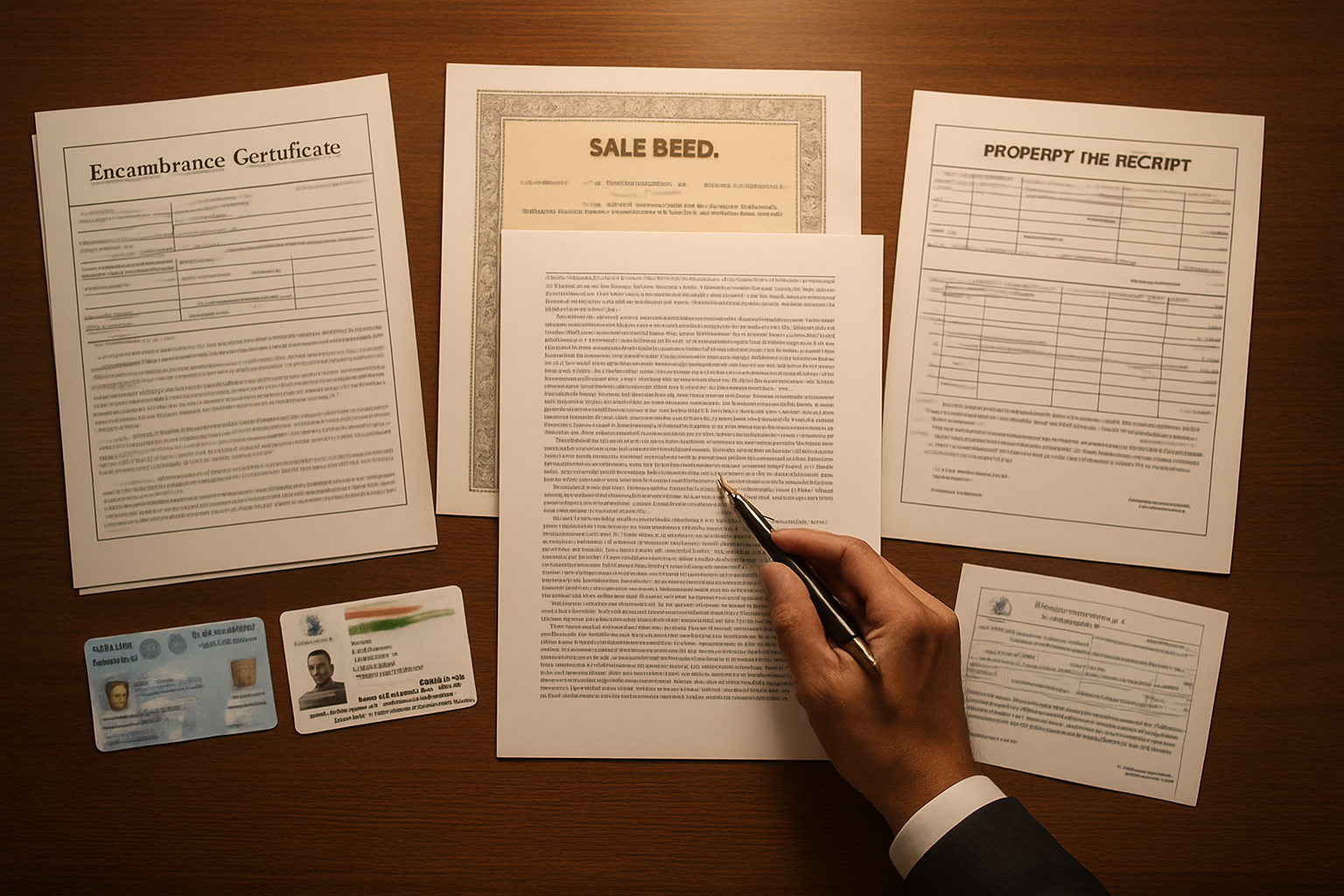
The sale deed is a document. It’s proof that ownership transferred from seller to you. Registration is the legal act of recording that document with the government. One is paper. The other is process.
Here’s why this matters: you can have a signed sale deed sitting in your hands and still not own the property legally. Until it’s registered at the sub-registrar’s office, that deed is just a fancy piece of paper with no enforceability in court.
We’ve seen buyers on Freeperty who assumed signing the agreement was enough. It’s not. If the seller changes their mind before registration, you’re stuck in a legal mess that could take years. Registration is the finish line. Everything before it is just running.
Myth 2: You Can Skip the Lawyer If You Trust the Seller
Trust is great for friendships. It’s a terrible strategy for property transactions.
Even if your seller is your cousin, your childhood friend, or someone who “wouldn’t cheat you,” you still need a lawyer to verify documents before registration. Not because people are dishonest — though some are — but because most sellers genuinely don’t know what’s wrong with their own paperwork.
A seller might not realize their property has an unresolved legal dispute from 1987. They might not know their mother’s share wasn’t properly documented when their father died. They might think the municipal tax receipts don’t matter because “we always paid on time.”
One case on Freeperty involved a buyer in Pune who skipped legal verification because the seller was a family friend. Turned out the property had a 12-year-old court case attached to it that the seller genuinely didn’t know about. The registration got blocked. The buyer lost six months and had to renegotiate the entire deal at a higher price because the market had moved.
A property lawyer costs between ₹15,000 and ₹40,000 depending on the city and property value. That’s cheap insurance against buying a problem you can’t solve.
What Actually Happens During Property Registration
Let’s walk through the real process. No jargon. No skipped steps.
Step 1: Document verification before registration
Before you even book an appointment at the sub-registrar’s office, your lawyer should verify the chain of ownership going back at least 30 years. This is called a title search. You’re checking that every single transfer of ownership was legal, documented, and clear.
You’ll also need the encumbrance certificate — a document that shows whether the property has any loans, mortgages, or legal claims against it. If the seller took a loan to buy the property and hasn’t cleared it yet, that shows up here.
Most states let you get the EC online now through the state revenue department portal. It usually costs between ₹50 and ₹200 depending on how many years you’re checking.
Step 2: Drafting and printing the sale deed
Your lawyer drafts this. It includes the property details, sale price, seller and buyer information, payment terms, and possession date. Both parties review it. Once everyone agrees, you print it on non-judicial stamp paper of the appropriate value.
Stamp duty varies wildly by state — anywhere from 3% to 7% of the property value in most cases. Women buyers often get a discount, usually 1% to 2% lower. This isn’t optional. No stamp duty payment, no registration.
You can buy stamp paper or pay stamp duty online in most states now. Maharashtra, Karnataka, Tamil Nadu, Delhi, and Telangana all have e-stamping. It’s faster and avoids the risk of fake stamp paper, which still exists in some areas.
Step 3: Booking the registration appointment
You book a slot online through your state’s registration department portal. Some states let you walk in, but most major cities now require prior appointments to avoid chaos.
You’ll need to bring the original sale deed, identity proof for both parties, address proof, PAN cards, two witnesses with ID proof, and passport-sized photos. If either party can’t attend, they need to send someone with a notarized power of attorney.
Registration fees are usually 1% of the property value, capped at a maximum amount that varies by state. In Maharashtra, for example, it’s capped at ₹30,000.
Step 4: Physical registration at the sub-registrar office
On the appointment day, both buyer and seller show up. The sub-registrar verifies identities, checks the documents, confirms that both parties agree to the terms, and collects fingerprints and signatures.
The two witnesses also sign. Their role is to confirm that both parties signed willingly and understood what they were doing.
Once everything checks out, the sub-registrar records the deed in the government register, stamps it, and hands you a registered copy. This is now a legal public record. Anyone can request a copy of it from the registration office.
This step usually takes 2 to 4 hours if your appointment is on time and your paperwork is clean.

The Documents You Actually Need
Stop asking random people what documents you need. Here’s the actual list for most residential property transactions:
- Original sale deed printed on stamp paper
- Encumbrance certificate for the last 13 to 30 years
- Property tax receipts for the last few years
- Approved building plan and occupancy certificate (if it’s a building)
- No Objection Certificate from the housing society (if applicable)
- PAN cards of buyer and seller
- Aadhaar or other government-issued ID and address proof
- Two witnesses with ID proof
- Sale agreement (the initial agreement to sell, not the deed)
- Payment receipts showing how much was paid and when
- Power of attorney if anyone is signing on someone else’s behalf
If you’re buying from a builder or developer, you’ll also need the original allotment letter, construction agreement, and completion certificate.
Missing even one document can delay your registration by weeks. The sub-registrar won’t process incomplete applications.
Myth 3: Online Registration Means You Don’t Visit the Office
Partially true. Misleading in practice.
Several states now offer partial or full online registration for properties under a certain value — usually ₹30 lakh to ₹50 lakh depending on the state. You upload documents, pay fees, and sometimes even complete the entire process digitally.
But here’s the catch: most banks won’t disburse a home loan without a physical registered document with the sub-registrar’s wet signature and seal. And if there’s any complexity in your transaction — a power of attorney, a minor as co-owner, agricultural land conversion — you’ll probably still need to visit in person.
Online registration works best for smaller, straightforward transactions between individuals with no loan involved. For everything else, plan on showing up.
What Costs More Than You Expect
Stamp duty and registration fees are known costs. You calculate them upfront. What catches buyers off guard are the smaller, hidden costs that add up fast.
Lawyer fees, as mentioned, run ₹15,000 to ₹40,000. Encumbrance certificate costs are minor but vary by state. If you’re buying in a different city and can’t attend registration, notarizing a power of attorney costs another ₹2,000 to ₹5,000.
Property valuation charges apply if the sub-registrar thinks the sale price you declared is lower than the circle rate — the government’s minimum property valuation for that area. If your property falls under that, you’ll pay stamp duty on the circle rate, not your actual sale price. This happens more often than you’d think.
Some buyers on Freeperty tried to save on stamp duty by declaring a lower sale price. The sub-registrar flagged it, recalculated based on circle rate, and charged penalty interest on the shortfall. That “saving” cost them 23% more than if they’d declared correctly upfront.
Myth 4: Registration Means You Own the Property Completely
Registration gives you legal ownership. It doesn’t give you possession.
If the seller is still living in the property, or if there’s a tenant who refuses to leave, your registered deed doesn’t automatically evict them. Ownership and possession are two separate things in Indian property law.
This is why the sale deed should explicitly mention the possession date. If the seller doesn’t hand over possession by that date, you have legal grounds to act. Without that clause, you’re stuck negotiating or filing a lawsuit, both of which take time.
One Freeperty user bought a flat in Bangalore, completed registration, and then discovered the tenant had a rent agreement that ran for another 18 months. The buyer owned the property legally but couldn’t move in. The sale deed didn’t mention possession terms clearly, so they had no quick remedy.
Always confirm possession terms in writing before registration. And do a physical handover with keys, society documents, and utility transfer on the same day if possible.
How Freeperty Makes Property Search Simpler Before Registration
Finding the right property is half the battle. The other half is making sure the deal closes without surprises.
Freeperty lists properties from owners, brokers, builders, and channel partners across India — all on one free platform. You don’t pay to browse. You don’t hit subscription walls. You see complete listings with photos, walkthroughs, location details, and price trends.
But here’s the part that matters for registration: because listings on Freeperty include property type, location, and seller details upfront, you can start your due diligence earlier. You’re not wasting time on properties with unclear ownership or incomplete paperwork. You’re filtering for deals that can actually close.
If you’re a first-time buyer, an NRI, or someone investing in a new city, that visibility matters. You’re not flying blind into a transaction where registration becomes a nightmare because nobody told you the property was on agricultural land that needed conversion approval.
Common Mistakes That Delay Registration
Let’s speed through the mistakes we see most often:
Declaring a sale price lower than circle rate to save stamp duty. The sub-registrar recalculates it anyway and adds penalties.
Not checking if all co-owners signed the sale deed. If three people own a property and only two sign, registration fails.
Using an old encumbrance certificate. Some states accept ECs up to 30 days old. Others want it issued within 15 days of registration. Check your state’s rule.
Bringing witnesses who don’t have valid ID proof. The registration gets postponed on the spot.
Not confirming whether the seller has legal authority to sell. If they’re selling on behalf of a deceased parent without proper succession documents, registration won’t happen.
Assuming the builder will handle everything. Builders often push registration responsibility onto buyers, especially in delayed projects. Know what you’re responsible for.
Frequently Asked Questions
What is the difference between registration and mutation?
Registration records the ownership transfer with the government. Mutation updates the property tax records to reflect the new owner’s name. Registration is mandatory. Mutation is administrative but necessary if you want tax bills and official records in your name.
Can I register property without the seller being present?
Yes, if the seller provides a notarized power of attorney to someone who can represent them at registration. The PoA holder must bring the original PoA document, the seller’s ID proof, and their own ID proof.
How long does property registration take in India?
If all documents are correct and both parties attend the appointment, registration takes 2 to 4 hours at the sub-registrar’s office. Getting the registered document back can take another few days to two weeks depending on the state.
What happens if I don’t register the property within the time limit?
You’re legally required to register within four months of signing the sale agreement. After that, you’ll pay a penalty — usually 10% of the registration fee for every month of delay, up to a maximum. If you wait too long, the document might become invalid and you’ll have to redo the entire process.
Is property registration mandatory for all types of properties?
Yes. Whether it’s residential, commercial, agricultural, or a plot, registration is mandatory under the Registration Act, 1908. Some states have stricter rules for agricultural land, but registration itself is non-negotiable for any immovable property transaction above ₹100.
Ready to Find a Property Worth Registering?
Registration is the final step. Finding the right property is where it starts.
Freeperty gives you free access to thousands of listings across India — from owners, brokers, builders, and channel partners. No subscription fees. No hidden charges. Just a transparent marketplace where you can search, compare, and connect with sellers directly.
Whether you’re buying your first home, investing in a plot, or looking for commercial space, start your search on Freeperty. Every listing is SEO-optimized, which means you’re discovering properties that others might miss on paid platforms.
Visit Freeperty today and start browsing properties you can actually afford to register.