
We’ve listed over 40,000 properties on Freeperty across farmland and residential plots, and the question we get asked most often isn’t about location or price. It’s about returns. Which actually makes money? And here’s what surprises people — the answer changes depending on what you think ROI means.
Most investors compare farmland and residential plots the way they’d compare two fixed deposits. They look at appreciation, maybe rental yield, and call it a day. But that’s not how land works. Farmland can generate income while sitting idle. Residential plots can double faster but stay completely unproductive for years. The ROI story is more complicated — and more interesting — than most people realize.
Let’s break down the myths, the numbers, and the real-world patterns we’ve seen working with brokers, NRIs, and first-time buyers across India in 2026.
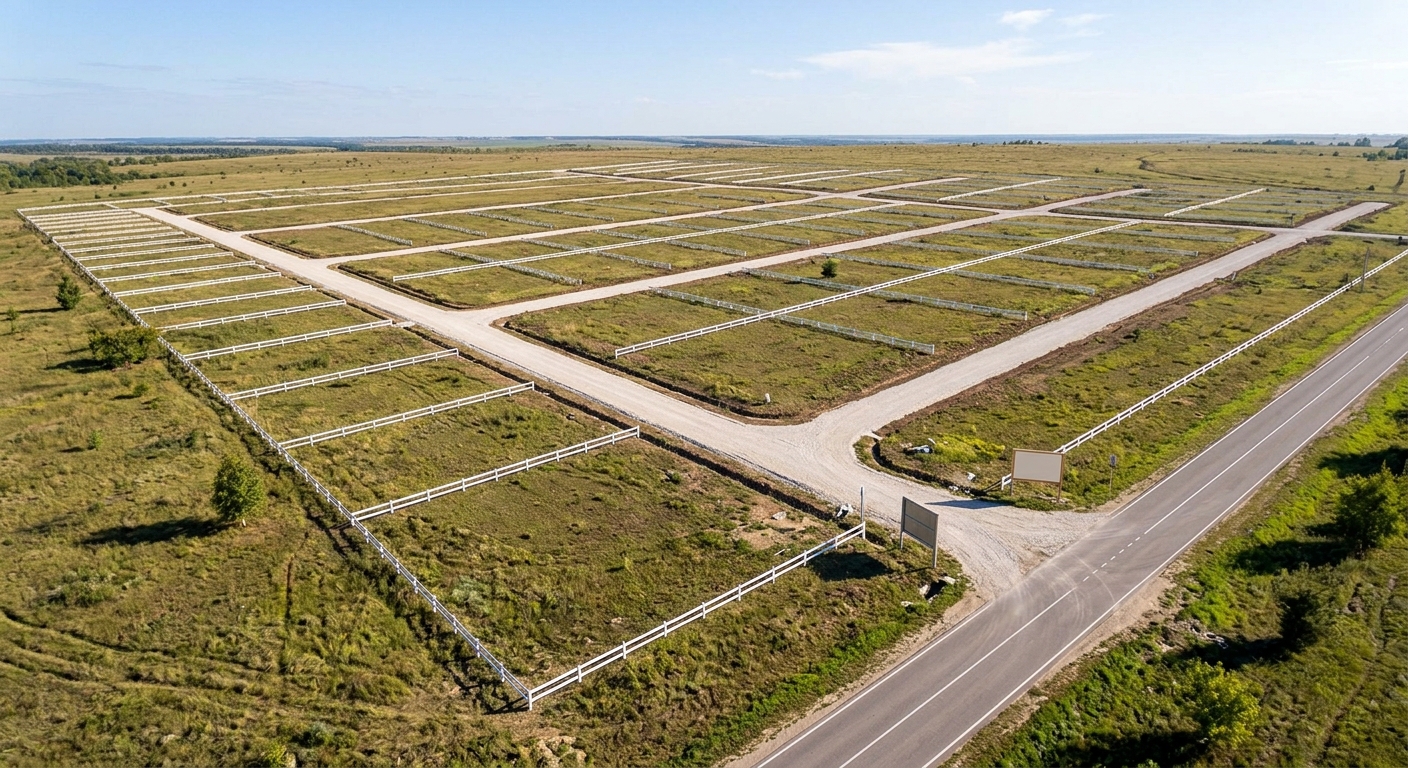
Myth 1: Residential Plots Always Appreciate Faster
Here’s the most repeated piece of advice in Indian real estate: buy a plot in a growing city, sit tight, and watch it double in five years. And yes, that does happen. We’ve seen plots near upcoming metro stations in Pune appreciate 80% in four years. But we’ve also seen plots 15 kilometers outside tier-two cities stay flat for a decade.
Appreciation isn’t automatic. It’s tied to infrastructure announcements, actual project execution timelines, and local demand. A residential plot in a well-connected suburb can absolutely outperform farmland in the short term. But only if the area actually develops. And that’s the friction most buyers miss — they buy based on promises, not reality.
Farmland appreciation works differently. It’s slower, steadier, and less speculative. Agricultural land near highways or industrial corridors doesn’t spike overnight. But it also doesn’t crash when a metro project gets delayed by three years. We’ve tracked farmland parcels in Maharashtra that delivered 6 to 8 percent annualized appreciation over ten years — not explosive, but reliable. And unlike residential plots, they weren’t sitting idle while appreciating.
Here’s the nuance most investors ignore: residential plots appreciate faster only in high-growth pockets, and those pockets are harder to predict than people admit. Farmland appreciates slower, but more predictably, especially near expanding city limits or industrial zones. If your timeline is five years or less and you’ve done serious location homework, residential plots can win. If you’re holding for ten years and want passive income while you wait, farmland often delivers better overall returns.
Myth 2: Farmland Doesn’t Generate Any Income
This one drives us crazy. The idea that farmland just sits there doing nothing until you sell it is completely outdated. Agricultural land can generate rental income through lease agreements with local farmers, and those yields are more stable than most people expect. We’ve seen farmland near Nashik leased for ₹25,000 to ₹40,000 per acre annually depending on water availability and crop viability. That’s not spectacular, but it’s income a residential plot will never give you.
And it’s not just crop leasing. Farmland near tourist corridors or weekend getaway zones can be leased for agro-tourism, farm stays, or organic farming projects. We listed a 5-acre parcel near Karjat last year that generated ₹1.2 lakh annually through a combination of mango cultivation and weekend farm experience bookings. The owner didn’t touch the land. A local operator handled everything.
Compare that to a residential plot. Until you build or sell, it generates nothing. You’re paying property tax, maybe fencing costs, and hoping appreciation covers your opportunity cost. If you’re holding a plot for eight years waiting for the area to develop, you’ve lost eight years of potential income. Farmland won’t make you rich through lease income, but it offsets holding costs and improves your effective ROI when you finally exit.
One more thing most buyers miss — farmland financing is harder, but tax treatment is better. Agricultural income is exempt under Section 10(1) of the Income Tax Act if the land is actually used for farming. Residential plot gains get taxed as capital gains. That difference matters more than people think when you’re calculating real returns.
Myth 3: Farmland Is Riskier Because It’s Less Liquid
Liquidity is the argument everyone uses to justify residential plots over farmland. And yes, it’s true that residential plots in developed areas sell faster. List a plot in an approved layout near Bangalore or Hyderabad, and you’ll get inquiries within weeks. List farmland in a rural zone, and it might take months.
But liquidity isn’t the same thing as risk. Illiquidity just means you need to plan your exit better. What actually creates risk is buying land with unclear title, disputed boundaries, or regulatory restrictions you didn’t understand. And those risks exist equally in both categories.
We’ve seen more title disputes on residential plots than farmland in our experience at Freeperty. Why? Because residential layouts get carved up, resold, and subdivided faster. Approvals get faked. Encroachments go unnoticed. Farmland transactions move slower, which actually forces better due diligence. Buyers take the time to verify land records, check conversion restrictions, and confirm boundaries with local revenue offices.
The real risk in farmland isn’t liquidity — it’s regulation. Agricultural land conversion rules vary wildly by state. In Karnataka, you need government permission to convert farmland to non-agricultural use, and that can take years. In Maharashtra, rules differ depending on whether the land falls inside municipal limits or not. If you’re buying farmland hoping to convert it and sell as residential plots later, you’re taking on regulatory risk that most investors underestimate.
Here’s the better way to think about liquidity: if you need to sell within two years, buy a residential plot in a developed area. If your timeline is seven years or more, farmland offers better income potential and comparable exit timelines once you account for actual market demand in tier-two and tier-three zones.
Farmland vs Residential Plot ROI India: The Numbers That Actually Matter
Let’s compare two real scenarios we’ve seen on Freeperty in 2026. Both are investors with ₹50 lakh to deploy, five- to ten-year holding period, and a goal of maximizing total returns including any interim income.
Scenario A: Residential Plot in Pune Outskirts
Buyer purchases a 1,200 sq ft plot in an approved layout 20 kilometers from Hinjewadi IT Park. Price: ₹50 lakh. The area has a planned metro extension announced but not yet under construction. Holding period: seven years. Appreciation assumption based on local trends: 9 percent annually if infrastructure delivers, 4 percent if it doesn’t. No income during holding period. Property tax and maintenance: ₹15,000 per year.
Best case exit value after seven years: ₹91.5 lakh (9% CAGR). Worst case: ₹65.8 lakh (4% CAGR). Total returns: 83% or 32% depending on infrastructure execution. Effective IRR: 8.9% or 4.0%.
Scenario B: Farmland in Nashik Belt
Buyer purchases 4 acres of farmland 15 kilometers from Nashik city limits, near the Nashik-Pune highway. Price: ₹50 lakh (₹12.5 lakh per acre). Leased to a local grape farmer at ₹30,000 per acre annually. Holding period: seven years. Appreciation assumption: 6 percent annually (steady demand from agro-industrial buyers and weekend farm seekers). Annual lease income: ₹1.2 lakh. Maintenance cost: ₹10,000 per year.
Exit value after seven years: ₹75.2 lakh (6% CAGR). Total lease income collected over seven years: ₹8.4 lakh. Combined exit value + income: ₹83.6 lakh. Effective IRR including income: 7.8%.
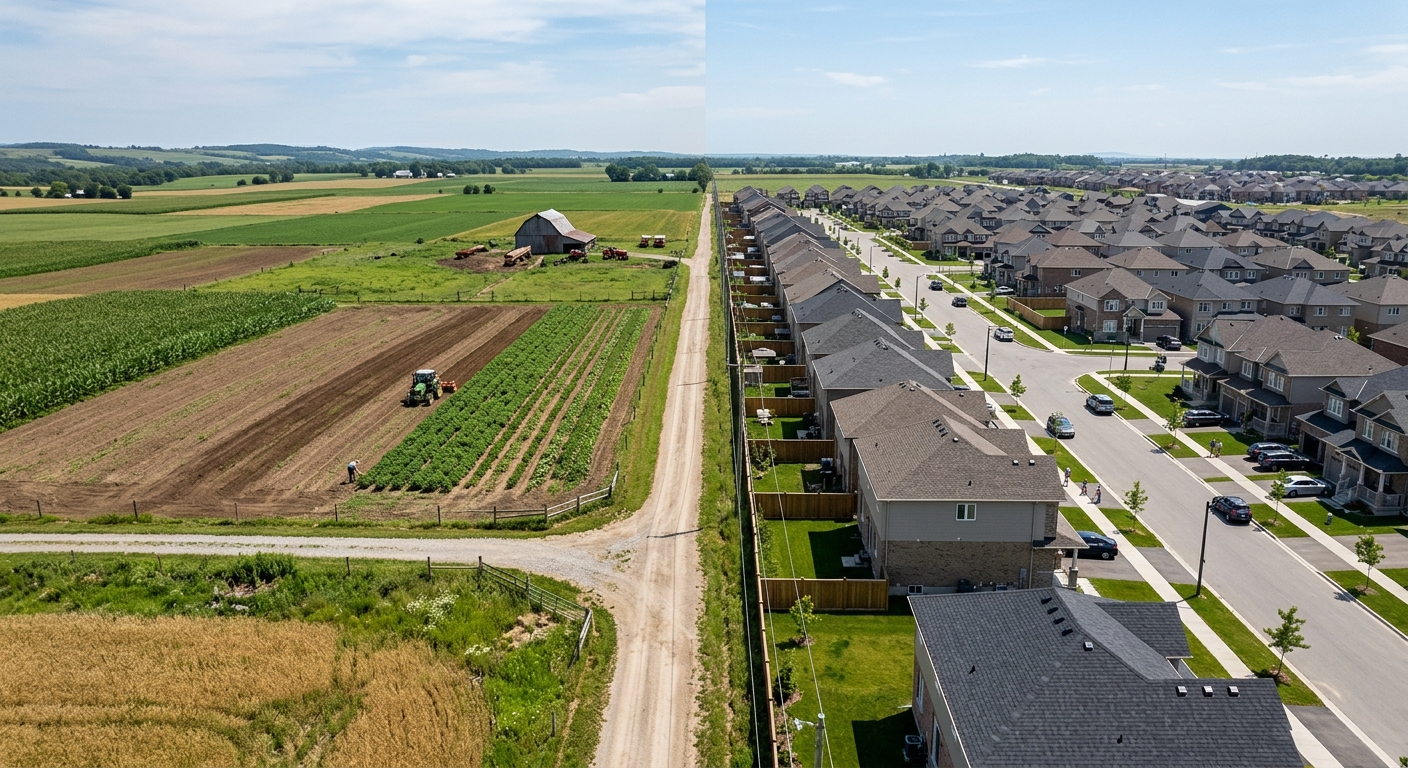
The residential plot wins on pure appreciation if infrastructure delivers. The farmland wins on risk-adjusted returns because it doesn’t rely on a single project timeline and generates income throughout.
And here’s the part almost no one calculates — tax impact. If the residential plot is sold before two years, it’s taxed as short-term capital gains at your income tax slab rate. After two years, it’s long-term capital gains at 20 percent with indexation. Farmland used for agriculture gets exemption on the income, and sale gains are treated as long-term after two years, but you lose indexation benefit if it’s classified agricultural. Depending on your tax bracket, the farmland ROI can end up higher post-tax even if gross returns look lower.
What Most Investors Get Wrong About Risk and Timeline
Risk in land investment isn’t volatility. It’s mismatch. Buying a residential plot with a three-year timeline in an area that needs ten years to develop is high risk. Buying farmland hoping for quick conversion and resale without understanding state-specific rules is high risk. The asset itself isn’t risky — your expectations are.
We’ve worked with NRI buyers who treat Indian land like a stock portfolio. They want liquidity, transparency, and quick exits. For them, residential plots in tier-one city suburbs make sense despite lower yields. We’ve also worked with second-generation investors who grew up watching their parents hold farmland that eventually became industrial zones. For them, patience and income generation matter more than fast appreciation.
Timeline determines strategy. If you’re buying land as a three- to five-year play, prioritize residential plots in areas with visible infrastructure progress — metro stations under construction, IT parks in operation, airports within 30 kilometers. If you’re holding seven years or more, farmland near expanding city limits or along highways offers better risk-adjusted returns when you include lease income and tax efficiency.
How Location Intelligence Changes the Farmland vs Residential Plot ROI India Equation
Generic comparisons don’t work anymore. A residential plot in Gurgaon and a residential plot in Nashik are completely different assets. Same with farmland in Punjab versus farmland in Karnataka. Returns depend on location intelligence — understanding infrastructure pipelines, regulatory environments, and actual local demand patterns.
At Freeperty, we structure every property listing as a searchable landing page with location context, nearby projects, and price trend visibility. That’s because buyers in 2026 don’t just want a plot — they want the data layer underneath it. Where’s the nearest highway? What’s the water table situation? Are there any pending conversion applications in the area? That intelligence changes ROI calculations completely.
For residential plots, the highest-ROI zones in 2026 are tier-two city expansion corridors where infrastructure is already funded and timelines are realistic. Think Coimbatore’s peripheral areas near the new airport, or Indore’s zones along the metro Phase 2 route. For farmland, the sweet spots are peri-urban belts within 30 kilometers of tier-one cities where industrial and logistics demand is growing but agricultural classification keeps prices reasonable.
One pattern we’ve noticed — residential plots near IT parks appreciate faster in the first three years, then slow down. Farmland near industrial corridors appreciates slower in the first five years, then accelerates as warehousing and logistics buyers enter the market. If you’re timing your entry and exit right, farmland can actually deliver better terminal value.
Should You Buy Farmland or a Residential Plot in 2026?
It’s not either-or. It’s about what you’re optimizing for.
Buy a residential plot if you want liquidity, faster appreciation in the right location, and you’re comfortable holding an unproductive asset for five to seven years. Best use case: tier-one city suburbs with confirmed infrastructure projects, or approved layouts in tier-two cities near operational IT hubs or airports. Worst use case: speculative plots in areas with no visible development progress where you’re betting on rumors.
Buy farmland if you want income during your holding period, tax-efficient returns, and you’re willing to wait seven to ten years for full value realization. Best use case: peri-urban belts near expanding cities, farmland along national highways, or areas with agro-tourism potential. Worst use case: remote agricultural zones with no conversion potential and weak local lease demand.
And here’s the move almost nobody makes but should — buy both. Allocate part of your capital to a residential plot in a high-growth zone for appreciation, and part to farmland for income and diversification. That’s the portfolio approach real estate investors with ten-year track records actually use.
At Freeperty, we’ve listed properties across both categories because we’ve seen both work. We’ve also seen both fail when buyers ignored location fundamentals or misjudged timelines. The platform is free to use, free to list, and every property page is built to give you the search visibility and context you need to make informed decisions. No subscriptions. No hidden fees. Just transparent access to inventory from owners, brokers, and developers across India.
Frequently Asked Questions
Is farmland investment better than residential plots in India for long-term ROI?
It depends on your timeline and income needs. Farmland typically delivers 6 to 8 percent annual appreciation plus lease income, while residential plots can appreciate 9 to 12 percent in high-growth zones but generate no income. For ten-year horizons, farmland often wins on risk-adjusted returns. For five-year plays in tier-one suburbs, residential plots usually perform better.
What are the tax benefits of buying agricultural land over residential plots?
Agricultural income from leasing farmland is exempt under Section 10(1) if the land is used for farming. Residential plots generate no income and face capital gains tax on sale — long-term at 20 percent with indexation after two years. Farmland also qualifies for long-term gains treatment after two years, but without indexation benefit, so the tax advantage depends on your holding period and income bracket.
Can I convert farmland to residential plots for better returns?
Yes, but conversion rules vary by state and can take years. In Maharashtra, conversion requires non-agricultural use permission and depends on location and land classification. In Karnataka, government approval is mandatory and timelines are unpredictable. If you’re buying farmland hoping to convert and resell quickly, you’re taking on significant regulatory risk that most investors underestimate.
Which gives better rental income — farmland or residential plots?
Farmland can generate ₹25,000 to ₹50,000 per acre annually through crop leasing or agro-tourism, depending on location and water availability. Residential plots generate zero rental income until developed. If passive income during your holding period matters, farmland is the only option that delivers.
Ready to Compare Properties and Make Your Move?
List your property or browse thousands of residential plots and farmland options on Freeperty — completely free. No listing fees, no subscription walls, just transparent access to India’s growing real estate marketplace. Every property is a searchable landing page with location intelligence, price trends, and direct contact with owners, brokers, and developers.
Whether you’re an NRI investor exploring appreciation zones, a first-time buyer comparing ROI, or a channel partner expanding inventory, Freeperty gives you the visibility and choice you need. Start your search today at freeperty.com — because the best land investment decisions start with better information, not bigger budgets.