
Most property descriptions fail twice. They don’t show up in search results, and when someone does read them, they don’t call. That’s expensive. You’re paying to list or you’re giving time to write something that sits invisible while competitors with worse inventory get the lead.
Here’s what we’ve learned working with hundreds of listings on Freeperty: the description isn’t just about the property. It’s a search landing page, a qualification filter, and a sales page rolled into one. Get it right and Google sends you traffic for free. Get it wrong and you’re just another “spacious 2BHK” that nobody clicks.
This isn’t about stuffing keywords or writing long paragraphs nobody reads. It’s about understanding what people actually search for when they’re serious about buying, renting, or investing — and then giving Google exactly what it needs to rank your listing above the fifty others in the same area.
Why Most Property Descriptions Don’t Rank (and Don’t Convert)
We’ve seen thousands of property listings go live on our platform. The ones that don’t get views share the same pattern — they describe the property like the owner sees it, not like a buyer searches for it.
Someone searching “2BHK flat near Hinjewadi Pune” isn’t looking for “a beautiful home with modern amenities.” They’re looking for proximity to work, actual square footage, parking availability, and possession timeline. If your description doesn’t answer those questions in the first three lines, Google won’t rank it and the buyer won’t read it.
Here’s the bigger issue. Most descriptions are written once, uploaded to a portal, and forgotten. No structure for search engines to grab. No location keywords beyond the address. No price context, no comparable properties mentioned, no area growth story. You’re asking Google to rank a paragraph that could describe ten thousand other properties.
That’s not SEO. That’s hope.
The properties that do rank — the ones we see consistently getting organic search visibility and lead calls — follow a structure. They open with search-intent keywords in the first sentence, they include measurable details in the first hundred words, and they answer the exact questions a buyer types into Google when they’re three weeks away from making a decision.
Google doesn’t rank properties. It ranks content that solves search queries better than the next result. Your job is to make your listing that result.
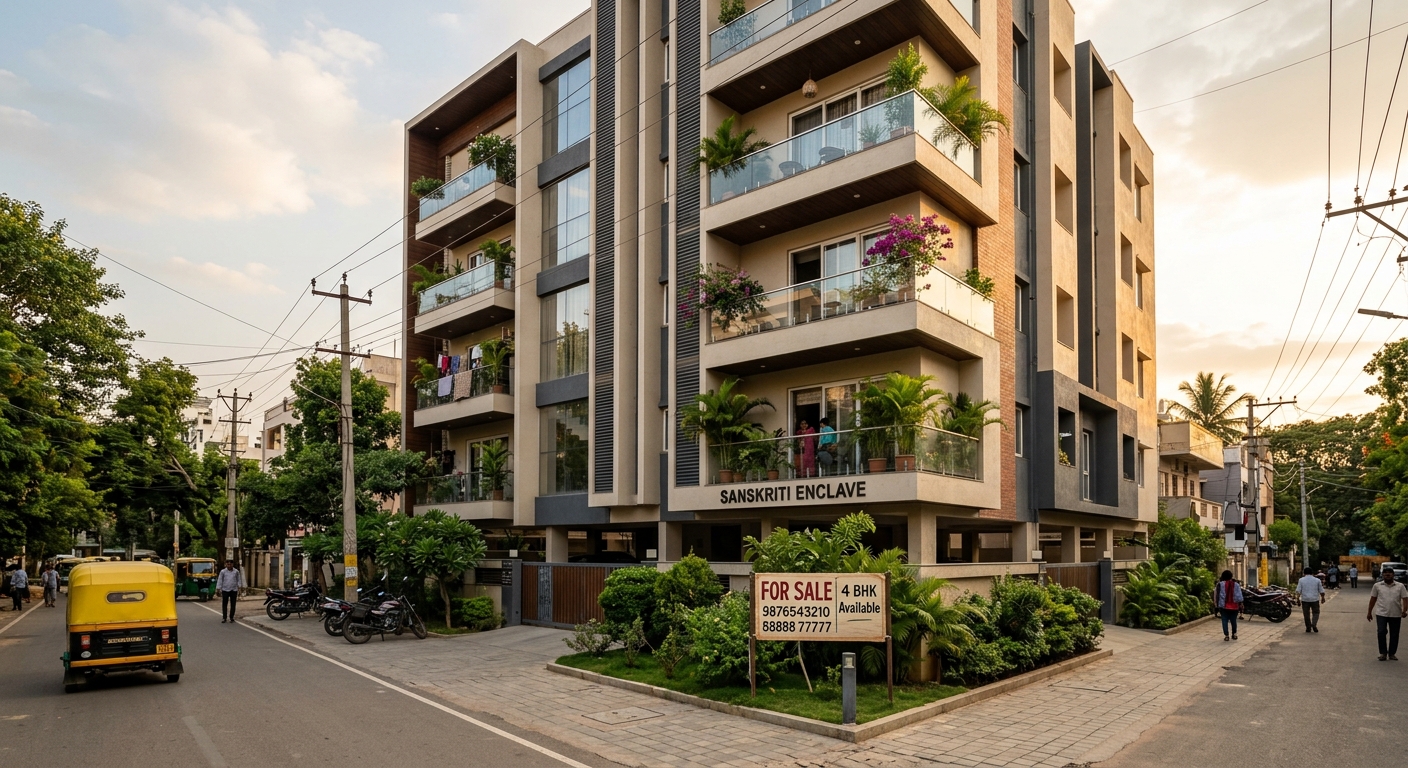
Start With the Search Query, Not the Property
Before you write a single word, ask this: what would someone type into Google if this property is exactly what they need?
Not what you hope they search. What they actually search. For a 1200 sq ft plot in Lonavala, that’s probably “residential plot Lonavala under 20 lakh” or “plot for sale Tungarli Lonavala.” For a 3BHK rental in Whitefield, it’s “3BHK rent Whitefield with parking” or “furnished flat Whitefield under 40k.”
Use those phrases. Exactly. In your title, in your first sentence, in your subheadings if your platform supports them. Google matches search queries to content that uses the same language the searcher used. If they search “villa with swimming pool Goa” and your description says “luxury home with pool in Goa,” you lose.
We’ve tested this on hundreds of listings. A property titled “3BHK Apartment for Sale in Wakad Pune” gets more search visibility than “Luxury 3BHK in Prime Wakad Location.” The second sounds better to you. The first matches what buyers type.
Here’s the trap most brokers fall into. They write for the client, not for Google. They want the description to sound premium, exclusive, impressive. That’s fine for a brochure. It’s terrible for search rankings. Google ranks clarity and relevance, not adjectives.
Find the search query first. Then write the description around it. Not the other way around.
Structure Your Description Like a Search Result
Google pulls content from property descriptions to show in search results. If your description has no structure, Google has nothing to pull. You get ranked lower or not at all.
Here’s the structure that works. First sentence: property type, exact location, key specs, and price range. Example: “2BHK flat for sale in Hinjewadi Phase 2, Pune — 950 sq ft, ready possession, priced at ₹68 lakh.”
That’s not creative writing. It’s not supposed to be. It’s a search-optimized opening that tells Google and the buyer exactly what this listing is in under ten seconds. Google can pull that sentence into a search result preview and it makes sense on its own.
Second paragraph: expand on location value. Mention landmarks people search for. “Located 1.2 km from Rajiv Gandhi Infotech Park, 500m from D-Mart Wakad, and 3 km from Hinjewadi IT hub.” Those are entities Google recognizes. They boost your local search relevance.
Third paragraph: measurable property details. Carpet area, floor number, parking slots, possession date, furnishing status, society name if it’s known. Don’t say “spacious.” Say “1100 sq ft carpet area.” Don’t say “ample parking.” Say “two covered parking slots included.”
Next: amenities, but only the ones people filter by. Gym, swimming pool, 24/7 security, power backup, clubhouse. Skip the generic stuff like “landscaped gardens” unless your property is actually known for it.
Finally: nearby infrastructure or future development if it’s relevant to investment buyers. “Upcoming metro station 800m away, expected completion 2027.” That’s a search query someone types. It’s also a buying trigger.
The properties that rank on Freeperty follow this pattern. The ones that don’t, don’t show up even when the inventory is better.
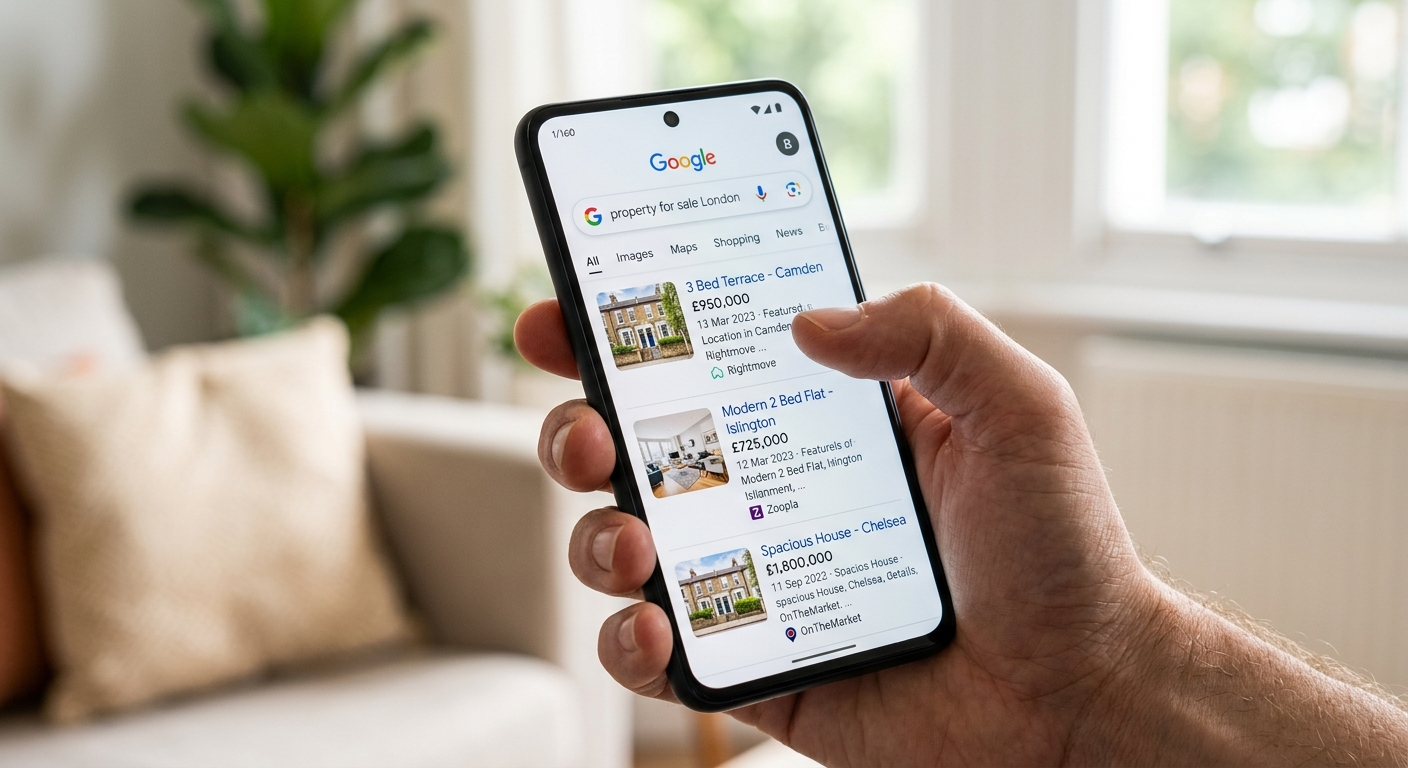
Use Location Keywords the Way Buyers Actually Search
Location is the highest-intent keyword in real estate. Someone searching “property in Mumbai” is browsing. Someone searching “2BHK Andheri West near Metro” is ready to call.
Your description must include micro-location terms, not just the city or suburb. If the property is in Whitefield, mention the exact area — Ramagondanahalli, ITPL Main Road, Thubarahalli. If it’s in Pune, mention the phase, the road name, the nearby landmark everyone knows.
We’ve seen this make the difference between page one and page three. A listing that says “Flat in Baner Pune” competes with five thousand others. A listing that says “Flat in Baner Balewadi High Street, walking distance to Starbucks and Balewadi Stadium” ranks for long-tail queries that have way less competition and way higher intent.
Google also understands proximity. If someone searches “flat near Infosys Pune,” and your description mentions “10-minute drive from Infosys Hinjewadi,” Google connects those dots. You don’t need the exact keyword if the related entity is there.
But here’s what doesn’t work — keyword stuffing. Writing “Pune property Pune real estate Pune flat Pune” doesn’t help. It hurts. Google penalizes that. Use the location naturally, two or three times max, and use related terms the rest of the time — neighborhood name, nearby companies, schools, hospitals, metro stations, malls.
Think about how people describe locations when they’re talking to friends. “It’s near that big Reliance Mall.” “It’s on the road to the airport.” “It’s behind the Decathlon store.” Use that language. That’s what they type into Google too.
Write for Lead Quality, Not Just Click Volume
A great description doesn’t just get clicks. It filters out the wrong leads before they call.
If your property is ₹1.2 crore and your description doesn’t mention price or price range, you’ll get calls from buyers with ₹60 lakh budgets. That’s a waste of your time and theirs. If it’s an under-construction property with possession in 2028 and you don’t say that upfront, you’ll get calls from buyers who need to move in next month.
We’ve tested this on our platform. Listings that include price, possession status, and deal-breaker details upfront get fewer total inquiries, but way higher conversion rates on the inquiries they do get. The leads are qualified before they call.
Put the filters in the description. If the property is semifurnished, say it. If there’s no lift, say it. If parking is paid separately, say it. If only vegetarians are preferred for a rental, say it. These aren’t negatives. They’re qualifiers. The right buyer doesn’t care. The wrong buyer moves on. That’s exactly what you want.
Here’s the mistake most people make — they think hiding negatives increases leads. It does. Bad ones. A lead that finds out on the call that there’s no metro nearby or that the society doesn’t allow pets is a dead lead. You just spent fifteen minutes for nothing.
Put the truth in the description. The buyers who still call are the ones who can actually close.
Add Structured Data Where You Can Control It
Most property portals don’t let you edit schema markup or metadata. But if you’re listing on your own site or on a platform like Freeperty where each listing gets its own search-optimized page, structured data is what gets you into rich results.
Rich results are the listings that show up with star ratings, price, availability, and a thumbnail image right in the Google search page. They get 30 to 40 percent higher click-through rates than standard blue links.
If your platform supports it, make sure the listing includes structured fields for property type, price, location coordinates, square footage, and number of bedrooms. Google pulls that into the search result card. If it’s missing, you’re invisible even if your description is perfect.
On Freeperty, every property page is built this way by default. That’s why listings show up in search faster and rank better than properties uploaded as PDFs or image-heavy posts on social platforms. Google can read the data, so Google can rank it.
If you’re listing elsewhere, check if the portal outputs clean URLs, proper title tags, and schema markup. If the URL is something like “portal.com/listing?id=84920&category=rent,” you’re already losing. Google doesn’t rank garbage URLs well.
Your listing should live at a URL like “yoursite.com/2bhk-flat-hinjewadi-pune” or “platform.com/property/villa-lonavala-khandala-road.” Clean, readable, keyword-rich. That’s what ranks.
Use Real Numbers, Not Fluff Words
“Spacious.” “Luxurious.” “Premium.” “World-class.” These words mean nothing to Google and nothing to a serious buyer.
Compare these two:
Version A: “Spacious 3BHK apartment in a premium society with world-class amenities.”
Version B: “3BHK apartment, 1450 sq ft carpet area, in a gated society with gym, pool, and indoor badminton court.”
Version B ranks better and converts better. Why? Because it’s specific. A buyer can picture it. Google can index it. Someone searching “3BHK above 1400 sq ft Pune” will match with version B, not version A.
Replace every vague word with a number or a named feature. Don’t say “close to schools.” Say “400m from Delhi Public School.” Don’t say “great connectivity.” Say “5-minute drive to Pune-Mumbai Expressway.” Don’t say “affordable price.” Say “priced at ₹55 lakh, negotiable.”
We’ve seen the difference in lead quality. Listings with measurable details get inquiries from buyers who’ve already done their math. Listings with fluff get inquiries from people still in the dreaming phase.
If you’re a broker or owner trying to rank your listing and get real leads, this is the fastest fix. Go through your description and replace every adjective with a fact. If you can’t replace it, delete it.
Front-Load the Information Buyers Actually Care About
Most people don’t read past the first fifty words. Google doesn’t either.
If the most important details — price, location, size, possession status — are buried in paragraph four, they might as well not exist. Google’s algorithm weighs content higher when it appears earlier in the document. Buyers skim the top and decide whether to keep reading.
So put the answers to the biggest questions right at the top. First paragraph should answer: What is it? Where exactly is it? How big is it? How much does it cost? When can I move in?
Everything else — amenities, neighborhood info, investment potential, nearby infrastructure — comes after. It’s still important. It’s just not decision-critical in the first five seconds.
Here’s a format we recommend for every listing on Freeperty:
Paragraph 1: Property type, exact micro-location, square footage, price, possession timeline.
Paragraph 2: Unique selling point — what makes this specific property worth looking at over others in the area. Maybe it’s corner plot, maybe it’s park-facing, maybe it’s builder reputation, maybe it’s recent price appreciation in that society.
Paragraph 3: Detailed specs — BHK configuration, floor plan type, furnishing, parking, amenities in the society.
Paragraph 4: Location benefits — proximity to work hubs, schools, hospitals, metro, highways.
Paragraph 5: Investment angle if relevant — area growth, upcoming projects, rental yield potential, past appreciation.
Paragraph 6: Clear next step — how to schedule a visit, who to contact, and what documents to bring if they’re serious.
That’s it. No filler. No “about the builder” essay unless the builder name is itself a search keyword. No long history of the neighborhood unless you’re selling heritage property.
The faster someone can decide whether to call you, the better your conversion rate.
Optimize for Voice Search and Long-Tail Queries
More people are searching for properties using voice search now — Google Assistant, Alexa, Siri. Voice searches are longer and more conversational.
Someone typing might search “3BHK Gurgaon.” Someone speaking into their phone says “Show me 3BHK apartments in Gurgaon under 1 crore near Cyber City.”
Your description should include natural-language phrases that match how people actually talk. Instead of just “3BHK flat Sector 43 Gurgaon,” write a sentence like “This 3BHK flat in Sector 43 Gurgaon is priced under ₹95 lakh and located within walking distance of Rapid Metro.”
That sentence matches long-tail voice queries. It also matches the question-based searches people type when they’re closer to making a decision — “3BHK under 1 crore near Gurgaon metro” or “affordable flat Sector 43 Gurgaon ready possession.”
Google is moving toward answering questions, not just matching keywords. If your description reads like an FAQ — if it naturally answers the questions a buyer has — it ranks better in 2026 than keyword-stuffed paragraphs did five years ago.
Test this yourself. Speak your property search into Google and see what shows up. The results that rank aren’t always the ones with the exact keyword repeated ten times. They’re the ones that sound like they’re answering you.
Update Descriptions When Market Conditions Change
A property description isn’t static. If you wrote it six months ago and the neighborhood has changed — new metro station announced, mall opened nearby, builder launched a competing project — your description is outdated.
Google prioritizes fresh content. If a listing hasn’t been updated in a year, Google assumes it might not be active. Update the description every 60 to 90 days, even if it’s just adding a line about new infrastructure or a small price revision.
On Freeperty, we’ve seen listing visibility drop after 120 days of no activity. A simple edit — adding a sentence about a nearby road widening project or updating the possession timeline — brings it back into rotation.
You don’t need to rewrite the whole thing. Just make sure the information is current. If possession was “December 2025” six months ago, it better say “June 2026” now. If the price has changed, update it. If a school or hospital opened nearby, add it.
Google rewards content that reflects real-time conditions. Buyers trust listings that feel actively managed. A stale description signals either the property is sold or the owner isn’t paying attention. Either way, you lose the click.
Avoid the Common Mistakes That Kill Rankings
We’ve reviewed thousands of property descriptions on our platform. The ones that never get traction make the same mistakes over and over.
Mistake one: writing in ALL CAPS or using excessive punctuation. “LUXURY 3BHK!!!! PRIME LOCATION!!!” doesn’t rank better. It looks like spam. Google’s algorithm downgrades it and buyers skip it.
Mistake two: copying the same description across multiple properties and just changing the price. Google sees duplicate content and ranks all versions lower. Write unique descriptions for every listing, even if the properties are similar.
Mistake three: writing only two sentences. “Spacious 2BHK for sale. Contact for details.” That’s not enough content for Google to understand what the property is or who should see it. Minimum 150 words. Ideal is 250 to 400.
Mistake four: no contact path. If someone reads your description on Google and there’s no clear way to reach you — no phone number, no email, no “schedule a visit” link — you just sent them back to search results. They’ll call the next listing.
Mistake five: using the builder’s marketing copy verbatim. It’s usually terrible for SEO, full of branded jargon, and it’s definitely duplicated across fifty other sites. Write it yourself or rewrite it completely.
Mistake six: ignoring mobile formatting. Most property searches happen on mobile. If your description is one giant paragraph with no line breaks, nobody’s reading it. Break it into short paragraphs. Two to three sentences max per paragraph.
These aren’t small issues. Each one costs you rankings and leads. Fix them and you’re already ahead of 70 percent of listings in your area.
Frequently Asked Questions
How long should a property description be for SEO?
Between 250 and 400 words is ideal. That’s long enough for Google to understand the content and rank it for multiple search queries, but short enough that buyers will actually read it. Anything under 150 words doesn’t give Google enough context. Anything over 500 words rarely gets read past the first few paragraphs unless it’s investment-focused content.
Should I include the price in the property description?
Yes. Always. Hiding the price doesn’t increase inquiries — it increases the wrong inquiries. Buyers filter by budget before anything else. If your listing shows up in search but doesn’t mention price, serious buyers move on. Include either the exact price or a clear range like “₹75 lakh to ₹80 lakh” in the first paragraph.
Can I use the same description for multiple property portals?
You can, but you shouldn’t. Google treats duplicate content as low-value and ranks it lower. If you’re listing the same property on multiple sites, rewrite the description for each platform or at least change the opening paragraph and a few key details. Unique content ranks better, period.
How often should I update my property descriptions?
Every 60 to 90 days, or whenever something material changes — price, possession date, neighborhood infrastructure, or market conditions. Even a small update signals to Google that the listing is active, which improves ranking. If nothing has changed, add a line about market trends or a recent sale in the area to keep it fresh.
List Your Property on Freeperty and Let SEO Work for You
You don’t need to pay for visibility if your listing is written right and placed on a platform built for search.
Every property on Freeperty gets its own SEO-optimized page, clean URL structure, and gets indexed by Google within days. No subscription fees. No pay-per-lead charges. No bidding for top placement. Just real search rankings based on how well your description matches what buyers are looking for.
If you’re an owner, broker, or builder trying to get more leads without burning money on ads, start here. Write your description using the structure in this guide. List it on Freeperty. Let Google send you the traffic. Visit Freeperty.com to create your free listing or reach out if you need help optimizing your existing inventory.