
Channel Partner Property Listings: How to Build Inventory Visibility Without Subscriptions
Channel partner property listings: how to build inventory visibility without subscriptions — free strategies for real estate partners, brokers, and consultants to showcase property inventory and reach buyers in 2026.
Rajesh runs a property consultancy in Thane. Six months ago, he had 140 properties in his inventory — mix of builder flats, resale apartments, a few plots in Karjat. Good listings. Decent locations. But when buyers searched online, they found aggregator sites with subscriptions starting at ₹15,000 a month. He paid for three months. Got maybe four leads. Two were already sold. One was a tire-kicker. The math didn’t work.
He’s not alone. We’ve watched dozens of channel partners across Maharashtra, Karnataka, and Haryana hit the same wall — excellent ground inventory, zero search visibility, and platforms that charge rent for something that should be free: showing property to people who want to buy it.
That’s the real problem with channel partner property listings today. Not the quality of inventory. Not the effort. The gatekeeping.
Why Channel Partner Inventory Gets Lost in Subscription-Only Platforms
Most property portals treat channel partners like afterthoughts. Builders get featured slots. Big brokerages negotiate bulk deals. Individual consultants and smaller channel partners pay full price for limited visibility — and their listings sit on page three of search results even after they’ve paid.
Here’s what happens. A channel partner uploads 50 properties. The platform charges based on listing count or a flat monthly subscription. Listings go live, but they’re not indexed separately by Google. They don’t show up when someone searches “2 BHK flat in Thane West” or “plot for sale near Karjat.” Instead, they live inside the aggregator’s walled garden, competing with thousands of other listings, visible only to users already on that platform.
The partner pays. The platform profits. The listings stay invisible to organic search traffic.
We’ve seen consultants spend ₹80,000 over six months with minimal lead flow. Not because the properties weren’t good. Because the platform wasn’t designed to make their inventory findable — it was designed to make the platform findable.
That’s not a marketplace. That’s a tollbooth.
How Inventory Visibility Actually Works in Real Estate Search
Property discovery in 2026 is search-first. Buyers don’t start on property portals anymore — they start on Google. They type “villa for sale in Lonavala” or “farmland near Pune under 50 lakhs” and expect to find actual properties, not just aggregator homepages.
If your listing isn’t a standalone searchable page with its own URL, metadata, and content, it doesn’t exist in that journey. It’s trapped inside someone else’s database, visible only after multiple clicks and filters. Most buyers never get that far.
Real inventory visibility means this: when someone searches for what you have, your property shows up. Not your company profile. Not a category page. The actual listing — with photos, price, location, description — ready to convert interest into inquiry.
Channel partners who crack this don’t rely on paid platforms. They build visibility through distribution — getting each property onto pages that search engines can index, users can find, and leads can convert from. That used to mean building your own website or paying a developer thousands to set up listing pages. Not anymore.
The shift is toward open marketplaces where the inventory itself becomes the content. Every listing is a landing page. Every property gets found on its own terms.
What Makes a Property Listing Actually Searchable
Here’s where most channel partners get it wrong. They think uploading a property to a platform is enough. It’s not. A searchable listing has structure, metadata, and context that search engines can read and rank.
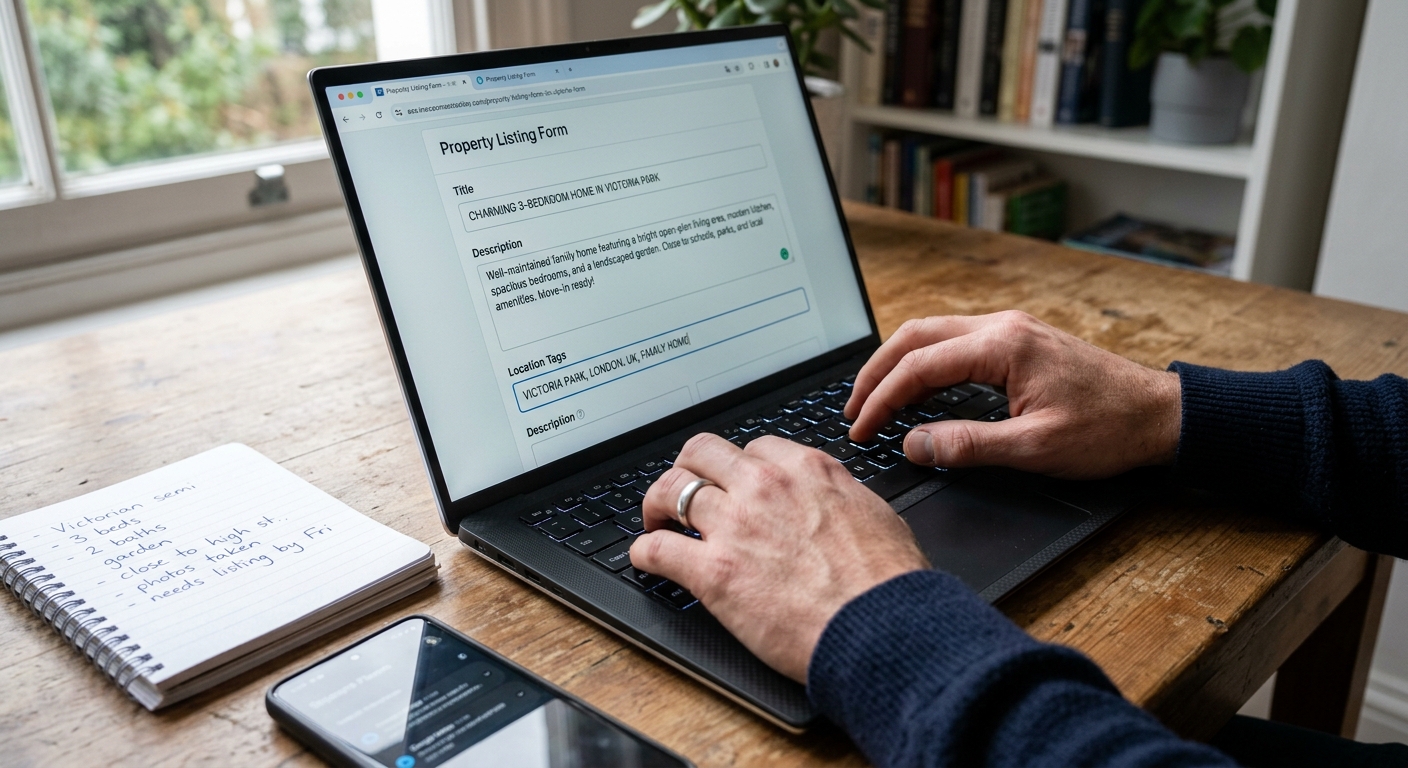
Start with the basics. Title matters more than you think. “2 BHK for sale” is useless. “2 BHK flat in Thane West near Ghodbunder Road under 1 crore” is a search query someone actually types. That’s the title format that ranks.
Description needs to do more than list features. Buyers search with intent — school proximity, highway access, metro connectivity, ROI potential. If your description doesn’t include these phrases naturally, you’re invisible to those searches. A listing for a plot in Karjat should mention the upcoming Navi Mumbai airport, the expressway, weekend home demand, appreciation trends. That’s not fluff — that’s the language buyers use to search.
Location data has to be specific. “Pune” is too broad. “Hinjewadi Phase 2 near Wipro Circle” is what actually matches search intent. Every listing should have neighborhood-level precision, nearby landmarks, and infrastructure references. Google ranks specificity.
Photos matter for engagement, but alt text matters for search. When you upload images, the file name and alt tags should describe what’s in the image and where it is. “balcony-view-2bhk-thane-west.jpg” beats “IMG_4738.jpg” every time.
Most platforms strip this control away from you. They auto-generate titles, ignore your metadata, compress your images, and bury your listings under template pages that all look identical to search engines. You get a dashboard. You don’t get discoverability.
Free Platforms That Give Channel Partners Full Listing Control
This is where the market split in the last two years. Some platforms still operate on the subscription-rent-extraction model. Others realized that when properties rank well organically, everyone wins — the platform grows, partners get leads, buyers find inventory faster.
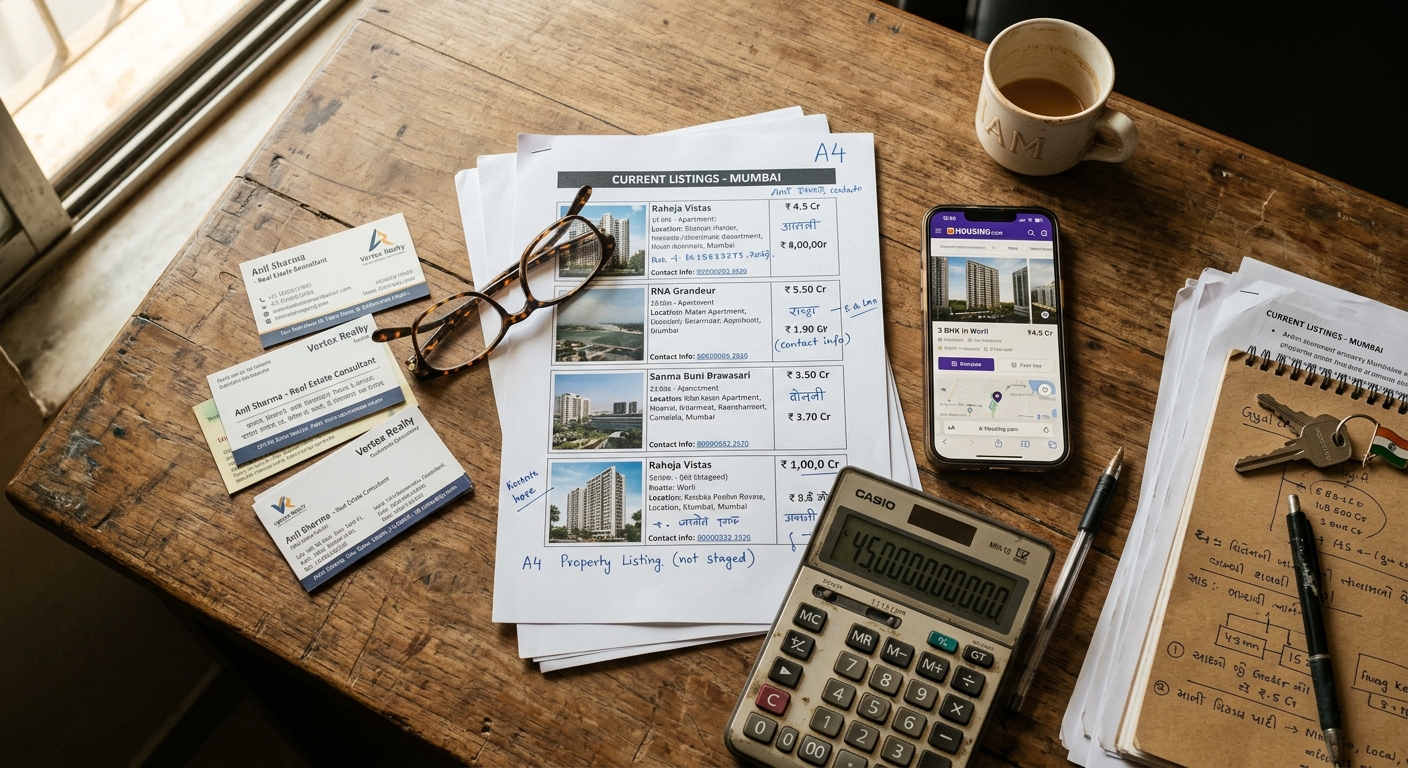
Freeperty built its entire model around this shift. No listing fees. No monthly subscriptions. No tiered visibility packages. You upload a property, it becomes a standalone page with its own URL, metadata, and SEO structure. You control the title, write the description, add location tags, upload photos with proper naming. The listing goes live and starts getting indexed by Google within hours.
We’ve worked with channel partners who migrated their entire inventory — 80, 100, 150 properties — from paid platforms to Freeperty in a weekend. Within three weeks, leads started coming through organic search. Not platform referrals. Not paid ads. Direct Google traffic to individual property pages.
One partner in Pune had a plot listing in Hinjewadi that wasn’t getting any traction on a subscription portal. He moved it to Freeperty, rewrote the description with search-focused language — IT park proximity, metro extension plans, ROI comps — and added proper location metadata. In two months, that single listing page ranked on page one for “plots near Hinjewadi IT park.” Generated 11 inquiries. Closed one sale.
That’s not luck. That’s what happens when a listing is treated like content, not database inventory.
How to Structure Your Inventory for Maximum Discovery
Smart channel partners don’t just upload listings randomly. They think in clusters. Properties near each other, properties in the same budget range, properties targeting the same buyer profile — these should reinforce each other in search.
If you have five plots in Karjat, don’t write identical descriptions. Write each one with slightly different search angles. One focuses on weekend home buyers. Another highlights investment appreciation. Another targets NRI buyers looking for land banking. Same property cluster, different search intents, broader keyword coverage.
Use area guides to multiply visibility. A single listing page ranks for one search query. An area guide — “Best residential areas in Thane West for families under 1.5 crore” — ranks for dozens. Link your inventory to these guides. Buyers researching the area find the guide, then discover your listings through internal links.
This is how real estate content strategy works in 2026. Listings are nodes. Guides are connectors. Together, they create a web of discoverability that paid ads and platform profiles can’t match.
Freeperty’s structure supports this naturally. Every property page can link to related listings, area insights, price trend data, and investment calculators. It’s not just a listing — it’s a mini landing page designed to answer search queries and convert traffic. Channel partners who use this well treat their inventory like a content library, not a spreadsheet.
Real Inventory Management Without Paying Rent
Here’s what sustainable inventory visibility looks like. You add a property once. It lives on a platform where it’s searchable, shareable, and editable anytime. When it sells, you mark it sold — it doesn’t disappear, it just updates status. When you get new inventory, you add it the same way. No renewal fees. No expiration dates. No credit system forcing you to prioritize which listings get visibility.
Traditional portals make you pay monthly whether your listings are active or not. Inventory turnover is unpredictable in real estate. A villa might sit for six months. A plot might sell in two weeks. Paying rent for listings that are already sold or haven’t moved yet makes no financial sense for channel partners operating on commission-based income.
We’ve met partners who stopped listing properties altogether because the platform costs ate into their already thin margins. They went back to WhatsApp forwards and word-of-mouth — massive step backward in reach and professionalism.
The free model isn’t charity. It’s alignment. When your listings get found organically, the platform benefits from traffic and engagement. You benefit from leads. The buyer benefits from choice. Nobody’s paying rent to a middleman who adds no real value beyond hosting the listing.
That’s the infrastructure shift. From gatekeeping to facilitation.
Lead Quality From Organic Search vs. Platform Referrals
Not all leads are equal. We’ve tracked this with dozens of channel partners who list on multiple platforms simultaneously. Leads from organic search — where a buyer found your property by searching Google — convert at roughly twice the rate of leads from aggregator platforms.
Why? Intent clarity. A buyer who types “3 BHK flat in Navi Mumbai near Seawoods under 1.2 crore” and lands on your listing already has defined criteria. Budget, location, configuration — all matched. They’re not browsing. They’re searching.
Leads from aggregator platforms often come from broader discovery — someone filtered by city, scrolled through pages, clicked a few listings. They’re earlier in the journey. More likely to be comparing hundreds of options. Harder to convert.
Channel partners optimizing for organic search see fewer total leads, but higher quality. Conversations are shorter. Buyers are more serious. Closure rates improve.
This is measurable in Google Search Console. Pages that rank for long-tail queries — specific combinations of property type, location, budget, and features — generate leads with much higher conversion intent than pages ranking for broad terms like “property in Mumbai.”
Most subscription platforms don’t give you this data. They show you impressions and clicks within their ecosystem, but not how your listings perform in actual search. You’re flying blind. Free platforms with proper SEO structure let you connect your listings to Google Analytics and Search Console. You see exactly which search queries bring traffic, which listings rank, and which convert.
That visibility changes how you write descriptions, choose photos, and position inventory. You’re not guessing. You’re optimizing based on real search behavior.
Multi-Channel Distribution Strategy for Channel Partners
Smart partners don’t rely on one platform. They list everywhere they can get genuine visibility, and they cross-promote. But here’s the key — you can’t do this sustainably if every platform charges a monthly fee. The math breaks down fast.
Free listing platforms let you distribute widely without cost pressure. List your inventory on Freeperty for search visibility. Share individual property links on WhatsApp, Facebook groups, LinkedIn. Embed listings on your own website if you have one. Every property page becomes a marketing asset you control and reuse.
We’ve seen channel partners in Gurgaon and Noida build entire lead generation systems around this. They use Freeperty as the listing hub — properties are hosted there, indexed, searchable. Then they drive traffic through social media, email campaigns, and even offline materials. QR codes on standees at property expos linking directly to Freeperty listing pages. Business cards with short URLs to curated inventory collections.
This only works when the platform doesn’t lock your content behind paywalls or expiring credits. If a listing URL stops working after your subscription ends, you can’t build anything durable around it.
Inventory visibility isn’t about being on the biggest platform. It’s about being findable everywhere your buyers are searching. That requires distribution, not concentration.
Why Builders and Developers Should Care About Channel Partner Visibility
Developers often underestimate how much inventory actually moves through channel partners. In most tier-2 cities and suburban markets, 40 to 50 percent of sales come from consultants and brokers, not direct marketing. If those partners can’t showcase your projects effectively, your inventory stagnates.
The builder invests in brochures, site visits, sales teams. The channel partner gets a stack of PDFs and maybe a WhatsApp group. When they try to list the inventory online, they hit the same subscription walls. Projects with great potential sit invisible because the partner can’t afford ₹20,000 a month for premium listings.
We’ve worked with developers in Pune and Nagpur who started actively encouraging their channel partners to list on free platforms. The logic is simple. More visibility for the project, more inbound interest, faster inventory turnover. The builder doesn’t pay for each listing. The partner doesn’t pay either. The project gets distributed across dozens of searchable pages instead of living only on the builder’s website.
This creates a network effect. Ten channel partners listing the same project in different ways — one focuses on ROI, another on amenities, another on location advantages — means that project shows up for ten different search intents. Broader keyword coverage. More entry points for buyers.
Builders who embrace this see their channel partner networks become more active. Partners who can list easily list more often. Projects get more consistent online presence without the developer managing every listing personally.
Technical SEO Basics Every Channel Partner Should Understand
You don’t need to be an SEO expert to improve listing visibility, but understanding a few basics makes a huge difference.
First, title tags and meta descriptions. The title is what shows up as the blue clickable link in Google search results. The meta description is the gray text underneath. If your platform auto-generates these from generic templates, they won’t rank well. Good platforms let you edit both. Use the primary keyword in the title, write the description to answer search intent clearly, and keep both concise.
Second, URL structure. A listing URL should be readable and include location or property type. “freeperty.com/property/2-bhk-flat-thane-west” is infinitely better than “portal.com/listing?id=847392”. Readable URLs rank better and get clicked more often.
Third, image optimization. Large image files slow down page load speed, which hurts ranking. Compress before uploading. Name files descriptively before uploading. Add alt text that describes the image and mentions location.
Fourth, internal linking. If the platform allows it, link related properties to each other. “Similar properties in this area” sections help users navigate and help search engines understand site structure.
Most subscription platforms handle all this on the backend with zero partner control. You get what you get. Free platforms with SEO-first design — like Freeperty — expose these controls. You’re not editing code. You’re filling in fields that directly impact how your listing ranks.
One partner in Bangalore spent an afternoon going through his 60 listings and optimizing titles and descriptions based on the search terms he knew buyers used. Within a month, organic traffic to his inventory doubled. No ads. No paid promotion. Just better alignment between what he wrote and what buyers searched.
Common Mistakes That Kill Listing Visibility
Copying and pasting the same description across multiple properties. Google detects duplicate content and ranks it lower. Even if you have ten similar flats in the same building, rewrite each description with slight variations. Mention different views, different floor plans, different buyer profiles.
Using builder-provided marketing copy verbatim. That same copy is probably already on the builder’s website and ten other broker sites. Google won’t rank duplicates. Rewrite in your own words. Add local context the builder doesn’t mention — school proximity, traffic patterns, weekend activity in the area.
Ignoring location tags and metadata. If the platform offers fields for city, locality, sub-locality, landmark, and pincode, fill them all. That metadata feeds into structured data that search engines use to match listings to location-based queries.
Uploading low-quality or irrelevant photos. Blurry images hurt engagement. Stock photos that aren’t the actual property hurt trust. Buyers can tell. And when your bounce rate spikes because images don’t match expectations, your ranking drops.
Not updating sold listings. Leaving expired or sold properties live with wrong information frustrates users and damages credibility. Platforms that make it easy to update status help you maintain quality. Platforms that charge per edit or make updates cumbersome encourage bad data.
We’ve audited inventory pages for partners who wonder why they’re not getting traffic. Nine times out of ten, it’s one of these avoidable mistakes. The property is good. The listing is lazy.
How to Measure Whether Your Listings Are Actually Working
Traffic and inquiries are obvious metrics, but they’re lagging indicators. Here’s what to track to actually improve performance.
Impressions and click-through rate. If your listing is showing up in search results (impressions) but not getting clicked (low CTR), your title or description needs work. If you’re not getting impressions at all, you’re not ranking — likely a keyword or metadata issue.
Bounce rate and time on page. If people land on your listing and leave immediately, something’s wrong. Either the images don’t match expectations, the description is thin, or the page loads slowly. If they stay and scroll, you’ve got their attention — even if they don’t inquire immediately.
Lead source breakdown. Which listings generate the most inquiries? What do those listings have in common? Optimize others to match. If one property page consistently converts, clone its structure — not the content, the approach.
Search query data. Google Search Console tells you exactly what phrases brought traffic to each listing. You’ll discover combinations you never thought to optimize for. Use that data to refine titles and descriptions.
Most channel partners never look at this data because the platforms they use don’t expose it. You’re given a lead count and maybe an impression number. That’s not enough to optimize. Platforms that integrate with Google Analytics and Search Console — or show search performance data natively — give you the insight to improve. Freeperty connects directly to these tools. You see what’s working and what’s not.
One consultant in Ahmedabad discovered that half his traffic came from searches related to “investment properties near Sindhu Bhavan Road” — a phrase he hadn’t even targeted consciously. He wrote three more listings emphasizing investment angle in that micro-location. Leads from that cluster tripled in two months.
Data-driven listing strategy beats guesswork every time.
Building Long-Term Inventory Visibility Without Paying Rent
The real win isn’t just free listings today. It’s building a presence that compounds over time. Every listing you publish, if it’s structured well and hosted on a platform with proper SEO, becomes a long-term asset. It keeps ranking. It keeps bringing traffic. Months after you publish it, buyers are still finding it through search.
That only happens when you’re not locked into subscription cycles. Pay-per-month platforms create a treadmill. Stop paying, your listings vanish. All that ranking momentum, gone. You’re starting over.
Free platforms let you build equity. The inventory you listed six months ago is still discoverable. The area guide you wrote still ranks. The internal link structure you built still funnels traffic between properties. You’re accumulating visibility, not renting it temporarily.
This is how channel partners with 100+ properties compete with bigger brokerages. Not through budget. Through consistency and search visibility. Every property is a potential entry point. Every page is working for you even when you’re not actively promoting it.
We’ve watched partners go from zero organic traffic to 300+ monthly visitors across their inventory in six months. All from free listings, optimized structure, and search-first content. No paid ads. No platform subscriptions. Just disciplined execution on platforms designed to make properties findable.
That’s the model that works in 2026. Open access. Search-first infrastructure. Inventory treated as content, not database rows. Channel partners who adopt this early build sustainable lead pipelines. Those who keep paying rent to platforms that gate visibility fall further behind every month.
Frequently Asked Questions
Can channel partner property listings rank well on Google without paying for ads?
Yes. Organic ranking depends on content quality, metadata structure, page speed, and backlinks — not ad spend. Well-optimized listings on platforms with good SEO infrastructure can rank on page one for specific location-based queries within weeks. Focus on long-tail keywords like “2 BHK flat in Thane West under 80 lakhs” instead of broad terms like “property in Mumbai.”
What’s the biggest mistake channel partners make when listing properties online?
Using identical descriptions across multiple similar properties. Google penalizes duplicate content, so even slight variations matter. Another common mistake is ignoring location-specific metadata — city, sub-locality, landmarks, nearby infrastructure. These fields directly impact how well a listing matches location-based searches.
How long does it take for a new property listing to start appearing in search results?
Google typically indexes new pages within 24 to 72 hours if the platform has proper sitemap submission. Ranking takes longer — anywhere from two weeks to three months depending on competition for the keywords and the authority of the platform hosting the listing. Platforms like Freeperty with strong domain authority help new listings rank faster.
Do free listing platforms actually work as well as paid ones for generating leads?
Often better. Paid platforms rely on their internal traffic, which means you’re competing with thousands of other listings for attention within a closed ecosystem. Free platforms with strong SEO create standalone pages that rank independently in Google search. Leads from organic search typically have higher intent and better conversion rates because buyers found exactly what they searched for.
Start Building Searchable Inventory Today
Channel partners don’t need expensive subscriptions to get inventory visibility. They need platforms that treat properties as content, optimize for search, and align incentives with partners instead of extracting rent.
Freeperty was built exactly for this. No listing fees. No hidden costs. No subscription tiers. Every property becomes a fully searchable page with metadata control, image optimization, and direct Google indexing. Upload your inventory once, edit anytime, and let organic search do the work.
If you’re still paying monthly fees for listings that don’t rank and leads that don’t convert, it’s time to rethink the model. Visit Freeperty, sign up, and start listing. Your inventory deserves to be found by buyers who are actually searching for it — not buried behind paywalls that only benefit the platform.