
You’re a small broker. You’ve got decent commercial inventory — maybe a couple of office spaces in a decent locality, a retail unit near a busy market, or a warehouse on the outskirts. But your listings aren’t getting the visibility they deserve. Big aggregators want subscription fees you can’t justify. Your properties get buried under hundreds of others. Leads are thin. Follow-ups go nowhere.
Here’s what most small brokers get wrong: they treat commercial property listing like residential. It’s not. The buyer pool is smaller, the decision cycle is longer, and the information your prospects need is completely different. A startup hunting for office space cares about connectivity, floor plate efficiency, and lease structure. A retailer needs footfall data and visibility from the road. You can’t list a 2000 sq ft office the same way you’d list a 2BHK and expect results.
We’ve worked inside the Indian commercial real estate ecosystem long enough to know this: small brokers who succeed online do three things differently. They choose platforms that don’t charge per lead, they write listings that answer business questions upfront, and they track which properties actually convert — not just which ones get clicks. This guide walks you through each of those, step by step, without the jargon or the upsell.
Why Most Small Brokers Waste Money on the Wrong Platforms
Let’s start with the obvious problem. Most brokers list on platforms that take a cut of everything — subscription fees, lead fees, or both. You pay to list. You pay again to unlock leads. If you’re moving two or three properties a quarter, those fees eat your margin fast.
Here’s what happened with a broker we spoke to in Navi Mumbai in early 2025. He listed four commercial properties on a major paid portal. Spent about ₹18,000 over three months. Got 22 leads. Sounds decent, right? Only two actually responded to his follow-up. One was a student looking for coworking space with zero budget. The other ghosted after the site visit. The platform counted every click as a “lead.” That’s the trap.
Now compare that to free listing platforms like Freeperty, where you can list without subscription fees and each property becomes its own SEO-optimized landing page. No cap on listings. No charge per inquiry. If someone finds your property through search, you talk to them directly. That changes the economics completely for small brokers. Instead of paying to compete with hundred of other listings on a crowded portal, you show up in organic search where intent is higher and competition is lower.
The lesson: if you’re spending more on listing fees than you’re earning per deal, the platform is the problem, not your inventory.
What Actually Belongs in a Commercial Listing That Converts
Most commercial listings we see look like this: “2000 sq ft office space available in [location]. Good connectivity. Parking available. Contact for price.”
That tells a prospect nothing. Compare that to this approach, which we’ve seen work consistently across Indian markets: lead with the exact use case your property fits. Is it a startup-ready plug-and-play office? Say that. Ground floor retail with street visibility in a high-traffic corridor? Lead with footfall and neighboring brands. Warehouse near a logistics hub with dock-level loading? State truck access and distance from the nearest highway.
Your listing needs to answer five questions before someone picks up the phone:
- What kind of business is this space designed for?
- What’s included — is it bare shell, warm shell, or fully fitted?
- What’s the real monthly cost including maintenance and taxes?
- How’s the connectivity for employees or customers?
- What paperwork is clean and ready to go?
A Pune-based broker we worked with started adding floor plans, a breakdown of included amenities (like whether AC and furniture were part of the deal), and a simple line about building occupancy — “Currently 80% occupied by IT and consulting firms.” His inquiry-to-visit conversion rate doubled in about six weeks. People stopped calling to ask basic questions. They called ready to visit.
Commercial buyers are doing due diligence before they contact you. If your listing doesn’t give them enough to qualify themselves in or out, you’re wasting everyone’s time.
How to Price Commercial Listings When You’re Not a Big Brand
Here’s the uncomfortable truth. If you’re a small broker, you don’t have the brand pull to list at the top of the market and wait. Your properties need to compete on value, clarity, or both. That doesn’t mean underpricing — it means pricing with intent and making sure your listing explains the value loud and clear.
We’ve seen brokers make two common mistakes. The first is listing way above market with the logic that “someone will negotiate down.” In commercial real estate in India, that rarely works. Decision-makers compare five to ten properties before shortlisting. If your price is 20% higher than comparable options and your listing doesn’t justify it, you don’t even make the shortlist.
The second mistake is hiding the price altogether. “Price on request” signals either overpricing or that you’re not confident in your number. Serious commercial buyers want transparency upfront. If you can’t share pricing in the listing, at least share the range and the basis — per sq ft rate, monthly lease, or total cost including fit-out.
Freeperty’s model works well here because pricing visibility is the default, and buyers filter by budget before they ever contact you. That means the leads you get have already qualified the cost. You’re not spending time on calls with prospects who can’t afford the space.
One tactic that works surprisingly well: show comps in your listing description. “This property is priced at ₹55 per sq ft, which is 10% below the average for [locality] given the direct metro access and Grade A building certification.” You’re doing the buyer’s homework for them, which builds trust and speeds up decision-making.

Platform Choice Matters More Than You Think
Not all platforms work the same way for commercial inventory. Some focus heavily on residential. Others aggregate everything but give no SEO juice to individual listings. A few — like Freeperty — structure every property as its own landing page, which means it can show up in Google search when someone types “office space for rent in [your area]” or “warehouse near [landmark].”
That matters because most commercial property searches in India start on Google, not on portals. A startup founder looking for office space in Koramangala doesn’t go straight to a property portal. They search “small office space Koramangala” or “plug and play office Indiranagar.” If your listing isn’t indexed and optimized to show up in that search, you’re invisible.
We tested this in 2025 with a broker managing three office properties in Gurgaon. He listed them on two paid portals and Freeperty. Within 90 days, 60% of his qualified inquiries came through organic search traffic landing on the Freeperty pages. The paid portals generated clicks, but most were brokers, not end users. The free listing optimized for search brought actual tenants and buyers.
The takeaway: choose platforms that work with search engines, not against them. If your property can’t be found outside the portal’s own ecosystem, your reach is capped.
Writing Property Descriptions That Sound Like You’ve Actually Seen the Space
Generic descriptions kill conversions. “Spacious office with modern amenities in prime location” could describe ten thousand properties in any metro. If your description could apply to anyone’s property, it’s not doing its job.
Walk the property. Take notes on specifics. What’s the view from the windows? How’s the natural light? What’s the vibe of the building? Are neighboring tenants small startups, established firms, or co-working operators? What’s the actual commute time from the nearest metro station — not the distance, the time?
Then write like you’re describing it to a friend. Not a brochure voice. A real one. Here’s an example we pulled from a listing that worked:
“Third-floor corner unit with windows on two sides — gets solid daylight, no artificial lighting needed until evening. Flooring and washrooms are redone. Lift works. The building’s mostly mid-sized consulting and creative firms, so it’s busy but not chaotic. Parking for six cars in the basement, first-come basis. Walk to Huda City Centre metro is about eight minutes, we’ve timed it.”
That description tells you what it’s like to work there, not just what’s on the spec sheet. Small brokers can win on this because you’re closer to the property than a large aggregator ever will be. Use that.
Lead Response Speed Is the Most Underrated Conversion Factor
You can have the best listing in India, but if you’re slow to respond, you lose. Commercial property leads move fast. A business looking for space has a timeline — a lease ending, a new office opening, expansion plans tied to hiring. If they inquire and don’t hear back within two hours, they’ve moved on to the next option.
We’ve tracked this across multiple brokers. Response time under one hour converts at about 40%. Response time over 24 hours converts under 10%. Most small brokers don’t have a CRM or a lead tracking system. You’re relying on phone calls and WhatsApp. That’s fine — but it means you need discipline.
Set up alerts for new inquiries. If you’re listing on Freeperty or any open platform, make sure inquiry notifications go to your phone, not just email. Have a response template ready that acknowledges the inquiry, confirms availability, and offers two time slots for a call or visit. Speed signals seriousness.
Here’s a small thing that works: when you respond, mention one detail from their inquiry in your reply. If they asked about parking, lead with parking in your response. If they mentioned team size, tailor your description to that. It shows you read their message, not just hit reply on a script. That alone increases response rates.
How to Actually Use Photos Without a Professional Shoot
Most small brokers skip property photos entirely or upload three blurry phone shots that show nothing useful. You don’t need a ₹15,000 shoot. You need ten decent photos taken in daylight that show the layout, condition, and feel of the space.
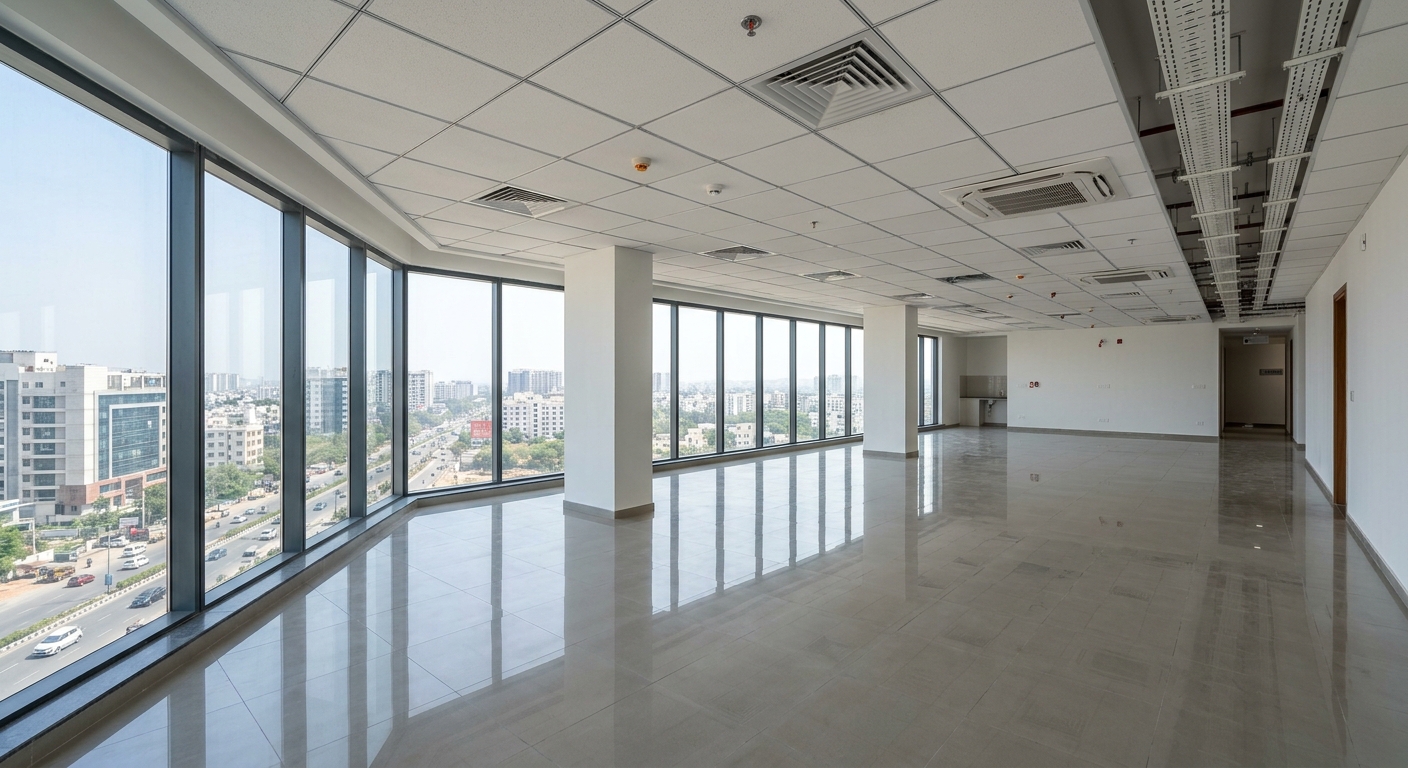
Walk through the property during late morning when light is best. Shoot from the corners to show maximum floor space. Include these specific shots: entrance and lobby, main workspace or floor plate, windows and view, washrooms if they’re updated, parking area, any common zones like a pantry or terrace, and one exterior shot that shows the building and surrounding area. If it’s retail, shoot the frontage from across the street so people see visibility and signage potential.
Clean the space before you shoot. Sweep the floor. Remove clutter. Open windows. It’s not about staging — it’s about showing the bones of the property without distractions. Commercial buyers know they’ll customize, but they need to see what they’re starting with.
Upload all photos to your listing. The more visuals, the higher the trust. Freeperty allows unlimited photo uploads per listing, so use that. Properties with eight or more photos get significantly longer page visits and more inquiries than those with two or three.
If you’ve got the budget, shoot a simple walkthrough video on your phone. Doesn’t need editing. Just walk through the space slowly, narrate what you’re seeing, and upload it. Video increases inquiry rates by about 25% in our experience because it answers the “what’s it really like” question better than photos ever will.
Deal with Channel Partners Without Giving Up All Your Margin
Here’s a reality of the Indian market: a lot of commercial deals involve channel partners — other brokers, consultants, corporate leasing agents. You list a property, someone else brings the client, you split the commission. That’s fine — if you structure it right.
The mistake small brokers make is agreeing to splits before knowing what the partner is actually contributing. If they’re just passing a lead they saw on your listing and doing no qualification, site visit, or negotiation work, a 50-50 split doesn’t make sense. You did the marketing, the listing, the pricing work, and you’ll handle the documentation.
Set clear terms upfront. If a partner brings a qualified client who’s ready to visit, that’s worth a referral fee or a smaller split — maybe 20% to 30%. If they’re handling client relationship, multiple site visits, and negotiation, a 50-50 split is fair. If they just forward a contact and disappear, pay a finder’s fee, not a co-brokerage commission.
List your properties with a note in the description that says channel partners are welcome and commissions are negotiable based on involvement. That signals openness without committing to a fixed split. Freeperty’s open ecosystem makes this easier because channel partners can discover your inventory organically and reach out if they have a client fit.
Protect your direct inquiries. If a lead comes straight to you from your listing, that’s your client. Don’t let another broker claim it as a referral. Track inquiry sources carefully — most CRM tools or even a simple spreadsheet with date, source, and contact works.
Track What Actually Converts, Not Just What Gets Clicks
Most small brokers don’t track anything. You post a listing, you get some calls, maybe one turns into a deal. You have no idea which platform worked, which listing drove the lead, or what made the client say yes.
Start simple. Every time someone inquires, note where they found you. Was it Google search? A property portal? A referral? Which specific property did they ask about first? Did they visit? Did they make an offer?
After three months, look at the pattern. You’ll probably find that 70% of your actual closed deals came from one or two sources, and most of the other platforms are just generating noise. Double down on what converts. Cut or deprioritize what doesn’t.
One broker we worked with in Bangalore found that inquiries from paid portals had a 5% close rate, but inquiries from organic search on Freeperty had a 35% close rate. Same properties. Same descriptions. Different buyer intent. He shifted his entire listing strategy toward SEO-optimized free listings and stopped paying for portal subscriptions. Revenue stayed flat, but profit per deal improved significantly because lead acquisition cost dropped to zero.
The point: measure outcomes, not activity. Clicks don’t pay your bills. Closed deals do.
Build a Local Reputation That Makes Your Listings Sell Themselves
Online visibility matters. But in India, especially for commercial real estate, local reputation still drives most repeat business and referrals. If you close a deal well — smooth handover, transparent pricing, no surprises in paperwork — that client will refer you. Their CA will refer you. The interior contractor they hire might refer you.
Small brokers who succeed long-term do two things consistently: they follow up after a deal closes, and they stay visible in local business circles. Join your local trade association. Attend property expos or business networking events in your city. Contribute to local business WhatsApp groups without spamming listings — answer questions, share market updates, build credibility.
When your reputation in a micro-market is strong, your listings get preference even when they’re not the cheapest or the flashiest. People trust you, so they trust your inventory. That’s an edge big portals and faceless aggregators can’t replicate.
Freeperty’s model supports this because you’re not anonymous behind a platform brand. Your contact information is on the listing. You own the relationship. That’s exactly how small brokers should operate — direct, transparent, accountable.
Frequently Asked Questions
How much does it cost to list commercial property online in India?
It depends on the platform. Paid portals typically charge ₹10,000 to ₹50,000 annually for subscriptions, plus lead unlock fees. Free platforms like Freeperty charge nothing to list or browse, making them a better option for small brokers managing lower deal volumes. Choose based on whether lead quality justifies the cost.
What’s the best platform for small real estate brokers in India?
The best platform is one that brings you qualified leads without eating your margin. Free listing platforms with strong SEO visibility — like Freeperty — tend to work better for small brokers than expensive aggregators where your properties get buried under enterprise inventory. Test a few and track which one closes deals, not just which one gets clicks.
How long does it take to close a commercial property deal in India?
Most commercial deals take 45 to 90 days from first inquiry to agreement signing, longer if financing or tenant fit-out is involved. The timeline depends on how quickly the buyer can finalize terms, complete due diligence, and arrange funds. Your job as a broker is to keep the process moving and remove friction wherever you can.
Should I list commercial properties with pricing or keep it hidden?
List with pricing or at least a range. Hiding pricing in 2026 signals either overpricing or lack of confidence, and it reduces inquiry quality. Commercial buyers filter by budget before they contact you. Transparency upfront saves time for both sides and increases conversion rates from inquiry to site visit.
Ready to List Commercial Properties That Actually Get Found?
If you’re a small broker tired of subscription fees, buried listings, and low-quality leads, it’s time to try a different approach. Freeperty offers completely free commercial property listings with full SEO visibility — no caps, no charges, no lead unlock fees. List your inventory once, and it becomes searchable across Google and our platform.
You keep control of your leads. You own the client relationship. You don’t pay unless you close a deal — and even then, you keep your full commission because there’s no platform cut.
Visit Freeperty today, upload your commercial properties, and start reaching buyers who are actually searching for spaces like yours. Real visibility. Real leads. Zero cost.