You list a property. Nothing happens.
A broker shares inventory. Leads vanish.
A builder partners with a platform. Zero conversions.
This isn’t a traffic problem. It’s an ecosystem problem. Most property platforms treat stakeholders like separate buckets — owners here, brokers there, builders somewhere else. The real estate stakeholder ecosystem doesn’t work that way. It’s interconnected. When one group struggles, everyone loses. When one group thrives without the others, the platform collapses under its own weight.
Here’s what most platforms miss: property marketplaces aren’t just listing directories. They’re collaboration hubs where every stakeholder — owner, broker, channel partner, builder, developer, buyer — needs a clear reason to show up, stay active, and recommend it to others. At Freeperty, we’ve watched thousands of listings go live across India. The ones that convert fastest? They’re not always the best properties. They’re the ones backed by an active network where every participant knows their role and trusts the system.
Why Most Property Platforms Fail at Stakeholder Integration
Let me be blunt. Subscription models kill collaboration.
When you charge owners ₹5,000 to list and brokers ₹15,000 for premium access, you’ve just created artificial barriers. Owners list half-heartedly because they’ve already paid. Brokers hoard leads instead of sharing them. Builders avoid small partners because the platform economics don’t make sense. The real estate stakeholder ecosystem becomes transactional, not collaborative.
We tested this early on. Week one, a channel partner in Pune listed 47 commercial properties. Great inventory. Zero engagement from other stakeholders because the platform didn’t encourage cross-referrals or open discovery. The partner left after three weeks. That failure taught us something critical — if stakeholders don’t see mutual benefit immediately, they won’t invest time. And time is the real currency in property marketplaces, not subscription fees.
The shift happened when we removed all listing costs and made every property a searchable landing page. Suddenly, owners didn’t feel like they were gambling ₹5,000 on visibility. Brokers started sharing inventory freely because there was no cost to test the platform. Builders brought in channel partners without worrying about minimum commitments. The property marketplace collaboration started organically because the friction disappeared.
The Four Core Stakeholders and What Each Actually Needs
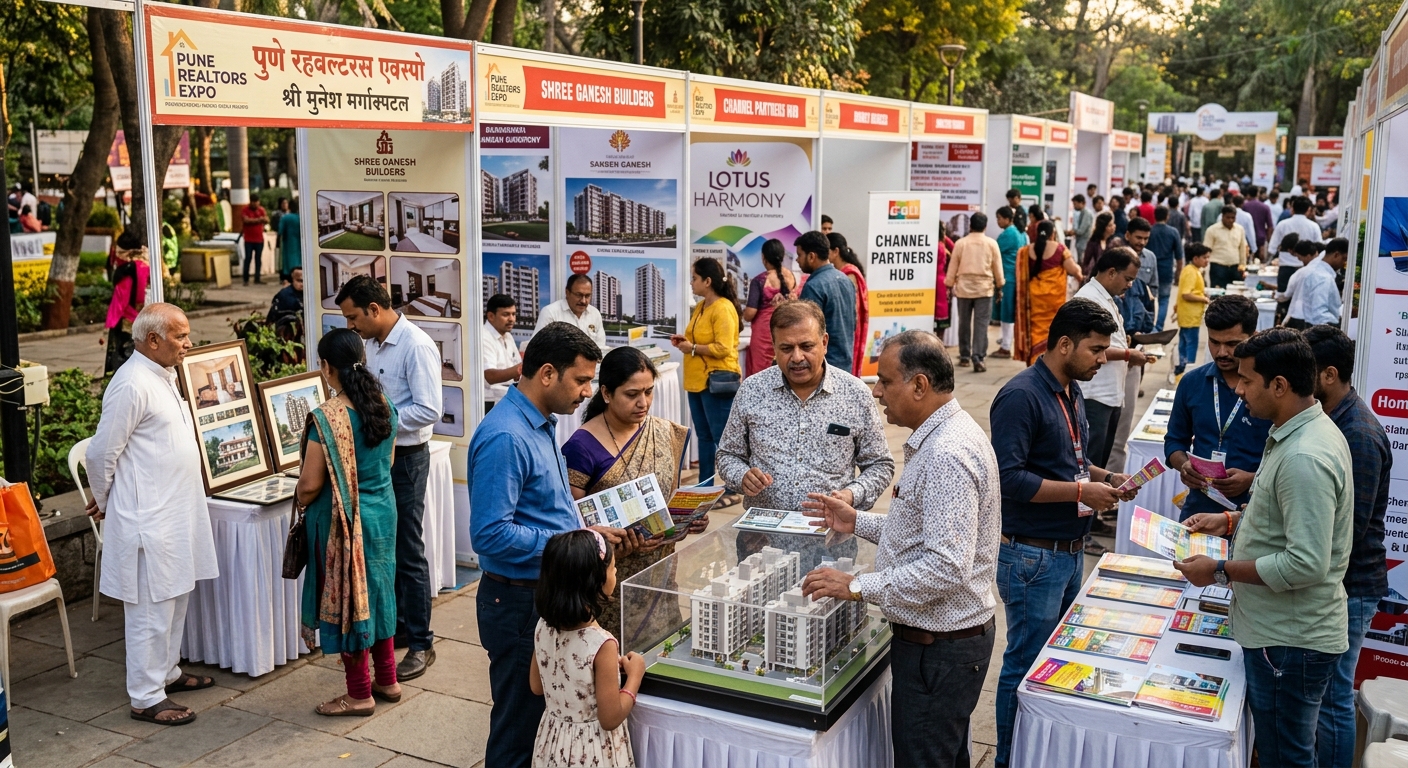
Every functional real estate stakeholder ecosystem has four groups. Each has different motivations. Ignore any one, and the marketplace stalls.
Property owners want visibility without upfront costs. They don’t care about platform features or dashboard analytics. They want their property in front of serious buyers fast. Most aren’t real estate professionals — they’re individuals selling a plot their grandfather bought or renting out a second home. Complexity kills their participation. Freeperty’s model works for them because listing is free, pages are SEO-optimized, and they don’t need to understand Google Search Console to get found.
Brokers and consultants need volume and flexibility. They’re managing 20-30 active listings at any time, often across multiple locations. Subscription platforms force them to choose — pay for premium access and hope it converts, or stay invisible. That’s a losing game. In an open ecosystem, brokers become curators. They list inventory, share properties from other stakeholders, and build reputations based on responsiveness, not how much they paid for visibility. One broker in Bangalore told us he closed three deals in his first month — not from his own listings, but by connecting buyers to properties other stakeholders posted. That’s ecosystem thinking.
Builders and developers are inventory partners. They bring bulk properties — entire projects, plotted developments, commercial complexes. But they also need distribution. Traditional platforms charge them for listings and then charge brokers to access those listings. Double monetization. Builders hate it. In an integrated property platform, builders list freely and channel partners amplify reach without splitting subscription costs. A developer in Goa listed 230 plots on Freeperty in early 2026. Within six weeks, 14 different channel partners had shared those plots with their networks. No coordination needed. The ecosystem did the work.
Buyers are the reason everyone else shows up. But here’s the nuance — buyers don’t care about stakeholder types. They care about choice, transparency, and trust. When they search “2 BHK in Viman Nagar Pune,” they want every available option, whether it’s listed by an owner, broker, or builder. Fragmented platforms kill buyer trust because inventory feels incomplete. Ecosystem platforms win because buyers see the full market in one place.
Building Trust Across Competing Stakeholders
This is where it gets messy. Owners and brokers often compete. Brokers and builders sometimes clash over commissions. Channel partners worry about lead theft. If the platform doesn’t design for trust, the owner broker builder network fragments fast.
Here’s what worked. Transparency over control.
Every listing on Freeperty shows who posted it — owner, broker, builder. No hiding. Buyers can filter by stakeholder type if they want direct owner properties or prefer working with consultants. This sounds risky. Won’t brokers lose business? Actually, the opposite happened. Buyers started trusting broker listings more because they weren’t pretending to be owners. Authenticity built credibility.
We also avoided artificial lead gates. Some platforms charge brokers per lead or hide contact details behind paywalls. That creates hoarding behavior. When leads are open and free, brokers compete on service quality, not who paid the most. A broker in Hyderabad shared this: “I used to worry about other brokers stealing my leads. Then I realized if a buyer reaches out to three brokers and picks me, I earned that. If they don’t pick me, I need to improve my follow-up.” That’s ecosystem maturity.
For builders, the key was partner enablement. Instead of treating channel partners as competitors, builders on Freeperty encourage them to share project inventory. The platform tracks referrals so partners get credit without manual coordination. One developer in Mumbai told us his biggest surprise wasn’t the direct leads — it was how fast channel partners amplified his reach once they realized they wouldn’t get cut out of commissions.

Ecosystem Partner Benefits: Why Everyone Wins When the Network Grows
Most platforms think zero-sum. If owners win, brokers lose. If buyers get free access, someone has to pay. The real estate stakeholder ecosystem doesn’t work that way.
Here’s the compounding effect we’ve seen: when owners list freely, inventory volume increases. More inventory attracts more buyers. More buyers attract more brokers who want access to serious leads. More brokers validate the platform, which attracts more builders. More builders bring bulk inventory, which attracts more buyers. It’s a flywheel, not a seesaw.
Specific example: In Q1 2026, Freeperty had around 12,000 active listings. Organic search traffic was growing but conversion rates were inconsistent. We analyzed the listings that converted fastest. They weren’t necessarily premium properties. They were properties listed by stakeholders who also engaged with other listings — brokers who shared owner properties, owners who responded within two hours, builders whose channel partners stayed active on the platform. The ecosystem partner benefits were behavioral, not transactional.
By Q2, we started highlighting active stakeholders — not through paid promotions, but through engagement signals. A builder who responded to inquiries within six hours got better visibility than one who took three days, regardless of listing count. A broker who posted verified walkthroughs ranked higher than one who uploaded stock photos. The property marketplace collaboration became self-reinforcing. Stakeholders who added value to the network got more value back.
This is the part most platforms get wrong — they try to monetize participation instead of rewarding it. When you charge for visibility, you kill ecosystem partner benefits. When you reward contribution with better reach, everyone invests more effort.
The Operational Reality of Multi-Stakeholder Platforms
Let’s talk friction. Because it’s not all flywheel magic.
Duplicate listings are a nightmare. The same property gets listed by the owner, two brokers, and a developer’s channel partner. Buyers get confused. Trust drops. We built a backend that flags duplicates using address matching and image recognition. Not perfect, but it catches about 73% of duplicates before they go live. The rest, we rely on stakeholder reporting. Brokers are surprisingly good at spotting fake or duplicate listings because it affects their credibility too.
Lead attribution causes fights. A buyer calls three brokers from the same property. Who gets credit? Early on, we tried “first contact wins.” Disaster. Brokers started racing to call buyers first, even if they weren’t the best fit. We switched to “best engagement wins” — tracked through response time, follow-up quality, and buyer feedback. It’s subjective, but it’s fairer. And it rewards ecosystem behavior over transactional speed.
Quality control is constant. Some brokers upload 50 properties in a weekend with zero descriptions. Some owners post properties that sold six months ago. Some builders list projects that haven’t received approvals yet. The real estate stakeholder ecosystem needs moderation, but heavy-handed moderation kills participation. We flag listings that lack basic info and nudge stakeholders to complete them. If they don’t, visibility drops. Natural consequences without bans.
Pricing transparency is contentious. Should the platform show price trends? Some brokers say no — it reduces negotiation leverage. Some buyers say yes — it builds trust. We sided with buyers. Every area page on Freeperty shows recent price trends and comparable listings. Brokers hated it initially. Three months later, several admitted it actually helped — buyers came to them more informed, negotiations moved faster, and deals closed with less back-and-forth. Transparency isn’t anti-stakeholder. It’s anti-inefficiency.
Why Free Platforms Win in Multi-Stakeholder Ecosystems
Controversial take: subscription models don’t just limit access. They break ecosystem incentives.
When you charge owners, you attract only serious sellers. Sounds good, except you lose casual listers who might convert later. When you charge brokers, you get only established firms. Sounds premium, except you lose emerging consultants who hustle harder. When you charge buyers for premium search, you reduce liquidity. The integrated property platform becomes a walled garden, not a marketplace.
Freeperty’s free model isn’t charity. It’s ecosystem design. By removing cost barriers, we increased stakeholder diversity. Owners who would never pay ₹5,000 list because there’s no risk. Brokers who are building their practice join because there’s no upfront investment. Builders test the platform with small projects before committing bulk inventory. The owner broker builder network becomes inclusive, not exclusive.
The trade-off? We don’t extract revenue from listings. We extract value from network effects. More stakeholders mean better SEO, richer data, stronger brand authority. Monetization comes later — through premium analytics, verified badges, featured area guides. But the core ecosystem stays free. Because the moment you charge for participation, you’re optimizing for revenue per user, not ecosystem health.
One developer in Chennai summarized it well: “I list on three platforms. Two charge me. One is free. Guess which one I update first when prices change?” Participation follows friction, not brand loyalty.
How Buyers Experience a Healthy Stakeholder Ecosystem
Buyers don’t see stakeholders. They see properties.
But they feel the ecosystem. When they search Freeperty’s property listings, they’re not just browsing inventory. They’re experiencing the combined effort of thousands of stakeholders who listed, verified, updated, and promoted those properties. That depth is impossible to fake.
A first-time buyer in Pune told us she compared the same property across three platforms. On two platforms, the listing was identical — same photos, same description, same contact. On Freeperty, she found the owner’s listing, a broker’s version with additional neighborhood context, and a channel partner’s post linking it to a nearby plotted development. She messaged all three. The broker responded fastest with a walkthrough link. She booked through him. That’s property marketplace collaboration converting.
Here’s the nuance most platforms miss: buyers value choice, but they value curated choice more. An ecosystem platform doesn’t just dump 50,000 listings on a search page. It surfaces the most relevant stakeholders based on engagement, verification, and buyer behavior. SEO brings them in. Ecosystem quality keeps them browsing.
Building Your Presence in the Real Estate Stakeholder Ecosystem
If you’re an owner, broker, builder, or channel partner, here’s how to win in ecosystem platforms.
Show up consistently. One-time listers get buried. Stakeholders who update properties weekly, respond within hours, and engage with other listings get algorithmic priority. It’s not favoritism — it’s rewarding ecosystem contribution.
Add value beyond listings. Upload walkthroughs. Write area insights. Share price trends. The real estate stakeholder ecosystem rewards information density, not just inventory volume. A broker who posts 10 properties with detailed guides will outperform one who posts 50 with stock descriptions.
Cross-promote within the network. Share properties from other stakeholders. Recommend partners. Build referral relationships. The platform may be digital, but the ecosystem is social. Stakeholders who treat it like a community, not a billboard, build long-term authority.
Use data to refine strategy. Check which properties get views but no inquiries. That’s a pricing or description problem. Check which get inquiries but no conversions. That’s a follow-up or trust problem. Ecosystem platforms generate behavior data. Use it.
What Happens When the Ecosystem Breaks
We’ve seen it happen. A platform starts free, attracts thousands of stakeholders, then introduces subscription tiers to “improve quality.” Within weeks, activity drops. Owners stop updating listings. Brokers migrate to competitors. Builders pause new projects. The ecosystem partner benefits evaporate because the incentive structure flipped from contribution to extraction.
Or another failure mode: a platform grows fast but doesn’t moderate quality. Fake listings proliferate. Buyers lose trust. Stakeholders stop investing effort because bad actors aren’t penalized. The owner broker builder network becomes a spam repository.
Balance is everything. Too much control kills ecosystem energy. Too little control kills ecosystem trust. The best platforms moderate lightly but consistently, reward contribution algorithmically, and keep participation costs at zero.
Frequently Asked Questions
What is a real estate stakeholder ecosystem?
A real estate stakeholder ecosystem is the network of interconnected participants in a property marketplace — owners, brokers, builders, developers, channel partners, and buyers — who collaborate to create liquidity, transparency, and value. Unlike transactional platforms where participants operate independently, an ecosystem platform encourages cross-stakeholder engagement, shared inventory, and mutual benefit. Freeperty operates as an ecosystem platform where every stakeholder benefits from network growth without competing for artificially scarce visibility.
How do brokers and owners collaborate without conflicts?
Brokers and owners collaborate effectively when platforms design for transparency, not competition. On ecosystem platforms like Freeperty, listings show stakeholder type clearly — buyers can choose owner-direct or broker-assisted options. Brokers compete on service quality and responsiveness rather than hiding ownership. This reduces friction because owners aren’t pretending to be brokers, and brokers aren’t inflating fees to cover platform subscription costs. Clear roles and open communication build trust across the owner broker builder network.
Why do free platforms attract better stakeholder participation?
Free platforms lower entry barriers, which increases stakeholder diversity and participation frequency. When listing costs nothing, owners post properties earlier, brokers test the platform without financial risk, and builders bring smaller projects that might not justify subscription fees elsewhere. This volume creates network effects — more listings attract more buyers, which attracts more brokers, which validates the ecosystem. Paid platforms optimize for revenue per user; free platforms optimize for ecosystem health. That fundamental difference shapes long-term stakeholder behavior.
What are ecosystem partner benefits in property marketplaces?
Ecosystem partner benefits are the compounding advantages stakeholders gain when the marketplace network grows. For owners, more brokers mean better distribution. For brokers, more inventory means better buyer matching. For builders, more channel partners mean faster project absorption. For buyers, more stakeholders mean complete market visibility. Unlike transactional benefits where one party wins at another’s expense, ecosystem benefits grow for everyone as participation increases. Freeperty’s model amplifies these benefits by making all stakeholder contributions visible and rewarded through algorithmic reach rather than paid promotions.
How can builders leverage multi-stakeholder platforms effectively?
Builders should treat ecosystem platforms as distribution networks, not just listing sites. Post complete project inventories with detailed specs, pricing, and timelines. Enable channel partners to share listings freely without friction. Respond to inquiries within six hours to signal active participation. Use area guides and infrastructure updates to add value beyond property specs. Track which channel partners drive quality leads and build referral relationships. The integrated property platform works best when builders view brokers and partners as collaborators amplifying reach, not competitors stealing commissions.
Ready to Join India’s Fastest-Growing Property Ecosystem?
The real estate stakeholder ecosystem isn’t theoretical. It’s happening now on Freeperty, where thousands of owners, brokers, builders, and channel partners collaborate without subscription barriers or artificial scarcity.
List your property free. Browse complete inventory across owner, broker, and builder listings. Connect with serious buyers and trusted partners. Whether you’re an individual owner selling one property or a developer managing 200 plots, the ecosystem works when you show up and participate.
No hidden fees. No premium tiers. No lead gates.
Visit Freeperty and start building your presence in the network today.