
How to Verify Property Owner Before Buying in India – Complete 2026 Guide
Learn how to verify property owner identity, check land titles, and confirm legal ownership before buying property in India. Step-by-step verification process with real documents.
A client walked into our office last month, excited about a semi-commercial plot in Pune’s outskirts. Great location. Fair price. Clean paperwork—or so he thought. Three weeks into due diligence, we discovered the seller wasn’t the actual owner. He was the power of attorney holder. The real owner? Living in Dubai, completely unaware someone was trying to sell his land.
That deal never closed. But it could have—if the buyer hadn’t taken the time to verify property owner credentials properly. And that’s the trap. Most buyers assume the person showing the property or signing the initial documents is the rightful owner. Sometimes they are. Often, they’re not.
Here’s what most people miss: property ownership verification isn’t one document. It’s a trail. And if you skip even one step in that trail, you’re not just risking money—you’re risking years of legal mess that no amount of enthusiasm about the property will fix.
Why Verifying Property Owner Identity Isn’t Optional Anymore
The Indian real estate ecosystem has gotten more transparent since 2026, but it’s also gotten more complex. Digital records exist. But so do forged signatures, outdated mutation entries, and sellers who genuinely believe they own property they don’t legally control.
We’ve seen three common scenarios where buyers got burned:
The power of attorney scam — someone holds PoA documents and tries to sell without the owner’s current consent. The PoA might be revoked, expired, or fake. The buyer has no idea until the real owner shows up with a lawyer.
The inheritance mess — property passed down through generations, but only one heir is trying to sell. The others either don’t know or don’t consent. Sale goes through. Then the other heirs file claims. Your property’s now in court for the next decade.
The encumbrance surprise — the seller is the owner, but the property’s mortgaged, has pending litigation, or someone else has legal rights you weren’t told about.
At Freeperty, we see this constantly. Buyers find listings, fall in love with a property, then realize halfway through that verifying ownership is harder than they expected. That’s why we built searchable property pages that encourage transparency from day one—but even we can’t verify what sellers don’t disclose upfront.
You have to do that work yourself.

Step 1: Start With the Sale Deed and Chain of Title Documents
First action: ask the seller for the original sale deed. Not a photocopy. Not a scanned version on WhatsApp. The actual registered document.
This is where you verify property owner name matches the person you’re negotiating with. Check the date of registration, the sub-registrar office, and the document number. Everything should be legible, stamped, and verifiably registered.
Then ask for the chain of title—every sale deed going back at least 30 years. In some states, 13 years is the legal requirement for clear title. But if you’re buying land or older property, go back further. You want to see how the property moved from one owner to the next. Any gap in that chain is a red flag.
What you’re watching for: missing links, unexplained gaps, sudden jumps in ownership, or deeds that don’t clearly reference the same property. If the seller hesitates or says “the previous documents are lost,” walk away or insist on a title insurance policy before proceeding.
One builder we worked with in Jaipur had property ownership verification issues because the land was originally agricultural. The conversion to non-agricultural happened, but the revenue records weren’t updated. The chain looked fine on paper. The mutation records told a different story.
Step 2: Cross-Check the Property Card and Mutation Records
The property card—sometimes called a 7/12 extract in Maharashtra or patta in Tamil Nadu—is the revenue department’s record of who owns the land. This is a government document, and it’s your second verification layer.
Get the latest property card from the local tahsildar or revenue office. In 2026, most states let you pull this online through portals like Bhulekh or state-specific land record websites. Compare the owner’s name on this document with the sale deed and the person selling to you.
Here’s the nuance most buyers miss: mutation doesn’t prove ownership. It’s just a record that the revenue department updated their files after a sale. It’s evidence, not proof. You can have your name mutated into records even if the sale wasn’t legal. So don’t treat this as the final word—treat it as a cross-reference.
What to watch for: mismatched names, different survey numbers, outdated entries that haven’t been updated in years, or mutation entries that conflict with the sale deed timeline.
We ran into this exact issue with a farmhouse plot near Lonavala. The seller’s name was on the sale deed. But the property card still showed the previous owner from 2019. Turns out, the mutation was pending for three years because of a minor clerical error. That’s not a dealbreaker—but it’s something you need to resolve before you pay.
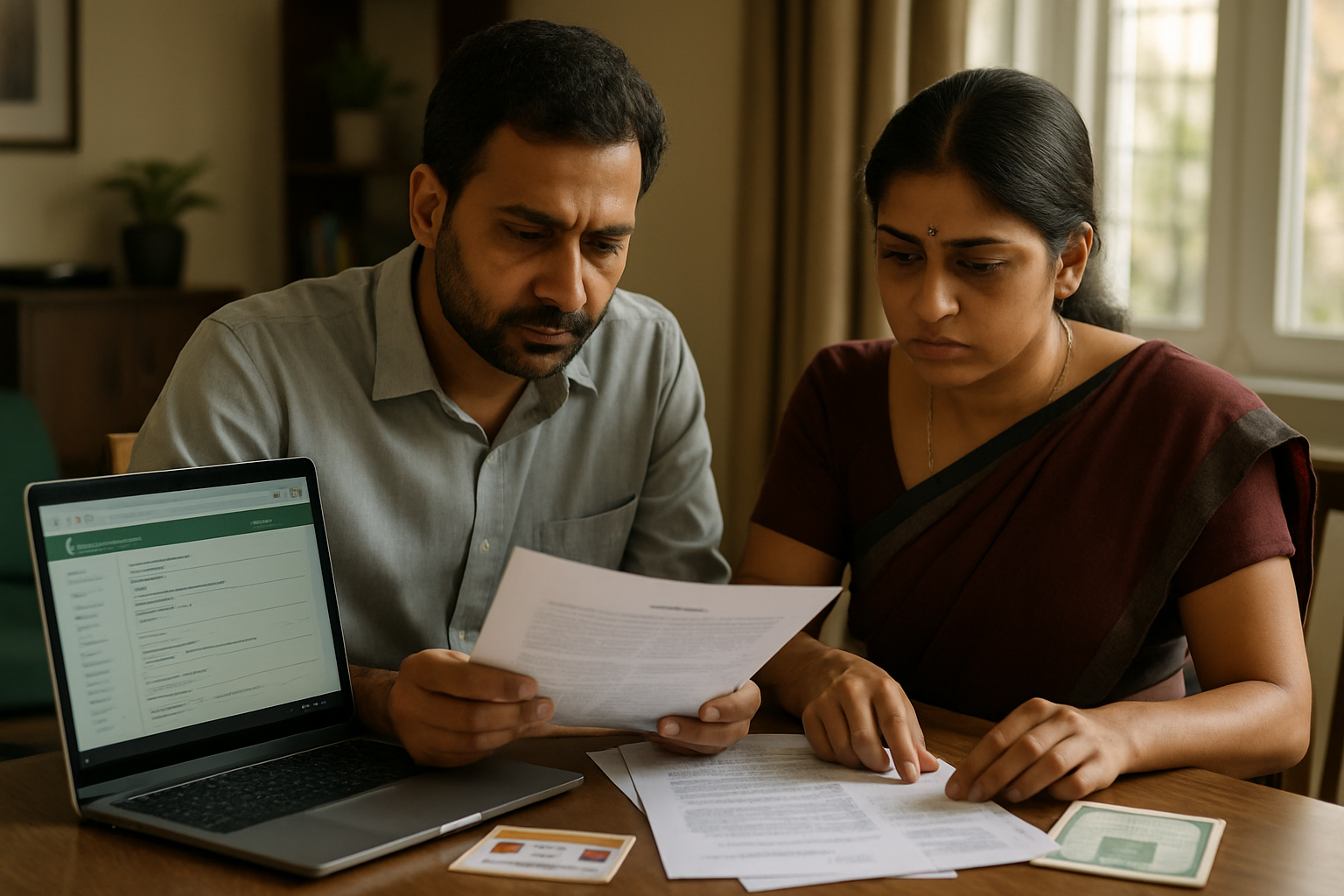
Step 3: Verify Identity Proof and Compare Signatures
Now that you’ve confirmed the name on paper, confirm the person. Ask for government-issued ID proof: Aadhaar card, PAN card, passport, or voter ID. The name should exactly match what’s on the sale deed and property card.
Pay attention to middle initials, spelling variations, and maiden versus married names. Indian legal documents are notorious for tiny inconsistencies that become massive problems during registration.
Then compare the signature on the ID proof with the signature on old sale deeds. If the seller inherited the property or bought it years ago, check if the signature matches across time. Forged documents usually have signature mismatches.
One trick fraudsters use: they’ll show you an Aadhaar card with a slightly modified name, hoping you won’t notice the difference. Then during registration, they use a different ID. If the seller resists showing you multiple ID proofs, that’s a warning sign.
Step 4: Run an Encumbrance Certificate Check for the Last 30 Years
The encumbrance certificate—EC—is your proof that the property is free from legal dues, mortgages, or pending claims. You get this from the sub-registrar office where the property is registered.
Request an EC for at least 13 years, ideally 30. This document will list every registered transaction on that property: sales, mortgages, leases, court orders, anything legally recorded.
What you’re looking for: no pending loans, no litigation, no unpaid dues. If the property was mortgaged and then released, the release deed should be listed. If there’s ongoing litigation, it’ll show up here. If someone else has a legal claim—like a lease or easement—you’ll see it.
We’ve caught issues here that sellers conveniently forgot to mention. A villa in Goa had a 15-year lease to a resort operator buried in the EC records. The seller thought it was “not a big deal.” The buyer would’ve owned a property they couldn’t use for over a decade.
Run this check yourself. Don’t rely on the seller’s version. The EC costs a few hundred rupees and saves you from catastrophic mistakes.
Step 5: Confirm No Pending Litigation Through Court Records
The EC won’t catch everything. Sometimes litigation is filed but not yet recorded. Or there’s a civil dispute that hasn’t reached registration yet.
Visit the local civil court and check if any cases are filed against the property or the seller. Some states have online portals where you can search by name or property details. Use them.
Ask the seller for a no-litigation affidavit—a notarized statement declaring the property has no pending or anticipated legal disputes. If they refuse, consider that a red flag worth investigating.
One residential plot deal we reviewed in Chandigarh seemed spotless. Sale deed clean. EC clear. But a quick court search revealed the seller was involved in a family partition suit. The property wasn’t part of the suit—yet. But the buyer wisely paused until the case resolved. Six months later, that same plot became part of the dispute. He would’ve been stuck in court for years.
Step 6: Use a Property Lawyer to Verify Title and Legal Standing
You’re not a lawyer. Don’t try to be. Hire one who specializes in property transactions in that specific state. Every state has different land laws. What works in Karnataka doesn’t work in Uttar Pradesh.
Your lawyer will verify the sale deed, check the title chain, review the EC, cross-check mutation records, and confirm the seller has legal standing to sell. They’ll also draft the sale agreement and ensure it protects your interests.
Budget for this. A good property lawyer costs anywhere from ₹15,000 to ₹50,000 depending on the property value and complexity. That’s a fraction of what you’ll spend if you skip this step and end up with a defective title.
At Freeperty, we always recommend independent legal verification—even for properties listed with full transparency. Because property ownership verification is a legal process, not just an administrative one.
Step 7: Physically Verify the Property Boundaries and Inspect for Encroachments
Documents verified? Great. Now verify the physical property.
Visit the site with a licensed surveyor. Compare the boundaries in the sale deed with what’s actually on the ground. Use the survey numbers and plot dimensions to confirm you’re buying exactly what you think you’re buying.
Check for encroachments: neighboring buildings that spill over, illegal constructions, public pathways cutting through, or utility lines that limit your usage. These won’t always show up in paper records, but they’ll absolutely limit what you can do with the property.
We worked with a buyer in Noida who discovered a 12-foot-wide illegal structure built by the neighbor onto his plot. The sale deed showed clear boundaries. The ground reality was different. The seller knew. The buyer didn’t. That’s the kind of mess that takes years to resolve—or forces you to accept less land than you paid for.
Walk the site yourself. Bring a local. Talk to neighbors. Ask if there have been disputes. This is old-fashioned due diligence, but it works.
Step 8: Verify Ownership If the Seller Is Using Power of Attorney
If the seller isn’t the registered owner but holds a power of attorney, verify that PoA carefully. Get a copy of the registered PoA document. Check the date, scope, and conditions. Confirm it’s not revoked.
Then—and this is critical—contact the actual owner directly. Yes, that means getting their phone number, calling them, and confirming they’ve authorized this sale. Don’t rely on the PoA holder’s word. We’ve seen forged PoAs, revoked PoAs still being used, and PoA holders exceeding their authority.
If the owner is an NRI or lives abroad, insist on a video call or notarized consent letter from them directly. The PoA holder should have no problem facilitating this if everything’s legitimate.
One apartment deal in Mumbai fell apart when the NRI owner—living in London—had no idea his brother was trying to sell the flat using an old PoA from 2018. The PoA was genuine. But the owner had verbally told his brother not to sell. That verbal instruction doesn’t hold up legally, but it created enough chaos that the sale collapsed.
Frequently Asked Questions
How can I verify property owner details online in India?
You can check land records through state-specific portals like Bhulekh, e-Dharti, or the respective state’s revenue department website. These show mutation records and property cards, but they don’t prove ownership—they only show revenue records. For complete verification, you’ll need the sale deed, encumbrance certificate, and legal title check. Online records are a starting point, not the finish line.
What documents do I need to verify property ownership before buying?
You need the original sale deed, chain of title documents for at least 30 years, encumbrance certificate, property card or 7/12 extract, owner’s government ID proof, no-litigation affidavit, and if applicable, the registered power of attorney document. Each document cross-verifies the others. Missing even one can leave gaps in your verification process.
How long does property ownership verification take in India?
Expect 3 to 6 weeks for thorough verification. Obtaining the encumbrance certificate takes 7-10 days. Legal title checks take another 2-3 weeks depending on the property’s history. Court record searches can add another week. If you’re dealing with inherited property, agricultural land conversion, or multiple co-owners, add another few weeks. Don’t rush this process—it’s where most buyers make costly mistakes.
Can I trust the seller’s documents without independent verification?
No. Sellers—even honest ones—often don’t know their own documents have issues. We’ve seen sellers present clean-looking paperwork that had outdated mutation records, missed encumbrances, or incomplete title chains. Always verify independently through government offices and a property lawyer. On Freeperty, we encourage listing transparency, but buyers still need independent checks. Trust isn’t a substitute for verification.
What if the property has multiple owners or legal heirs?
All co-owners or legal heirs must consent to the sale. Get a no-objection certificate from each of them, notarized and signed. If even one heir is missing or doesn’t consent, the sale can be challenged later. This is especially common with inherited property. Your lawyer should verify the succession, partition deeds, and ensure all heirs are accounted for. Don’t accept verbal assurances—get everything in writing.
Is title insurance necessary when buying property in India?
It’s not mandatory, but it’s smart. Title insurance protects you if undiscovered defects emerge after purchase—like forged documents, missing heirs, or undisclosed claims. It costs around 0.1% to 0.5% of the property value and gives you legal cover for issues you couldn’t have spotted during due diligence. If you’re buying older property or land with a complex ownership history, strongly consider it.
Ready to Find Properties With Transparent Listings?
Verifying property owner credentials takes time, patience, and the right documents. But it’s non-negotiable. The cleanest-looking deal can unravel if you skip even one verification step.
At Freeperty, we’ve built a platform where property owners, brokers, and developers list properties with zero fees and full transparency. Every listing is searchable, and every property becomes its own discovery page. That doesn’t replace legal due diligence—but it’s a start toward a marketplace where verification is easier because information is open.
If you’re listing a property, post it for free and make it visible to serious buyers. If you’re searching, explore verified listings without subscription walls or hidden costs. Transparency isn’t a feature—it’s how real estate should work.
Visit Freeperty today and experience a property marketplace built for clarity, choice, and zero-cost access.