Affordable Housing Guide: Budget Property Buying Tips India 2026
Learn how to buy affordable housing in India with this practical guide. Discover budget property options, PMAY schemes, loan tips, and smart strategies to find low-cost homes that fit your finances.
Affordable Housing Guide: How to Buy Budget Property in India
You earn ₹35,000 a month and everyone tells you homeownership is impossible. They’re wrong.
I’ve watched first-time buyers in Pune walk into homes they could actually afford while their better-earning friends stayed stuck in rental cycles, waiting for some mythical “right time.” The difference wasn’t income. It was knowing where to look and what affordable housing actually means in 2026. This affordable housing guide will show you exactly how to buy budget property in India without waiting another five years or stretching your finances until they snap.
Most people confuse affordable with cheap. That confusion costs them either money or opportunity. Let’s fix that.
What Affordable Housing Actually Means in India Right Now
The government defines affordable housing as property up to ₹45 lakhs with carpet area under 60 square meters. That’s the technical definition. The practical one is simpler: a home where your EMI doesn’t exceed 40% of your monthly income and you can actually arrange the down payment without emptying every savings account you have.
Here’s what surprised me working with buyers across tier-2 cities in 2025. A property listed at ₹38 lakhs looked affordable on paper. Registration, stamp duty, GST, and finishing work pushed the real cost to ₹47 lakhs. The buyer qualified for a home loan but couldn’t cover the gap between sanctioned amount and actual possession cost. Three months wasted.
Budget property buying starts with total cost calculation, not asking price. Add 12-15% to the listed price for everything else. That’s your real number. Work backwards from there to find what you can genuinely afford. The Pradhan Mantri Awas Yojana (PMAY) scheme offers subsidies up to ₹2.67 lakhs if your annual household income is below ₹18 lakhs, but only if the property qualifies and you apply before possession.
Low cost housing India isn’t one thing. It’s studio apartments in suburban Bangalore, 1BHK flats in Surat’s developing zones, plotted developments in Coimbatore, and government-backed projects in Lucknow. Your version of affordable depends entirely on location, income, and what you’re willing to compromise on.

Step One: Calculate What You Can Actually Afford
Forget what the bank approves. They’ll sanction ₹40 lakhs if you earn ₹50,000 monthly. That doesn’t mean you should take it. Run this calculation first: multiply your monthly take-home by 0.40. That’s your maximum safe EMI. At 8.5% interest for 20 years, every ₹10,000 EMI covers roughly ₹1.17 crore in loan amount. Do the math for your number.
Now calculate your down payment capacity. You need 20% of property value as down payment, plus another 10-12% for registration and other charges. So for a ₹35 lakh property, you need roughly ₹11 lakhs in hand. If you don’t have it, your budget isn’t ₹35 lakhs. It’s whatever allows you to pay 30% upfront from actual savings.
A channel partner I know in Nashik watched a young couple stretch to buy a ₹42 lakh flat in 2024. Income was ₹48,000 combined. EMI was ₹31,000. They survived eight months before defaulting. The property went back to the builder at a loss. Affordable means you can pay it and still live, not just technically qualify for the loan.
Track every expense for three months before you decide your budget. Most people underestimate how much they actually spend. That ₹15,000 EMI looks manageable until you realize you spend ₹8,000 on food, ₹3,000 on transport, ₹5,000 on utilities, and suddenly there’s no buffer for medical emergencies or inflation.
Step Two: Choose Location Based on Growth, Not Just Price
The cheapest property is rarely the best value. I’ve seen buyers grab ₹22 lakh flats in isolated pockets with zero infrastructure, then watch them stay at ₱22 lakhs three years later while properties 6 kilometers away doubled. Budget property buying isn’t about finding the lowest price. It’s about finding the lowest price in a location that’s moving upward.
Look for areas with three things: connectivity, upcoming infrastructure, and employment hubs within 10-15 kilometers. A ₹32 lakh flat near a proposed metro station in Nagpur beats a ₹28 lakh flat in a neighborhood with no planned development. Check your city’s master plan. Most municipal corporations publish these online. Find zones marked for commercial development, new roads, or metro extensions.
Freeperty’s area guides break down growth indicators by neighborhood, so you’re not flying blind. Every property listing includes location intelligence that shows what’s actually happening in that micro-market, not just broker promises. When you’re working with tight budgets, you can’t afford to bet on the wrong pin code.
Visit locations on weekdays and weekends. Traffic patterns change. Water supply changes. A building that looks fine on Sunday might have three-hour power cuts on Tuesday. Ask residents directly, not just the builder’s sales team. People love complaining. Use that.
Step Three: Identify the Right Affordable Home Purchase Scheme
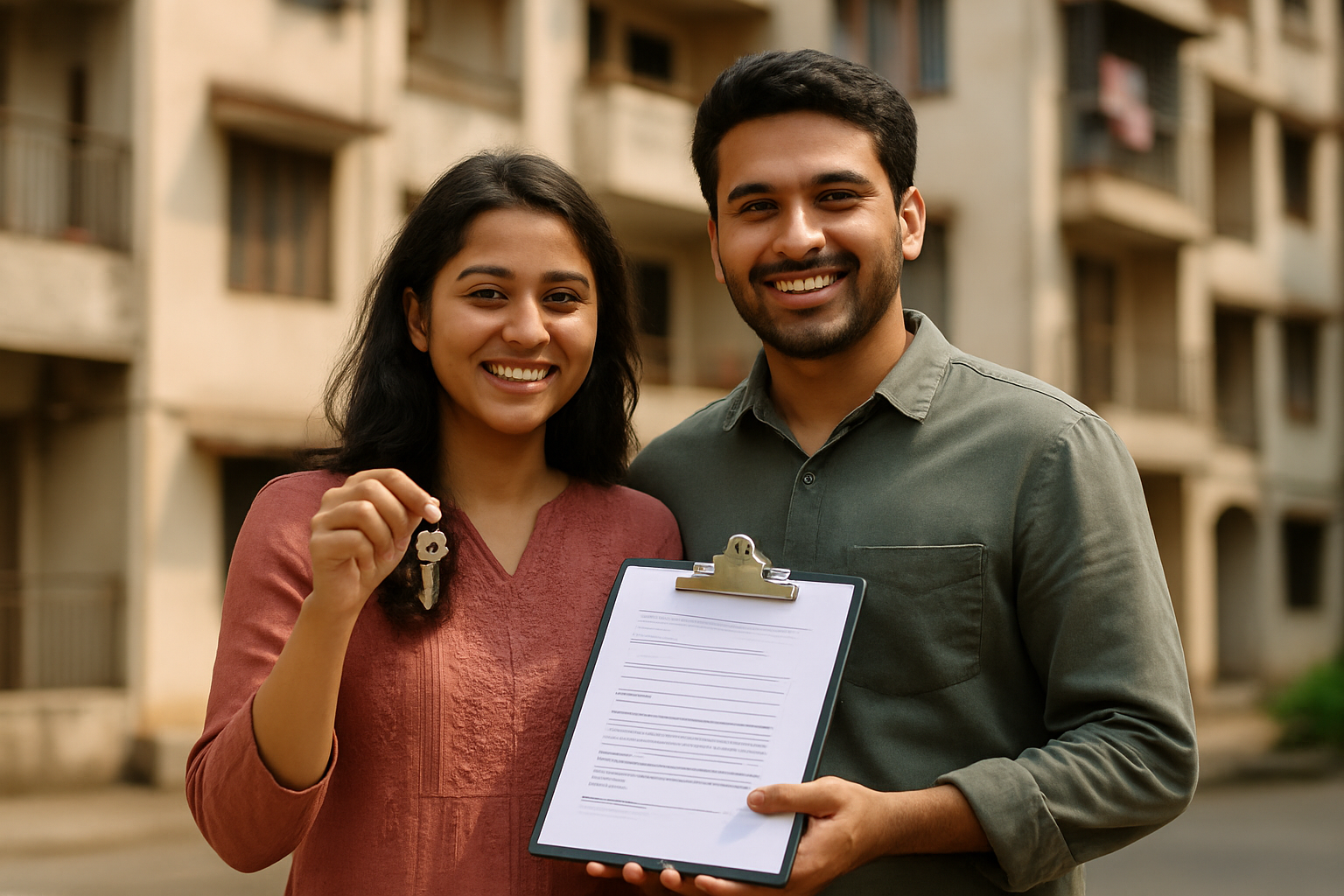
The government launched PMAY in 2015 and extended it multiple times. As of 2026, it’s still the largest subsidy program for affordable home purchase in India. But most first-time buyers either don’t know they qualify or apply incorrectly and lose the benefit.
PMAY has three categories. If you earn up to ₹6 lakhs annually, you get up to ₹2.67 lakhs interest subsidy. Between ₹6-12 lakhs income, you get up to ₹2.35 lakhs. Between ₹12-18 lakhs, you get up to ₹2.30 lakhs. These aren’t discounts on property price—they’re calculated subsidies on your home loan interest, credited directly to your loan account, reducing your principal.
Here’s where people mess up. They buy the property first, then try to claim PMAY. Doesn’t work. You must apply through a PMAY-approved lender before loan disbursal. The property must be PMAY-certified by the builder. Not all projects qualify. Check the project’s PMAY approval status before booking. Builders love saying “PMAY applicable” when they mean “you can try applying,” not “this project is pre-approved.”
Some states offer additional schemes. Maharashtra has the Pradhan Mantri Awas Yojana-Urban, Tamil Nadu has its own housing board schemes, and Karnataka offers subsidies for SC/ST buyers. Stack central and state benefits where possible. A buyer in Indore saved ₹3.7 lakhs combining PMAY with Madhya Pradesh’s Mukhyamantri Awas Yojana in 2025.
Check this before you pay any booking amount: is the builder registered under RERA? Is the project PMAY-certified? Is your lender on the PMAY-approved list? Three questions that prevent months of paperwork nightmares.
Step Four: Pick the Right Property Type for Your Budget
You don’t need a 2BHK if you’re single or newly married. That sounds obvious, but I’ve watched countless buyers stretch budgets for space they won’t use for five years. Economical property options exist at every life stage if you match property type to actual need.
Studio apartments in cities like Bangalore, Hyderabad, or Pune start around ₹25-30 lakhs in decent locations. Perfect for single professionals. You get ownership, you start building equity, and your EMI often matches what you’d pay in rent for a 1BHK. A techie in Whitefield bought a 380 square foot studio for ₹28 lakhs in 2024. Rented it out a year later for ₹14,000 monthly when his company asked him to relocate. That’s ₹1.68 lakhs annual return on a property that cost him ₹11,000 monthly EMI.
1BHK flats are the sweet spot for most first-time affordable housing buyers. They range from ₹28 lakhs to ₹42 lakhs depending on city and neighborhood. Big enough to start a family, small enough to maintain on limited income, and they resell faster than larger configurations when you’re ready to upgrade.
Plotted developments work if you’re buying for long-term appreciation and can wait to build. A 100 square yard plot in peripheral areas of Jaipur or Lucknow costs ₹12-18 lakhs. You own the land, which appreciates. Construction can wait until finances improve. Just make sure the layout is RERA-approved and has clear titles.
Avoid under-construction projects unless the builder has a solid track record and RERA registration. Delayed possession kills your financial planning. Ready-to-move properties cost 8-12% more but you get possession in 30-45 days and no construction risk. For budget buyers with tight finances, that certainty is worth the premium.
Step Five: Master the Home Loan Process Before You Apply
Most rejection happens because buyers don’t understand what lenders actually check. Your CIBIL score matters most. Anything above 750 gets you quick approvals at better rates. Below 700, you’ll struggle. Between 650-700, expect higher interest rates or lower loan amounts. Check your score three months before you plan to apply. Mistakes on credit reports are common. Dispute errors early through the CIBIL website.
Lenders verify income through salary slips, Form 16, and bank statements. Here’s what kills applications: irregular deposits that don’t match salary dates, frequent overdrafts, multiple small loans, and high credit card utilization. They want to see stable income and disciplined repayment behavior. If your last six months look messy, wait and clean it up.
The loan-to-value ratio for affordable housing is usually 80-90%, meaning you need 10-20% down payment. But that’s maximum. If your credit profile is weak, lenders sanction only 70-75%. Budget buyers can’t absorb that surprise. Assume you’ll need 25% upfront to be safe.
Interest rates for affordable housing under PMAY come with subsidies, but the base rate still varies by lender. In early 2026, PSU banks offered 8.35-8.75% while NBFCs charged 8.80-9.50%. A 0.5% difference on a ₹30 lakh loan over 20 years costs you ₹1.87 lakhs extra. Compare at least four lenders. Use their online EMI calculators. Don’t trust the broker’s “lowest rate in market” claim without written proof.
Pre-approved loans speed up the process. Some banks issue pre-approval based on income and credit score. You know your exact budget before you start property hunting. Builders often give better negotiation terms when you have pre-approval because they know the deal will close.
Step Six: Negotiate Smartly and Watch for Hidden Costs
Builders offer discounts. Not always, and not to everyone, but they exist. End of financial quarter, during festive seasons, and when inventory isn’t moving—that’s when you have leverage. I’ve seen buyers get ₹1.2 to ₹2.8 lakhs off on properties in the ₹35-40 lakh range just by asking at the right time and being ready to book immediately.
Ask for freebies if price is non-negotiable. Free car parking, clubhouse membership, modular kitchen, or waiver of maintenance charges for the first year. These add up. A car parking spot in a Tier-1 city costs ₹2-3 lakhs. Get it included.
Read the builder-buyer agreement before you sign. Cancellation clauses, delay penalties, possession timelines, and payment schedules matter. Some builders charge 10% cancellation fees even if delay is their fault. Others have clauses where they pay you ₹5-10 per square foot per month if possession is delayed beyond the agreed date. These aren’t decorative words. They’re your legal protection.
Hidden costs kill budgets. Stamp duty varies by state—5-7% in most places. Registration charges add another 1%. GST is 1-5% depending on property type and PMAY eligibility. Then there’s home loan processing fee (0.5-1% of loan amount), legal verification charges, society formation costs, and initial corpus fund. Budget an extra 12-15% beyond property price for all this. Every affordable housing guide should scream this, but most don’t.
Get a lawyer to verify property titles before paying anything beyond token booking amount. Costs ₹5,000 to ₹15,000 depending on city. Cheap insurance against buying property with legal disputes that block your loan or future resale.
Step Seven: Time Your Purchase and Funding Correctly
Buy when inventory is high and demand is soft. Sounds basic, but buyers do the opposite. They jump in during boom phases when prices peak and negotiation power is zero. Track property listing trends in your target area for 3-4 months. If unsold inventory is climbing and builders are advertising heavily, that’s your window.
Interest rates fluctuate. We saw repo rate hikes through 2024 and 2025. Early 2026 brought some stability but rates remain higher than the 2020-2021 lows. If you’re buying during a high-interest phase, consider shorter loan tenure or floating rates if you expect rates to drop. A buyer in Ahmedabad took a 15-year loan at 8.60% in mid-2025. Rates dropped to 8.25% six months later. He switched to a different lender through balance transfer, saved ₹47,000 in total interest, and paid a ₹15,000 processing fee. Net benefit: ₹32,000.
Don’t drain your emergency fund for down payment. You need at least six months of expenses in liquid savings after you buy. Medical emergencies, job loss, unexpected repairs—life doesn’t pause because you bought a home. I watched a couple in Bhopal use their entire savings for down payment in 2024. Four months later, a medical situation forced them to take personal loans at 14% interest. Their affordable home became an expensive burden.
Registry and possession timing matters for tax benefits. If you take possession and pay stamp duty before March 31st, you can claim deductions in that financial year. Section 80C allows ₹1.5 lakhs deduction on principal repayment. Section 24 allows ₹2 lakhs on interest for self-occupied property. For budget buyers in the 10-20% tax brackets, this saves ₹30,000 to ₹70,000 annually.
Why Budget Property Buying Fails and How to Avoid That
The biggest mistake is buying based on EMI, not total cost. Builders love saying “own a home for just ₹12,000 monthly.” They don’t mention the ₹8 lakh down payment or the ₹4.2 lakhs you’ll pay in interest over 20 years. Calculate total outflow. That’s your real price.
Skipping physical verification is the second killer. Photos lie. Floor plans lie. Site visits don’t. Check water pressure, mobile network strength, wall finishing quality, and neighborhood vibe yourself. A property in Faridabad looked perfect online. Buyer visited and found the approach road was a mud track that flooded every monsoon. Saved himself from a terrible decision.
Comparing apples to oranges wastes time. A ready property at ₹38 lakhs is not expensive compared to an under-construction one at ₹33 lakhs if the second takes three years and costs you ₹3.5 lakhs in rent while you wait. Factor opportunity cost. Your money and time have value.
Freeperty’s property search brings thousands of budget properties from across India onto one platform, all searchable without paying listing fees or subscription charges. You see what owners, brokers, and builders are offering in real-time, filtered by your actual budget. That transparency is rare in property marketplaces and it’s exactly what first-time buyers need when every rupee counts.
Ignoring resale potential is short-sighted even when buying affordable housing. You might think this is your forever home. It’s probably not. Life changes. Jobs relocate. Families grow. Buy in areas where someone else would want to buy five years from now. That means connectivity, schools, hospitals, and employment zones nearby.
Frequently Asked Questions
What is the maximum price for affordable housing in India under PMAY?
Under PMAY, affordable housing is defined as property priced up to ₹45 lakhs with carpet area not exceeding 60 square meters in metro cities and 90 square meters in non-metro cities. However, eligibility for PMAY subsidies depends on your annual household income, which must be below ₹18 lakhs. The scheme provides interest subsidies ranging from ₹2.30 lakhs to ₹2.67 lakhs depending on your income bracket.
Can I buy affordable housing with a ₹30,000 monthly salary?
Yes, but your options will be limited to properties around ₹18-22 lakhs. With ₹30,000 monthly income, a safe EMI would be ₹12,000 (40% of income). At 8.5% interest over 20 years, this covers approximately ₹14 lakhs in loan amount. You’d need ₹5-6 lakhs as down payment and other costs. Consider co-applicant options like parents or spouse to increase loan eligibility, or look at smaller property types like studios in developing areas.
Which cities in India offer the most affordable housing options?
As of 2026, cities like Indore, Bhopal, Lucknow, Jaipur, Coimbatore, Nagpur, Surat, and Ahmedabad offer the best combination of affordable pricing and growth potential. You can find quality 1BHK and 2BHK properties in the ₱25-40 lakh range in decent locations with good connectivity. Tier-1 metros like Mumbai, Delhi, and Bangalore have pushed most affordable housing to peripheral areas 25-35 kilometers from city centers.
How much down payment do I need for affordable housing?
Expect to arrange 25-30% of the property value upfront. This includes 20% down payment for the home loan, plus 5-7% for stamp duty, 1% for registration, and 2-3% for other charges like loan processing and legal verification. For a ₹35 lakh property, you need roughly ₹8.75 to ₹10.5 lakhs in hand. Trying to buy with less than this often leads to loan rejection or funding gaps at the last minute.
Is it better to buy under-construction or ready-to-move affordable housing?
Ready-to-move properties cost 8-12% more but offer immediate possession, no construction delays, and you can verify actual quality before buying. Under-construction properties are cheaper but carry completion risk. For budget buyers, I recommend ready-to-move unless the builder has an excellent RERA track record with on-time delivery history. The stress of delayed possession and continued rent payments often erases any price advantage from under-construction deals.
Start Your Affordable Home Purchase Journey Today
Budget property buying in India isn’t about waiting until you earn more. It’s about knowing what you can afford today, where to look, which schemes to use, and how to negotiate and structure the deal intelligently. Thousands of families with household incomes under ₹50,000 became homeowners in 2025 using the exact steps in this affordable housing guide.
Freeperty brings together properties from owners, brokers, channel partners, and builders on one free platform. No listing fees, no subscription walls, just transparent access to thousands of budget properties across India. Whether you’re looking at ₹25 lakh studios in Pune or ₹40 lakh 2BHKs in Lucknow, you can search, compare, and contact sellers directly without any middleman charges.
Visit Freeperty’s buy section and start filtering properties by your actual budget and preferred locations. Every listing includes location insights, price trends, and direct contact details. If you’re selling or listing affordable housing, post your property for free and reach genuine buyers actively searching for budget homes.
The only thing between you and homeownership is information and action. You have the information now. Take the action.