
Villa vs Independent House: Complete Comparison Guide
Ramesh spent three months hunting for a 3BHK in Whitefield, Bangalore. He thought he wanted an independent house — complete freedom, he said. No society rules. No maintenance headaches with neighbors. Then his broker showed him a villa inside a gated layout. Same price bracket. Similar built-up area. But completely different ownership model. Ramesh bought the villa. Six months later, he told me it was the right call — but not for the reasons he expected.
This confusion isn’t rare. Most buyers use “villa” and “independent house” interchangeably until they’re deep into negotiations. That’s when the differences hit — ownership structure, amenities, maintenance costs, legal paperwork, even resale dynamics. If you’re comparing a villa vs independent house, you need clarity before you sign anything.
What Actually Defines a Villa vs Independent House
Let’s get definitions out of the way first. An independent house sits on a plot you fully own — land and structure both. You control everything. The compound wall. The driveway. The terrace. There’s no shared infrastructure unless you choose to build something with a neighbor. It’s standalone in the truest sense.
A villa looks similar from the outside — often more polished, actually — but it exists inside a community layout. You own the villa structure and sometimes a small private yard. The land beneath? That’s usually shared ownership or leasehold, depending on the project. Roads, parks, clubhouses, gates — all common property managed collectively. You’re part of a layout, not isolated from it.
This structural difference changes everything downstream. Ownership titles differ. Maintenance models differ. Even your daily rhythm differs. One isn’t better than the other by default. But one will suit your situation better — and that depends on factors most buyers don’t think through until it’s too late.
Ownership Structure and Legal Clarity
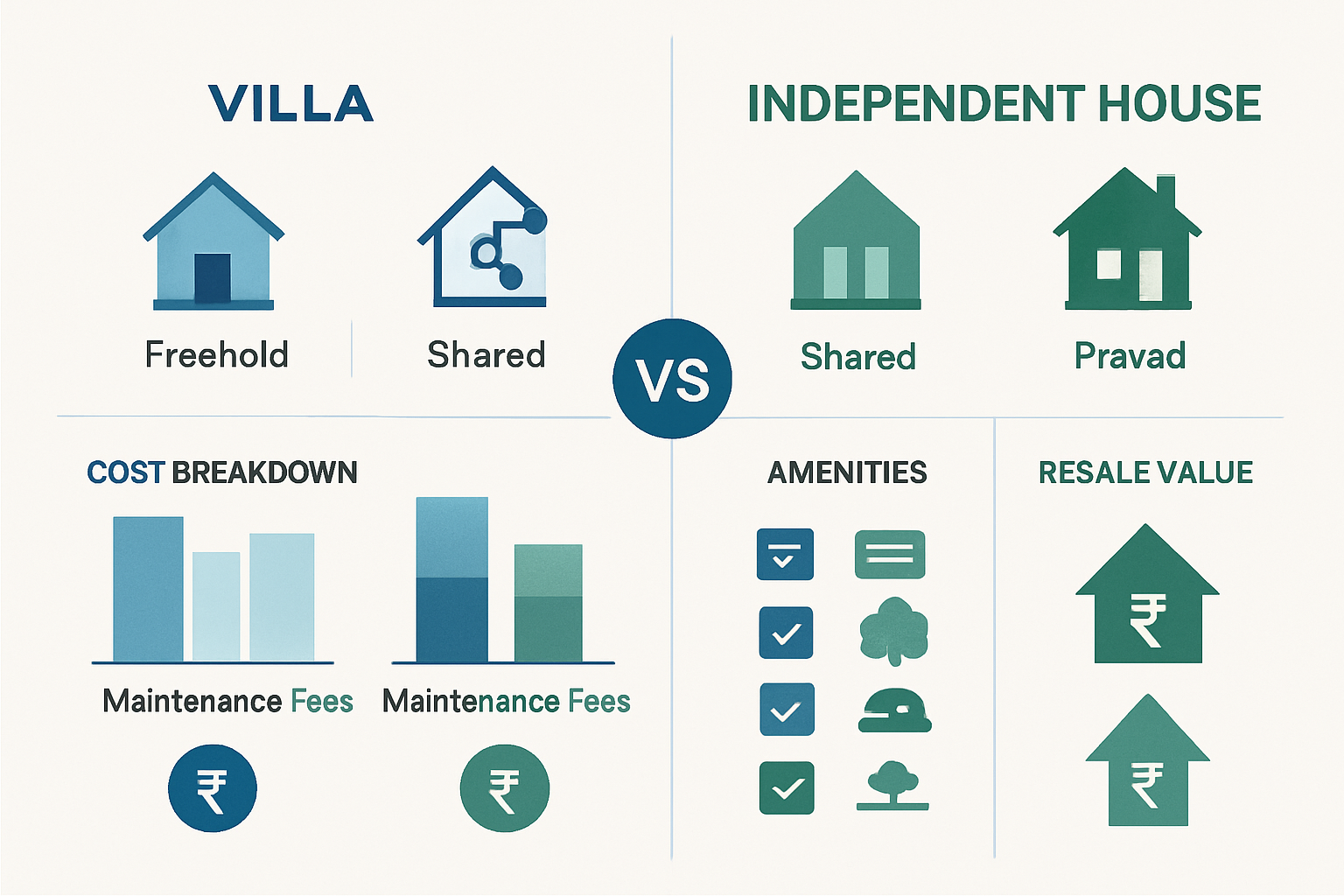
Here’s where it gets real. When you buy an independent house, you’re buying freehold land. The sale deed mentions plot dimensions, boundaries, survey numbers. It’s straightforward. You own it outright. Transfer is clean. Succession is simple. Banks understand it. Lawyers don’t flinch.
Villas complicate this slightly — not always negatively, just differently. Some villa projects offer freehold ownership of the villa unit plus undivided land share. Others operate on long-term leases — 99 years, sometimes perpetual renewal clauses. A few projects, especially older ones, have complex ownership structures where the land belongs to a developer entity and villa owners hold membership rights.
This isn’t a dealbreaker. But it requires due diligence. Check the ownership deed carefully. Verify if you’re getting freehold title or leasehold rights. Understand what “undivided share of land” actually means in square feet terms. One buyer I know purchased a villa assuming he owned 1,200 sq ft of land. Turns out his UDS was 340 sq ft. The rest was common area. He wasn’t cheated — he just didn’t read the fine print.
Property ownership laws in India recognize both models, but resale and loan approvals can vary. Some banks hesitate on leasehold properties beyond 60-70 years remaining tenure. If you’re considering a villa, get this clarity upfront from both the developer and your bank.
Cost Breakdown: Purchase Price and Hidden Charges
On paper, villas and independent houses in the same locality often quote similar price ranges. Dig deeper and the math shifts.
Independent houses usually come with lower per-square-foot rates if you’re buying older stock or vacant plots for construction. But you shoulder all development costs — compound walls, gates, water connection, sewage, electrical setup, internal roads if it’s a plotted layout. If the plot is in a semi-developed area, expect another 8-12% of the property cost going into basic infrastructure before you even start building.
Villas front-load these costs into the selling price. The layout is ready. Roads are paved. Streetlights work. Water supply is connected. You’re paying a premium for this convenience — typically 15-20% more per square foot compared to a DIY independent house in a similar location. But you’re also avoiding the chaos of coordinating with municipal bodies, contractors, and utility providers for two years.
Then come the recurring costs. Independent houses have lower monthly outflows — property tax, electricity, water. That’s it. Villas add monthly maintenance fees. In Freeperty listings across Hyderabad, Pune, and Bangalore, we’ve seen villa maintenance charges ranging from ₹3,500 to ₹12,000 per month depending on amenities. That’s ₹42,000 to ₹1.44 lakh annually. Factor this into your long-term budget. It’s not optional.
Some buyers resent paying maintenance. Others see it as outsourcing hassles they’d rather avoid — gardening, security, common area upkeep, waste management. Your personality will decide which camp you fall into. Just don’t ignore the math.
Lifestyle and Amenities: What You Actually Use
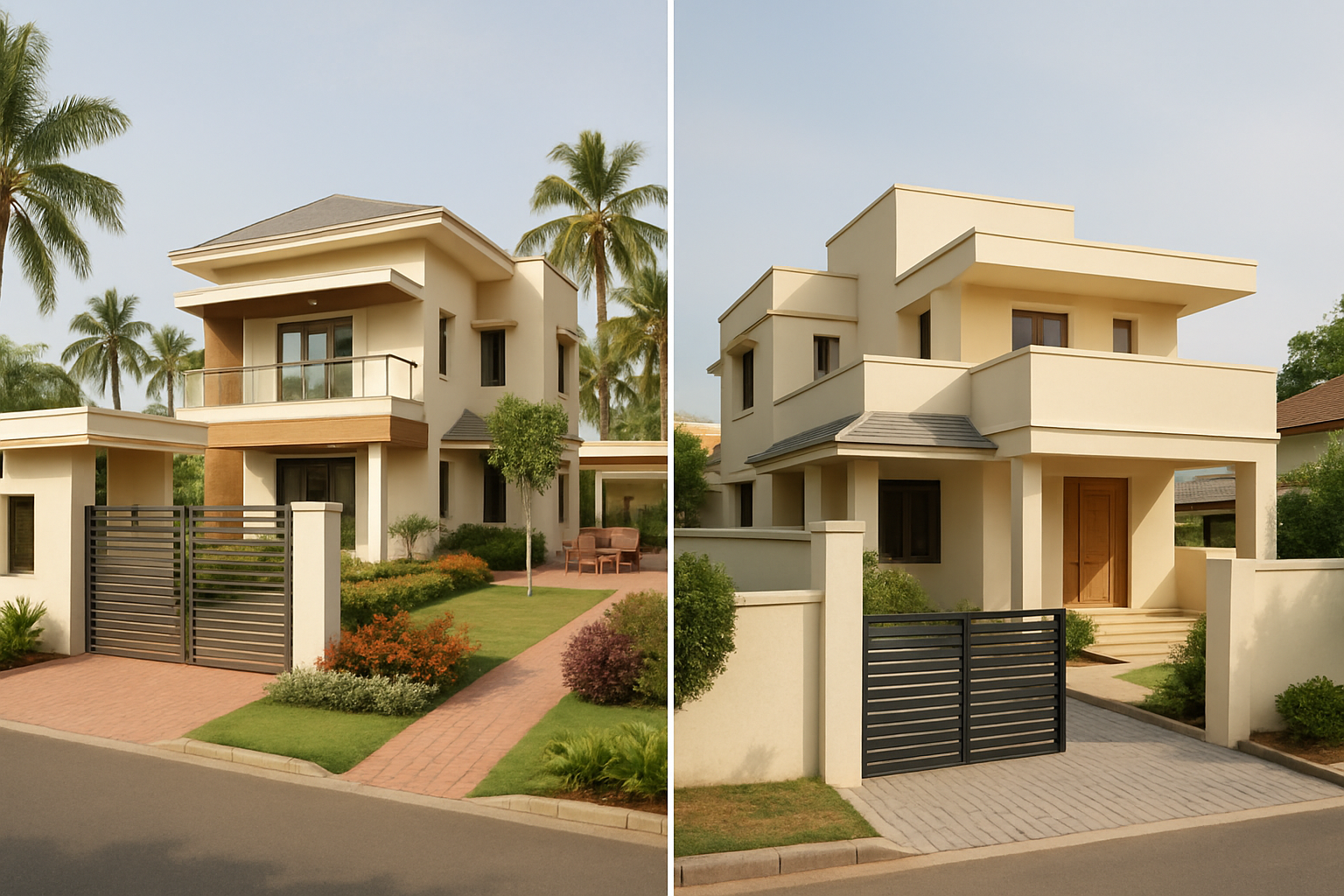
This is where the villa vs independent house debate gets emotional. Villas sell a lifestyle. Clubhouses. Swimming pools. Gyms. Landscaped gardens. Kids’ play areas. Jogging tracks. It looks great in the brochure. The question is — do you actually use it?
We listed a villa project in Whitefield where 60% of residents never stepped into the clubhouse after the first month. The gym had five regular users out of 140 units. The swimming pool? Packed in summer, empty by monsoon. Amenities sound valuable until you realize your actual routine doesn’t include them. If you work 10-hour days and travel twice a month, that landscaped garden you’re paying ₹8,000 monthly maintenance for becomes an expensive postcard.
Independent houses offer none of this. But they offer space. A large terrace you can actually use without society restrictions. A front yard where your kids play without supervision. A driveway where you park three cars without anyone complaining. One buyer converted his independent house terrace into a home office with a 180-degree view. Try that in a villa society — you’ll need six approvals and a structural engineer’s certificate.
There’s also the control factor. Independent house owners renovate when they want. Paint the exterior whatever color they like. Install solar panels without committee meetings. Villas come with architectural guidelines, society bylaws, and design committees. You give up autonomy for amenities. Make sure the trade-off feels worth it before you commit.
Maintenance and Long-Term Upkeep
Here’s a reality most buyers miss — independent houses demand more personal involvement. The plumbing issue at 9 PM? You’re calling the plumber. The compound wall needs repainting? You’re getting quotes. The inverter dies? You’re troubleshooting. It’s manageable, but it’s constant. You’re the facility manager by default.
Villas externalize this. Something breaks in the common area? The maintenance team handles it. Street light fuses? Facilities team is on it. Pest control? Scheduled quarterly. You still handle issues inside your villa unit, but everything outside your door is someone else’s responsibility. For working professionals, NRIs, or families where both partners work full-time, this convenience isn’t trivial.
The flip side — you’re dependent on society management quality. A well-run villa community is fantastic. A poorly managed one is a nightmare. Late-night noise complaints ignored. Maintenance funds mismanaged. Contractor quality declining because of cost-cutting. We’ve seen villa societies in Pune where internal roads cracked within five years because the builder used substandard materials and the maintenance team lacked the budget to fix it.
Before buying a villa, talk to current residents. Not the ones the sales team introduces you to — find owners independently. Check the society’s maintenance records if possible. See how reserve funds are managed. A strong residents’ association is worth more than a fancy clubhouse.
Resale Value and Market Demand
Resale is where independent houses often outperform villas — but only if location and condition are solid. Buyers looking for land appreciate independent houses because they’re buying an appreciating asset. The structure might age, but the land beneath it grows in value. In prime urban pockets, independent houses in good condition sell faster and command better per-square-foot rates than equivalent villas.
Villas attract a different buyer profile — typically nuclear families wanting ready-to-move, low-maintenance homes with some lifestyle cushion. Resale depends heavily on the project’s brand, the society’s upkeep, and amenity quality at the time of sale. A villa in a well-maintained society with an active community sells quickly. A villa in a project that’s visibly aging or poorly managed sits on the market longer.
Market data from metros shows independent houses hold value better during downturns. Villas are more sensitive to economic cycles. When budgets tighten, buyers skip the premium. When markets are hot, villas in good projects move fast. This doesn’t mean villas are bad investments — just that liquidity fluctuates more.
If you’re buying purely for investment, independent houses in appreciating zones edge ahead. If you’re buying for use and eventual resale in 10-15 years, either works — but pick the villa project carefully. Brand matters more in villas. In independent houses, location is everything.
Privacy, Security, and Community Living
Independent houses offer maximum privacy. No one hears your weekend party. No one monitors who visits. No society WhatsApp group debating gate timings or guest parking rules. You’re insulated — for better and worse. Security is entirely your responsibility. CCTV, alarm systems, watchmen — all on you.
Villas bring structured security but reduce privacy. Gated entry. Visitor logs. CCTV across common areas. Patrolling guards. It’s safer in a statistical sense — thieves avoid gated communities. But you’re also more visible. Your comings and goings are noticed. Some buyers love the oversight. Others find it intrusive.
Community living is polarizing. Some families thrive in villa societies — kids have instant playmates, neighbors become friends, festivals feel communal. Others find it exhausting. Too many opinions. Too many rules. Too much unnecessary interaction. If you value independence and minimal social obligation, an independent house suits you better. If you like the idea of a built-in social network, villas deliver that.
One overlooked factor — elderly parents. If your parents will live with you, villa societies often work better. Managed environments. Fewer stairs if you pick a ground-floor villa. Immediate neighbors in case of emergencies. Independent houses can feel isolating for seniors if they’re home alone during the day.
Which One Fits Your Situation
Let’s make this practical. You’re leaning toward an independent house if you want full control, have time to manage upkeep, value land ownership, and don’t need shared amenities. You’re okay handling contractor coordination and you see property as a long-term land asset.
You’re leaning toward a villa if you want convenience, prefer outsourcing maintenance, value security and structured community living, and you’ll genuinely use the amenities. You’re comfortable with society rules and you prioritize ready-to-move comfort over DIY control.
Neither choice is right or wrong. But one will match your daily reality better. Think about how you actually live — not how you imagine you’ll live once you move in. That gap is where most buyer regret happens.
At Freeperty, we see both property types listed by owners, brokers, and builders — all on one platform with zero listing fees. Whether you’re comparing a villa in a managed layout or an independent house on freehold land, search by location, filter by budget, and explore options without subscription walls. Browse residential properties across India and see what fits your criteria before you decide.
Frequently Asked Questions
Is a villa better than an independent house for investment?
Independent houses typically offer better long-term appreciation because you own the land outright. Villas can perform well in strong projects with good maintenance, but resale depends more on project quality and management. For pure investment, independent houses in growing locations usually edge ahead.
What are the maintenance costs for villas vs independent houses?
Villas charge monthly maintenance fees ranging from ₹3,500 to ₹12,000 depending on amenities, while independent houses only have basic utility and property tax costs. Over 10 years, villa maintenance can add ₹5-15 lakh to your total ownership cost compared to an independent house.
Can I get a home loan easily for both property types?
Yes, but documentation differs slightly. Independent houses need clear freehold title and building approvals. Villas need project approvals, occupancy certificates, and clear ownership structure. Banks approve both, but leasehold villas with less than 60 years remaining tenure may face stricter scrutiny.
Do villas have better security than independent houses?
Villas generally offer structured security with gated entry, guards, and CCTV across common areas. Independent houses require you to arrange and fund your own security. Statistically, gated villa communities report fewer security incidents, but personal vigilance matters in both cases.
Which property type is easier to sell later?
Independent houses in prime locations with clear titles usually sell faster and hold value better. Villas depend heavily on project reputation and society maintenance quality. Well-maintained villa societies in good locations sell quickly, but poorly managed projects can sit longer on the market.
Ready to Compare Villas and Independent Houses in Your Budget?
The villa vs independent house decision isn’t one-size-fits-all. It comes down to ownership preference, lifestyle priorities, and how much control you want over your daily environment. Walk through both options in your target location. Talk to current owners. Calculate real costs including maintenance, not just the purchase price.
Freeperty lists both villas and independent houses across India with complete transparency and zero platform fees. Search by location, compare properties side by side, and connect directly with owners, brokers, or builders without subscription barriers. Whether you’re a first-time buyer, an NRI investor, or upgrading to a larger home, find properties that match your needs — no hidden costs, no listing limits. Visit Freeperty today and start your search with complete visibility into the residential property market.